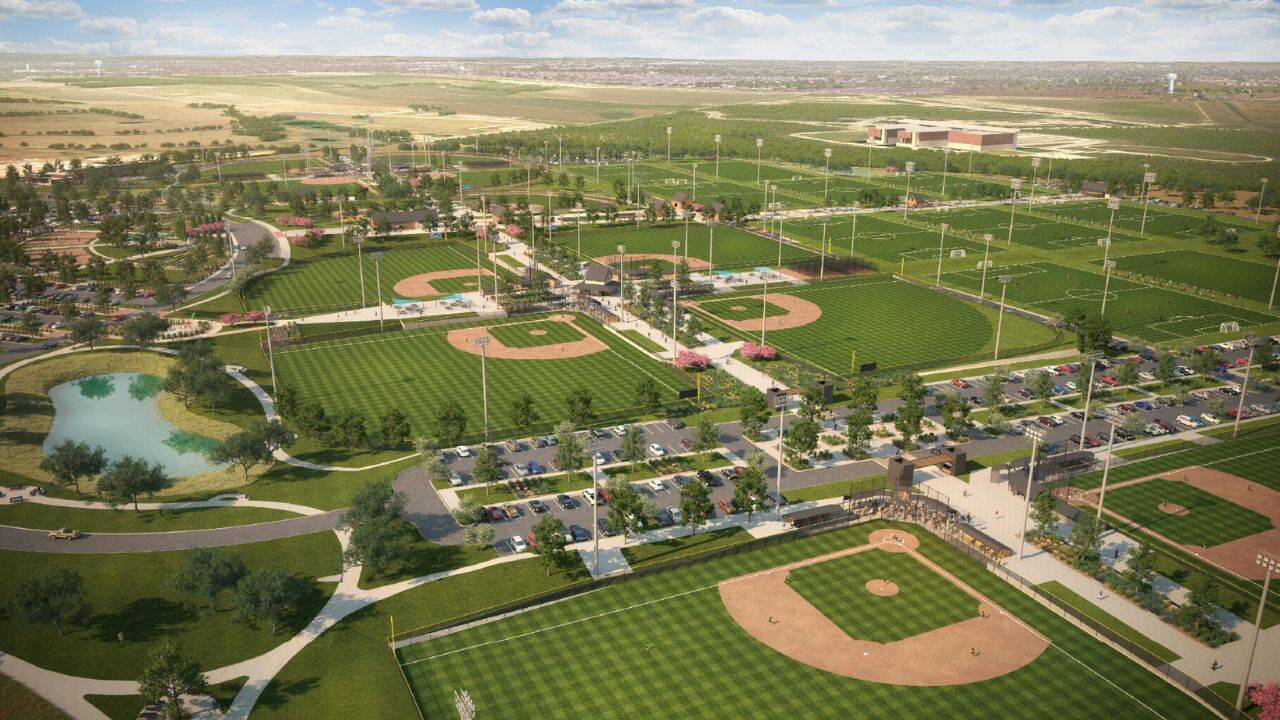
The acquisition of a 153-acre parcel for athletic infrastructure development represents a complex intersection of real estate valuation, municipal capital expenditure management, and long-term public maintenance liability. When private landowners transfer acreage for baseball, softball, and soccer complexes, the transaction is frequently misconstrued as a frictionless philanthropic win. In practice, converting raw acreage into a multi-sport recreational facility triggers a cascade of fiscal, operational, and structural challenges that municipalities must absorb. Deconstructing this transaction requires analyzing the initial land transfer mechanism, evaluating the infrastructure cost function, mapping public-private partnership liabilities, and forecasting the net economic yield against permanent municipal maintenance burdens.
The Asset Valuation and Tax Structure Mechanics
The primary vector of any large-scale land donation is the underlying asset valuation. A 153-acre tract carries distinct market dynamics depending on its proximity to urban growth boundaries. Raw rural or suburban fringe land possesses low baseline agricultural or speculative value, but its conversion into recreational zoning alters local property assessments.
The donor typically executes this transfer through a charitable remainder trust, a direct fee-simple donation, or a bargain sale structure. Each mechanism carries specific tax implications under federal and state codes. A fee-simple donation maximizes the donor's charitable deduction based on appraised fair market value established by a qualified appraisal. However, the municipal recipient inherits an asset that generates zero direct tax revenue while instantly demanding municipal service inputs.
The immediate friction point lies in the opportunity cost of lost property tax revenue versus the imputed value of public health and youth sports programming. When a municipality accepts 153 acres off the tax rolls, it foregoes decades of potential commercial or residential property tax yield. To justify this capital acquisition, the facility must generate sufficient local economic activity—through tournament tourism, hotel occupancy taxes, and sales tax capture—to offset the foregone tax baseline. Most civic models fail to quantify this delta accurately during the initial announcement phase.
Furthermore, zoning reclassification from agricultural or residential to public recreational use triggers complex municipal reassessments. Tax increment financing districts or overlapping special utility districts may be affected by the removal of acreage from taxable inventories. Practitioners must audit the exact millage rates and revenue losses across school districts and county governments to understand the complete fiscal footprint of the gift.
The Infrastructure Cost Function
Acquiring land is the lowest-cost phase of a sports complex lifecycle. The real financial weight rests on the infrastructure cost function, which scales non-linearly with acreage. Transforming 153 raw acres into a functional complex hosting diamond sports and rectangular pitches requires heavy capital expenditure across four distinct vectors: earthwork, utility integration, stormwater management, and hardscaping.
Earthwork on a 153-acre site is capital-intensive. Grading tolerances for baseball and softball diamonds require precise slope management to ensure infield drainage, while soccer fields demand uniform surface leveling to prevent player injury and standing water. Moving hundreds of thousands of cubic yards of topsoil and fill material introduces significant upfront engineering expenses. Subgrade stabilization often requires lime or cement treatment to achieve the bearing capacity needed for ancillary structures like grandstands and concession pavilions.
Utility integration presents the second major capital hurdle. Bringing electrical grids, potable water, industrial-capacity sewage lines, and broadband connectivity to a suburban or rural fringe parcel often requires extending municipal utility mains over significant distances. The cost of running utility infrastructure to the property line frequently matches the cost of internal facility wiring and plumbing. Fire flow requirements for large assemblies of spectators mandate high-pressure water mains and dedicated fire hydrants dispersed across the expansive acreage, adding substantial engineering overhead.
Stormwater management dictates the operational viability of large sports complexes. Impervious surfaces—parking lots, synthetic turf fields, concession structures, and concrete walkways—generate massive runoff volumes. Designing detention basins, bioswales, and underground retention systems to comply with environmental regulations consumes substantial acreage and capital. On a 153-acre footprint, stormwater engineering can easily account for twenty to thirty percent of total site development costs, especially when regulatory bodies enforce strict post-development runoff rate limits matching pre-development baselines.
Hardscaping and access infrastructure complete the primary expenditure model. Parking ratios for multi-sport complexes demand vast asphalt footprints. A facility hosting concurrent weekend tournaments for baseball, softball, and soccer requires thousands of parking stalls, dedicated bus turnaround lanes, and reinforced ingress-egress points connected to regional arterial roads. Without adequate traffic engineering, local municipal roadways experience severe gridlock during peak tournament windows, shifting externalized costs onto local taxpayers and requiring costly signalization upgrades.
Public Private Partnership Liabilities
Because municipal budgets rarely absorb the total capital expenditure of a 153-acre development in a single fiscal cycle, these projects rely on public-private partnership structures. These arrangements distribute responsibilities between municipal agencies, non-profit sports leagues, and private operating entities. The structural mechanics of these partnerships determine whether the facility thrives or becomes a municipal drain.
The allocation of capital expenditure forms the first pillar of the partnership agreement. Typically, philanthropic donations cover the land acquisition and initial earthmoving, while municipal bond issues or state grants fund the vertical construction of concession stands, press boxes, and lighting systems. Private operators then secure management rights through long-term leases, promising to handle daily programming and routine upkeep in exchange for exclusive tournament hosting windows.
The critical vulnerability in these agreements is the operational expenditure absorption model. Private youth sports leagues prioritize tournament revenue and field rental fees, but they frequently defer long-term capital maintenance. When turf fields reach their ten-year replacement lifecycle, or when stadium lighting fixtures require electrical overhauls, the financial responsibility often reverts to the municipality due to vague lease covenants or operator insolvency.
Contractual clarity regarding maintenance reserve funds separates successful facilities from failed projects. Operating agreements must legally mandate that a fixed percentage of tournament revenue flows directly into an escrowed capital replacement fund managed jointly by the municipality and the operator. Without this strict contractual mechanism, municipalities find themselves bailing out deteriorating facilities after the initial philanthropic enthusiasm fades and private operators exit the agreement.
The Economic Multiplier Versus Maintenance Burden
Proponents of large sports complexes frequently cite economic impact studies predicting millions of dollars in visitor spending. These projections rely on economic multiplier effects, calculating how dollars spent by traveling tournament teams circulate through local hotels, restaurants, and retail establishments.
The economic reality of sports tourism requires strict segmentation. Mid-week utilization rates for large athletic complexes hover near baseline community recreation levels, generating minimal outside revenue. Economic yield concentrates almost exclusively in weekend travel-team tournaments. Even during peak weekends, the capture rate depends heavily on local lodging capacity. If visiting families drive in from surrounding counties and return home each evening without booking hotel rooms, the lodging tax capture drops to zero, neutralizing the projected economic multiplier.
Simultaneously, the permanent maintenance burden operates with absolute predictability. Turf degradation, irrigation system failures, vandalism, and routine landscaping across 153 acres generate fixed annual operational expenditures. Synthetic turf surfaces, while reducing daily water consumption and mowing labor, accumulate micro-plastics, compact over time, and require specialized brushing and infill replenishment. Furthermore, organic infill materials require continuous moisture management to control temperature in hot climates.
As municipal budgets face competing demands for public safety, infrastructure repair, and social services, sports complex maintenance budgets are vulnerable to deferral. Deferred maintenance accelerates asset decay, shortening the functional lifespan of synthetic turf fields from ten years to six, and necessitating premature capital reinvestment funded by public debt.
Strategic Allocation Blueprint
Maximizing the long-term utility of a 153-acre sports complex donation requires shifting focus from construction milestones to asset lifecycle management. Municipalities and philanthropic partners must abandon simplistic assumptions about community goodwill and treat the asset as a commercial real estate holding with public service obligations.
The primary operational directive involves ring-fencing revenue. Every dollar generated through field rentals, concession percentages, and tournament gate fees must remain within a dedicated enterprise fund restricted entirely to the complex's maintenance and future capital replacement cycles. Commingling sports complex revenue with general municipal funds invites budgetary raids during fiscal downturns.
The second operational directive dictates phased development. Developing all 153 acres simultaneously maximizes upfront capital strain and exposes the project to market shocks. Phasing construction—commencing with core rectangular and diamond fields while preserving peripheral acreage as natural green space or agricultural leaseholds—generates early operational cash flow while preserving capital for future expansion phases.
The final structural imperative requires establishing strict performance metrics tied to the operating partner's lease agreement. If a private management entity fails to maintain surface safety standards, operational hours, or community access quotas, the municipality must retain unilateral contract termination rights without punitive financial penalties. Treating the land grant as an enterprise venture governed by rigorous performance benchmarks ensures that a philanthropic gift fulfills its intended civic purpose without devolving into a permanent municipal liability.


