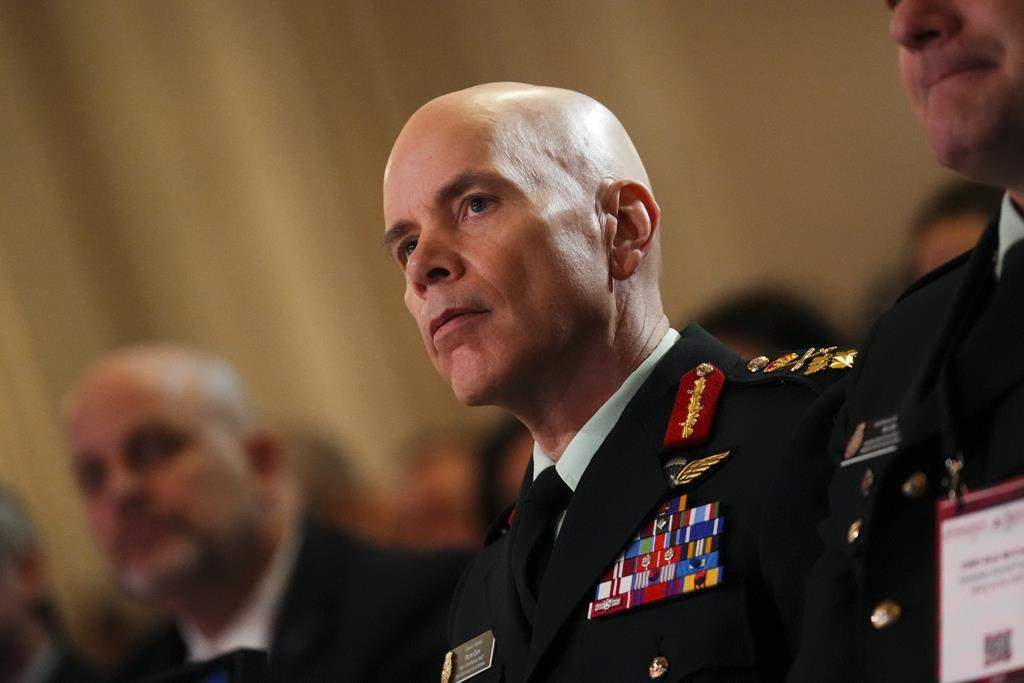
National defense policy is fundamentally an exercise in risk management under severe resource constraints. When former defense officials express alarm over the velocity of military recapitalization, the public discourse typically fixes on headline spending figures or political will. This surface-level diagnostic obscures the underlying mechanical failures of the state. Canada faces a crisis not of intent, but of structural capacity. The defense apparatus is bound by institutional friction, procurement redundancies, and personnel attrition loops that neutralize funding increments long before capital reaches the tactical edge.
Understanding why defense rebuilding remains sluggish requires examining the system through three distinct vectors: institutional governance bottlenecks, the capital versus personnel trade-off, and alliance credibility metrics. Each vector exposes why incremental budget adjustments fail to alter strategic outcomes.
Institutional Governance and Procurement Friction
The primary impediment to Canadian military recapitalization lies within the machinery of acquisition. Defense procurement in Canada operates through a decentralized, multi-agency triage involving the Department of National Defence, Public Services and Procurement Canada, and the Treasury Board Secretariat. Each stakeholder possesses veto power over requirements definition, bidding processes, and contract finalization.
This governance model creates an extended feedback loop where the time elapsed from capability identification to initial operational capability routinely spans decades. The replacement of strategic assets such as fighter aircraft, surface combatants, and tactical helicopters illustrates this dynamic. By the time requirements are finalized, technological baselines shift, necessitating costly mid-cycle engineering changes or contract renegotiations.
The procurement system prioritizes risk mitigation in bureaucratic compliance over speed of delivery. Risk avoidance manifests as hyper-specification in requests for proposals. When specifications become overly rigid, industrial bidding pools shrink, often leaving sole-source arrangements or delayed competitions. The resulting friction means that capital allocations announced in federal budgets do not represent immediate purchasing power. Instead, funds sit idle in frozen departmental votes while projects navigate sequential approval gates.
Furthermore, industrial offset policies, while designed to protect domestic economic interests, introduce additional drag. Requiring prime contractors to invest matching economic value within domestic supply chains frequently compromises cost efficiency and delivery timelines. When the state treats defense acquisition as an industrial development tool rather than a warfighting capability generator, strategic urgency is subordinated to regional economic distribution.
The Capital Expenditure Versus Personnel Capacity Trap
Budgetary debates frequently isolate capital acquisition from human capital sustainability. A modern military requires advanced hardware, but hardware is bounded entirely by the technical competence and availability of the personnel operating and maintaining it. The Canadian Armed Forces face a compounding retention and recruitment deficit that threatens to render newly procured platforms strategically inert.
Operating complex platforms demands specialized technical training pipelines. When retention rates decline among mid-career technicians, pilots, and combat engineers, the institutional knowledge required to sustain high-readiness units evaporates. Procuring next-generation multi-role fighters or frigates without addressing the manning deficit creates an inverted resource structure: high-value capital assets sitting underutilized due to maintenance backlogs and crew shortages.
The personnel crisis is exacerbated by high operational tempos driven by persistent domestic and international commitments. Routine deployments, disaster relief operations, and multilateral training exercises strain a force structure operating well below authorized end-strength. When troops face continuous deployment cycles without adequate dwell time for rest and reset, attrition accelerates.
The fiscal architecture compounds this pressure. Personnel costs, including salaries, benefits, and healthcare, consume a fixed baseline of the defense budget. When budgets experience sudden freezes or inflationary shocks, capital acquisition accounts absorb the cuts because personnel obligations cannot be easily shed. Conversely, when capital injections occur, they rarely scale personnel recruitment infrastructure proportionately. The system attempts to buy modern tools while starving the hands required to wield them.
Alliance Credibility and Interoperability Deficits
Canada operates within integrated alliance structures, most notably the North Atlantic Treaty Organization and the North American Aerospace Defense Command. Membership in these architectures carries structural obligations regarding interoperability, readiness standards, and burden-sharing metrics. The chronic shortfall in defense investment creates a widening capability gap with key allies, particularly the United States.
Interoperability is not merely a matter of using compatible ammunition or secure radios; it requires matching tactical mobility, electronic warfare resilience, and command-and-control bandwidth. As peer and near-peer competitors modernize anti-access and area-denial capabilities, legacy platforms maintained by the Canadian military face survivability deficits. Operating obsolete or logistically fragile equipment within a coalition framework shifts the burden onto allies, transforming Canada from a net security contributor into a consumer of allied protection.
The two percent of gross domestic product spending benchmark established by alliance agreements serves as a crude proxy for political commitment, but the more critical metric is the proportion of expenditure dedicated to major equipment procurement and research and development. Historically, Canadian defense spending has tilted heavily toward operations and maintenance and personnel overhead, leaving insufficient capital headroom for modernization.
When allied commands plan joint operations, they assess partner forces based on deployable capability rather than nominal troop counts. A military constrained by logistics bottlenecks, aging support fleets, and ammunition stockpiles that deplete rapidly under high-intensity combat conditions cannot sustain expeditionary operations independently. The strategic consequence is diminished influence in coalition decision-making forums, where capability dictates authority.
The Mechanics of Fiscal Gradualism
Incrementalism is the default mode of public administration, but it is structurally unsuited to national defense modernization. Threat environments evolve non-linearly, driven by rapid advancements in autonomous systems, cyber warfare, hypersonic delivery mechanisms, and space-based reconnaissance. A procurement and budgeting cycle that measures planning in five-to-ten-year increments cannot keep pace with technological disruption cycles measured in months.
When funding increases are distributed evenly across fiscal quarters as percentage bumps, they fail to achieve the critical mass required to fund transformative capital programs. Major defense acquisitions require upfront, lumpy capital commitments that defy smooth fiscal smoothing. Spreading capital over extended horizons inflates overall program costs due to production line inefficiencies and inflation.
The absence of a dedicated, ring-fenced capital fund insulated from annual political cycles ensures that defense budgets remain vulnerable to shifting domestic priorities. Every economic downturn or fiscal constraint prompts internal departmental re-baselining, which disproportionately targets long-term capability development in favor of short-term operational upkeep. This dynamic traps the institution in a perpetual state of modernization catch-up.
To break this cycle, defense financing requires a departure from traditional line-item incrementalism. Capital investments must be decoupled from annual parliamentary volatility through multi-year funding envelopes backed by statutory authority. Procurement governance must shift from a compliance-driven model focused on process elimination to a mission-driven model focused on delivery velocity and technological obsolescence mitigation.
The strategic imperative facing national leadership is clear. Continuing to manage defense policy through incremental budget adjustments and bureaucratic proceduralism guarantees a slow degradation of sovereign operational sovereignty. Rebuilding military capacity demands an honest reckoning with institutional friction points, a rebalancing of capital and human resources, and the recognition that national security cannot be acquired on a deferred payment plan.
Prioritize the immediate restructuring of acquisition authorities to eliminate redundant oversight layers while expanding recruitment pipelines to match hardware acquisition schedules. Allocate capital explicitly toward high-readiness enablers and scalable technology platforms rather than legacy garrison infrastructure. The timeline for institutional adaptation is narrowing, and the margin for bureaucratic delay has reached zero.