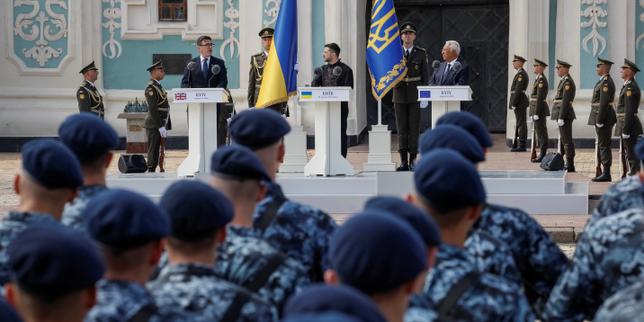
Thirty-five years. That is how long Ukraine has marked its independence from the Soviet Union. But this year feels entirely different. Brussels is stepping up, pledging fresh financial backing and military aid just as the war drags deeper into its grinding reality.
People ask me why European Union support remains critical right now. The answer is simple. Fatigue is real. Budgets are strained. Yet abandoning the frontline means abandoning the entire security architecture of the continent. Let's look past the political speeches. What is the European Union actually delivering on this milestone anniversary, and why should you care about the shifting dynamics in Eastern Europe?
The Milestone That Changed Everything
August 24 carries immense weight. Back in 1991, the declaration of independence reshaped the map of Europe. Today, that map faces its greatest stress test since 1945. When European leaders step up their assistance packages during anniversary summits, they aren't just sending cash. They are sending a signal.
You see, solidarity without ammunition is just noise. European Commission officials know this. That is why recent aid announcements focus heavily on defense production capacity, drone technology, and energy grid repairs heading into the winter months.
- Financial lifelines: Multi-billion-euro packages designed to keep public services running.
- Military hardware: Air defense systems to protect civilian infrastructure.
- Industrial integration: Merging Ukrainian defense manufacturing with European supply chains.
Moving Past Empty Promises
Diplomacy moves slowly. War moves at breakneck speed. That tension creates massive frustration on the ground. For months, critics pointed out delays in weapon deliveries and bureaucratic red tape holding up frozen asset transfers.
Brussels had to adapt. Officials realized that standard procurement processes built for peacetime simply do not work during an active invasion. They streamlined approvals. They pooled purchasing power.
If you look at the numbers, European institutions and member states have collectively mobilized well over one hundred billion euros since the full-scale invasion began. Humanitarian aid, refugee support, and direct military supplies make up that staggering sum. It is not charity. It is an investment in stability.
The Energy Weapon and Winter Reality
Nobody talks enough about the heating grid. Russia has targeted power plants and substations systematically. As temperatures drop, infrastructure becomes a primary battlefield.
European engineers are working directly with Ukrainian technicians to source spare parts, mobile generators, and high-voltage transformers across borders. This operational cooperation rarely makes front-page headlines, but it keeps hospitals powered and homes warm.
Citizens across the EU feel the pinch too. Inflation, high energy bills, and political friction create domestic pressures. Leaders must constantly justify these expenditures to voters who are dealing with their own cost-of-living crises. Yet polling consistently shows that most Europeans understand the stakes.
What Comes Next for European Security
The anniversary of independence is not just a moment for reflection. It is a deadline for commitment. Ukraine's path toward EU membership continues to move forward, albeit through a rigorous reform process. Anti-corruption measures, judicial overhauls, and economic adjustments are happening in the middle of an active conflict. That is unprecedented.
Support for Ukraine defines the political identity of modern Europe. Either collective security holds against territorial aggression, or a dangerous precedent takes root across the globe.
Keep your eyes on the upcoming defense procurement agreements and joint manufacturing plants opening inside Ukraine. That is where the real future of European security is being forged right now.