Europe is essentially the world's climate canary. While every corner of the globe feels the heat, our continent is currently warming at about twice the global average rate. This isn't just a vague prediction for 2050. It’s happening right now. Data from the latest Copernicus and World Meteorological Organization (WMO) report shows that Europe has seen a temperature rise of roughly 2.3°C compared to pre-industrial levels. Contrast that with the global average of about 1.3°C. The math is simple and terrifying.
You might wonder why we're the lucky ones winning this specific race. It’s not just bad luck. Our geography is basically a perfect trap for heat. We’re sitting right next to the Arctic—the fastest-warming region on Earth—and we're seeing a massive shift in atmospheric circulation. When the ice up north melts, it changes how air moves over Europe. We’re losing our natural air conditioning, and honestly, the consequences are already showing up in our grocery bills and our health records. In related developments, read about: The Anatomy of Desperation Systematic Analysis of the Athens Shooting.
The Arctic connection and why geography hates us
The biggest reason for Europe’s rapid warming is its proximity to the Arctic. It’s called Arctic amplification. As sea ice disappears, the white, reflective surface is replaced by dark ocean water. That water absorbs sunlight instead of bouncing it back into space. This creates a feedback loop that spills southward. Europe is basically the front porch of this melting freezer.
But it’s not just about the north. The Mediterranean is also becoming a literal hotspot. It’s a closed sea, which means it traps heat more efficiently than open oceans. During the summer of 2023, we saw marine heatwaves that felt more like a hot bath than an actual sea. This isn't just about uncomfortable swimming. Warm water fuels more intense storms and disrupts the entire food chain. If you think fish prices are high now, just wait until the local ecosystem can't handle the 30°C water temperatures. The Washington Post has provided coverage on this important topic in great detail.
We also have to look at our landmass. Land warms up faster than water. Europe is a relatively small, densely populated landmass surrounded by warming seas and a melting Arctic. It’s the perfect recipe for a heat trap. We’re seeing more "Omega blocks"—high-pressure systems that get stuck over the continent for weeks. They act like a lid on a pot, trapping hot air and causing those brutal, multi-week heatwaves that have become our new normal.
Heat is the silent killer in European cities
We talk a lot about property damage from floods, but heat is what actually kills people. In 2023, heat-related mortality in Europe increased by around 30% compared to the previous twenty years. Our infrastructure just wasn't built for this. Think about the classic Haussmann buildings in Paris or the brick row houses in London. They were designed to keep heat in, not out.
Now, these architectural icons have become ovens. In many European cities, the "urban heat island" effect makes city centers up to 10°C hotter than the surrounding countryside. Concrete and asphalt soak up the sun all day and radiate it back all night. There’s no relief. You can't just tell people to "stay hydrated" when the walls of their apartment are literally radiating heat at 3 a.m.
The impact on the economy and our plates
This isn't just a "nature" problem. It’s a bank account problem. Extreme weather has cost Europe billions over the last decade. Agriculture is getting hammered. We’re seeing "flash droughts"—where soil moisture evaporates so quickly that crops die before farmers can even react. In parts of Spain and Italy, traditional crops like olives and grapes are struggling. We're looking at a future where the wine map of Europe moves hundreds of miles north.
- Hydroelectric power is failing because reservoirs are dry.
- Nuclear plants have to scale back because the river water used for cooling is too warm.
- River transport, like on the Rhine, often shuts down because water levels are too low for barges.
When the Rhine dries up, supply chains break. When supply chains break, inflation spikes. This is how climate change enters your daily life, even if you stay in the air conditioning all day.
The glacier collapse we can't ignore
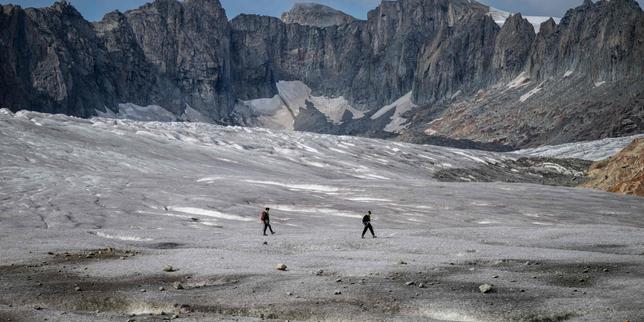
The Alps are losing their identity. Alpine glaciers have lost about 10% of their remaining volume in just the last two years. That’s a staggering pace. Glaciers aren't just for skiers; they’re Europe’s water towers. They store water in the winter and release it slowly throughout the summer, feeding major rivers like the Danube, the Rhone, and the Po.
Without that steady melt, we get a "feast or famine" water cycle. You get massive flooding in the spring when the snow melts too fast, followed by bone-dry riverbeds in August. We saw this in 2023 and 2024—devastating floods in Greece and Italy, followed by record-breaking droughts. The reliability of our water system is basically evaporating.
Renewables are the only bright spot
If there’s any good news, it’s that Europe is actually trying. Last year, for the first time, wind and solar generated more electricity than fossil fuels in the EU. We’re hitting record levels of renewable integration. But here’s the kicker: even if we hit net-zero tomorrow, the warming we’ve already locked in means the next thirty years are going to be rough. We have to adapt while we decarbonize.
Adaptation sounds like a boring policy word, but it’s actually about survival. It means ripping up asphalt to plant trees. It means painting roofs white. It means completely redesigning how we manage water. We’ve spent centuries trying to drain water away from our cities as fast as possible. Now, we need to learn how to keep every drop.
How you should actually prepare
Stop thinking about this as a future event. It’s a current reality. If you’re living in a European city, you need to change how you think about your home and your health.
- Insulate for heat: If you’re renovating, focus on external shutters or heat-reflective glass. Interior blinds don't do much once the heat has already passed through the glass.
- Check on the vulnerable: Heatwaves kill the elderly and the isolated. If you have an older neighbor, check on them when the mercury hits 35°C. Most heat deaths are preventable with basic cooling and hydration.
- Water management: If you have a garden, switch to drought-resistant plants now. Lawns are a waste of resources in a warming Europe. Think Mediterranean—lavender, rosemary, and succulents.
- Energy shift: If you can, move toward heat pumps. They’re far more efficient than traditional AC units and provide heating in the winter too.
The Copernicus report is a wake-up call that most people are still hitting the snooze button on. We aren't just watching the climate change; we're living at the epicenter of its most rapid shift. The "old Europe" with its mild summers and predictable rains is gone. The sooner we accept that, the better we can prepare for the reality that’s already at our doorstep.