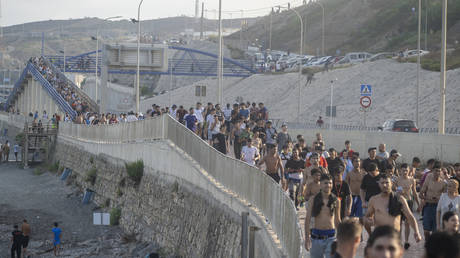
Borders aren't just lines on a map. They're administrative ecosystems. Right now, Europe's southern perimeter is bleeding authority, resources, and coherence. If you look at the Mediterranean coastline, the Canary Islands, or the land routes winding up through the Balkans, you see a system built for a different century.
Brussels loves grand declarations. They sign pacts, fund agencies, and host emergency summits every time arrivals spike. But on the ground, the reality looks messy, disjointed, and dangerously overwhelmed. For a closer look into this area, we suggest: this related article.
How did Europe lose control of its southern border? The short answer is a toxic mix of political cowardice, outdated legal frameworks, and member states looking out for themselves rather than the union.
The Myth of the Fortress
Politicians on both sides of the Atlantic love talking about fortress Europe. It sounds tough. It plays well on evening news broadcasts. It is also completely detached from reality. To get more information on this topic, extensive analysis can also be found at NPR.
The Mediterranean Sea is massive. You can't just throw up a wall across thousands of square miles of open water. When search-and-rescue operations turn into multi-week political tug-of-wars between Italy, Malta, and various NGOs, the border stops being a barrier and becomes a bureaucratic black hole.
National governments routinely prioritize domestic optics over regional strategy. Rome blames Paris. Athens blames Berlin. Meanwhile, local authorities on islands like Lampedusa or Lesbos absorb the immediate shockwaves alone.
Responsibility sharing was supposed to fix this. It didn't.
The Dublin Regulation Trap
To understand why the system breaks down repeatedly, look at the Dublin Regulation. This cornerstone of European asylum law dictates that the first country of entry must process an asylum seeker's application.
Think about that for a second.
If you arrive on a crowded wooden boat off the coast of Sicily or cross the Greek land border from Turkey, Italy or Greece owns your paperwork. That means southern frontline nations shoulder the administrative and financial burden of intake, registration, and housing. Wealthier northern states like Germany, Sweden, or the Netherlands can sit back and critique the management style from afar.
It creates an incentive structure built for failure. Southern nations realized years ago that if they register every single arrival strictly by the book, they trap themselves with thousands of stranded migrants who have no intention of staying in southern Europe anyway. They want to reach family networks in northern capitals.
So, enforcement slips. Registration numbers get massaged. People move north unchecked through the Schengen Area, turning a blind eye into official policy.
The Geopolitical Blackmail Factor
Borders are easily weaponized. Autocrats and fragile states have figured out that Europe will pay almost anything to stem migration flows.
Look at agreements signed with transit countries like Turkey, Tunisia, or Libya. Billions of euros flow out of EU coffers in exchange for border policing. When relations sour, the valves open. Boats launch. Border guards look the other way.
This approach turns sovereign European security into a hostage situation. You depend on external regimes with terrible human rights records to manage your backyard. The moment those regimes face internal pressure or want geopolitical leverage, they use human movement as a pressure valve.
It is fragile foreign policy masquerading as border management.
The Human Toll of Administrative Paralysis
Behind the policy memos and budget debates lie real human consequences. Smuggling networks thrive precisely because legal pathways are broken and chaotic. Organized crime syndicates pull in billions of euros moving people across perilous terrain because the alternative is waiting years in limbo for a bureaucratic verdict that might never come.
When states lose control of who enters, they also lose control of who stays. Return rates for rejected asylum seekers hover stubbornly low across most of the bloc. If you can't deport people who have no legal right to remain, your entire immigration framework loses credibility. Public trust evaporates. Populist movements exploit that vacuum, shifting the political center of gravity further to the right with every election cycle.
Fixing this isn't about wishing arrivals away. It requires brutal honesty about what works and what's broken.
What Actually Needs to Happen
If Europe wants to regain authority over its southern frontier, three things must change immediately.
First, the Dublin rule needs to die. Replace it with a mandatory, automated relocation quota system shared fairly across all member states from day one. If you're part of the single market, you share the perimeter burden. Period.
Second, processing centers must be established outside the bloc or strictly at external consular points before dangerous sea crossings happen. People need a clear, legal way to apply for protection without boarding a smugglers' rust bucket.
Third, return agreements with countries of origin must be enforced through economic leverage. If a government refuses to take back its own deported citizens, cut trade preferences and visa access. Diplomacy works best when it has teeth.
Right now, Europe is reacting instead of governing. Until leaders stop treating border management as a PR crisis and start treating it as an existential structural failure, the southern border will remain wide open to whoever wants to test it.