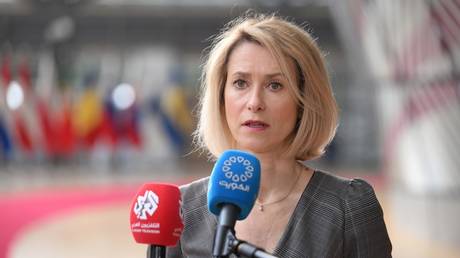
Brussels is turning on its own top diplomat. Only months into her tenure as the European Union’s foreign policy chief, Kaja Kallas is facing a quiet, coordinated mutiny from the very capitals that appointed her.
France and Germany are leading a push to strip powers from Kallas and drastically overhaul the European External Action Service (EEAS), the bloc’s €1 billion-a-year diplomatic arm. Senior officials in Paris and Berlin are frustrated by what they describe as a dysfunctional, overlapping bureaucracy that fails to respond quickly to global emergencies. Instead of acting as a unified global force, the EU’s diplomatic machine is bogged down by internal turf wars, prompting major member states to consider tearing the whole system apart. You might also find this related article interesting: Diplomatic Signaling at the Hiroshima Anniversary Structural Analysis of India Japan Relations.
The real driver behind this revolt isn't just bureaucratic inefficiency. It's a fundamental disagreement over who speaks for Europe and how hardlined that voice should be on the world stage.
The Plan to Dismantle Europe’s Foreign Policy Bureaucracy
The EEAS was created 15 years ago under the Lisbon Treaty to give the EU a single, powerful voice in global affairs. Instead, it has morphed into a sprawling agency managing over 140 global delegations that frequently clashes with national foreign ministries and the European Commission. As extensively documented in detailed articles by NPR, the results are worth noting.
An internal French government assessment circulating among member states outlines a radical restructuring plan. The most severe option on the table would heavily restrict Kallas’ autonomy. The proposal aims to loosen her direct control over those 140-plus global embassies and shift core responsibilities back to national capitals and the European Commission.
Under the current setup, Kallas wears two hats. She answers to the 27 member states while simultaneously serving as a Vice President of the European Commission. This dual role was meant to bridge the gap between EU institutions and national governments. Instead, it has created a structural bottleneck.
National capitals are annoyed. They want an agile, effective way to coordinate external policy, but they feel the current framework is failing them. The structural problems are so deep that officials are openly warning that the diplomatic service risks being completely dismantled if changes aren't made.
Why Kallas Irritates Paris and Berlin
Kallas built her political reputation as the uncompromising prime minister of Estonia. Her blunt, hawkish stance against Russia and China made her a favorite in Eastern Europe, but that exact same style is now causing friction in Western European capitals.
Diplomats privately complain that Kallas frequently speaks her mind on highly sensitive geopolitical matters before getting explicit sign-off from member governments. Her hardline rhetoric on Beijing, for instance, has ruffled feathers in countries that prefer a more delicate, trade-focused diplomatic approach.
There's also a growing sense that her hyper-focused stance on Russia leaves her poorly positioned to manage other global crises, such as escalating tensions in the Middle East or handling a volatile relationship with Washington under Donald Trump. Critics view her as too rigid to act as a credible, flexible negotiator when the geopolitical cycle shifts from confrontation to necessary dialogue.
Institutional Overlap: The Core Conflict
┌────────────────────────────────────────────────────────┐
│               European Commission                      │
│       (Led by Ursula von der Leyen - Trade/Budget)     │
└───────────────────────────┬────────────────────────────┘
                            │ (Power Struggle)
┌───────────────────────────▼────────────────────────────┐
│         Kaja Kallas & The EEAS (€1B Budget)            │
│       (140+ Global Delegations & Day-to-Day Diplomacy) │
└───────────────────────────┬────────────────────────────┘
                            │ (Policy Friction)
┌───────────────────────────▼────────────────────────────┐
│              27 EU Member States                       │
│        (Led by France & Germany - National Interests)  │
└────────────────────────────────────────────────────────┘
Compounding the problem is an evident rivalry between Kallas and European Commission President Ursula von der Leyen. Rather than presenting a unified front, the two leaders are locked in a persistent fight for primacy over foreign policy. Diplomats describe a constant competition for media attention and policy visibility, where parallel announcements and overlapping high-profile trips turn EU diplomacy into a race for headlines rather than a cohesive strategy.
The Three Options for the Future of EU Diplomacy
The French reform paper presents three distinct paths forward to resolve this institutional gridlock.
- Consolidation Under the Commission: This approach would absorb the bulk of day-to-day foreign policy and aid operations into the European Commission, putting them under tighter institutional control.
- Reversion to the EU Council: This option would shift critical strategic tasks, such as drafting sanctions lists and organizing military missions, away from Kallas’ team and directly into the Council, which represents member governments.
- The First Executive Vice President Model: In a twist that looks like a promotion but functions as a leash, Kallas would become the "First Executive Vice President" of the Commission. She would gain formal authority over commissioners handling trade and economic development, but the EEAS itself would be shrunk into a narrow, strategy-only shop, effectively stripping away her independent diplomatic apparatus.
Any structural shift to the terms governing the EEAS requires unanimous support from all 27 member states. While that makes a total treaty rewrite unlikely, significant operational powers can still be reassigned without changing the underlying EU treaties.
Money is also talking. The ongoing debates over the shared EU budget have member states hunting for cost savings. Moving functions out of the EEAS and back into existing directorates is a convenient way to slash duplicate bureaucratic posts.
What This Means for Europe’s Global Standing
The timing of this internal rebellion couldn't be worse. With the war in Ukraine dragging on and shifting transatlantic alliances, a public civil war over Brussels' diplomatic machinery signals weakness to Washington, Beijing, and Moscow.
Kallas has tried to put a brave face on the crisis. In an email sent to EEAS staff, she claimed to welcome the debate, acknowledging that the system could work better and with less duplication. But her cooperative tone can't hide the underlying reality: the EU's largest economies don't trust the current institutional setup to protect their interests.
If France and Germany succeed in curbing the high representative's autonomy, the era of a centralized, independent EU foreign policy chief is effectively dead. Power will claw its way back to national capitals, leaving Brussels to manage the paperwork while Berlin and Paris dictate the strategy.
For a deeper look into how European capitals are maneuvering behind the scenes, check out this breakdown of EU Diplomatic Changes which highlights how shifting public opinion and internal pressures are forcing Kallas to adapt her strategy on the international stage.