Brussels just drew a hard line in the sand. If nations want a seat at the European Union table, they can't cozy up to Washington's populist right.
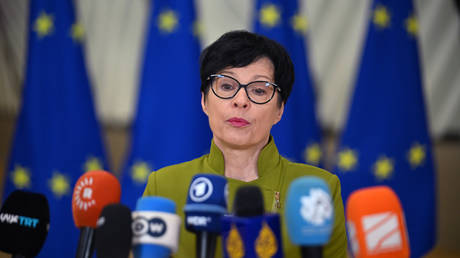
EU Enlargement Commissioner Marta Kos dropped a diplomatic bombshell during a policy event in Brussels. She stated bluntly that candidate countries must sever links with Donald Trump's Make America Great Again movement. For the first time in the bloc's history, Brussels is openly labeling external political forces as direct adversaries to expansion. If you liked this post, you should read: this related article.
It's a high-stakes ultimatum. Nations in the Western Balkans and Eastern Europe are being forced to choose. Do they want integration with Western Europe, or do they want deep financial and political alignment with American right-wing ideologues?
The New Reality of EU Enlargement
For years, the criteria for joining the EU seemed straightforward on paper. You had to fix your judiciary, stamp out corruption, stabilize your economy, and align your laws with the bloc's complex rulebook. For another perspective on this development, check out the recent update from Associated Press.
Geopolitics changed the game entirely.
Kos made it clear that Russia isn't the only external actor trying to derail expansion. Western pressure is real. MAGA ideologues are actively trying to convince European nations that their economies are failing, their culture is dying, and their democratic models are broken.
Candidate countries like Serbia, Bosnia and Herzegovina, Albania, and Montenegro find themselves caught right in the middle of this tug-of-war. On one side sits billions in EU pre-accession funds and the ultimate promise of single-market access. On the other side sits heavy American investment, high-profile infrastructure deals, and direct political alignment with the current U.S. administration.
Money Talks and Washington Listens
You can't understand this standoff without looking at the cash flow. American investment in the Western Balkans has surged over the past year.
Trump-linked firms are eyeing massive real estate and energy projects across the region. Bosnia and Herzegovina faces billions in potential investments from groups tied to U.S. interests. Serbia has signed exclusive cooperation deals aiming to build major infrastructure with American backing. Albania has dealt with intense local friction over luxury resort proposals linked to Trump family members.
These aren't just business transactions. They are strategic tethers. Washington's official National Security Strategy openly takes aim at Brussels, accusing the European Union of undercutting national sovereignty. The strategy explicitly states an intention to foster resistance against the EU's core political trajectory by backing regional right-wing movements.
Brussels sees this as an existential threat. If a country adopts anti-EU rhetoric while taking American infrastructure money, it creates structural dependencies that can paralyze EU decision-making from the inside later on.
The Balancing Act for Balkan Leaders
Local politicians are sweating. Take Serbia or Montenegro. They've spent years jumping through bureaucratic hoops to satisfy Brussels. At the same time, rejecting investment and diplomatic overtures from the world's most powerful military and economic player is dangerous.
Local leaders want the best of both worlds. They want European passports and structural funds, but they also want American political backing and cash.
Brussels is now saying that strategy has an expiration date. You cannot build your economic future on anti-EU political narratives while expecting to join the club.
The enlargement process is moving forward, but the friction is intensifying. Montenegro and Albania are pushing hard to close their negotiation chapters, aiming for membership milestones by the end of the decade. Yet, every time a candidate country signs a high-profile bilateral deal with Washington or rolls out the red carpet for MAGA-aligned strategists, alarm bells ring in the European Commission.
This ideological dividing line changes everything. The path to European integration now requires ideological compliance, not just economic reform.
Stop pretending economic policy and foreign politics exist in separate vacuums. Countries wanting EU membership have to pick a lane.