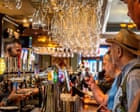
Pub owners across England woke up to news that promised relief. The government announced a planned 20 percent reduction in business rates specifically targeted at pubs, live music venues, and night clubs.
It sounds like a massive win. On paper, cutting a major fixed cost by a fifth gives breathing room to an industry that has been battered by soaring energy bills, wage hikes, and changing consumer habits. Don't miss our previous post on this related article.
Is it actually enough to save the local pub?
If you talk to anyone actually running a venue right now, the mood is cautious. Grateful? Sure. Saved? Far from it. If you want more about the background here, The Motley Fool offers an informative breakdown.
The Real Numbers Behind the Headline Relief
To understand why a 20 percent cut isn't the magic cure, you have to look at how business rates are calculated in the UK.
Business rates are essentially a tax on non-domestic properties. They're calculated based on your property's rateable value, which is an estimate of its open market rental value. That value gets multiplied by a uniform rate set by the government, known as the multiplier.
A 20 percent reduction sounds substantial until you look at the temporary relief measures that were already in place. During recent years, the retail, hospitality, and leisure sectors benefited from temporary discount schemes that at times offered up to 75 percent relief. As those emergency pandemic-era and inflation-era discounts taper off or expire, a permanent 20 percent baseline cut actually leaves many operators paying significantly more cash out of pocket than they were last year.
It's a subtle tax shift. You take away a 75 percent temporary discount, replace it with a 20 percent permanent cut, and call it a tax relief package. Technically, it is a permanent structural reduction in rates. Practically, the immediate monthly bill for many venue managers goes up, not down.
Why High Street Venues Are Hurting So Much
Running a brick-and-mortar venue in England right now is brutal. Business rates are just one slice of a very expensive pie.
- Energy costs remain elevated compared to pre-2022 levels. Keeping the lights on, the beer cold, and the kitchen radiators running costs double what it used to.
- Labor costs have jumped following necessary increases to the National Living Wage. Paying staff fairly is essential, but it squeezes tight margins.
- Beer duty and supply chain inflation mean every keg arriving at the cellar door costs more to purchase, squeezing profit margins on every pint poured.
- Consumer spending has shifted. People drink less alcohol, go out earlier, and cut back on mid-week outings to save money.
When you add these pressures together, saving a few thousand pounds a year on property tax doesn't suddenly make a struggling pub profitable. It just slows down the bleed.
What Music Venues and Clubs Specially Face
Grassroots music venues operate on paper-thin margins compared to standard pubs. They require large spaces to host crowds, which means higher rateable values, yet they often only pull in significant revenue three or four nights a week.
When a small music venue closes, it takes down a whole ecosystem. Young bands lose their first stage. Local sound engineers lose work. Promoters lose an entry point into the industry.
The 20 percent cut applies to these spaces too, which is a welcome acknowledgment of their cultural value. Yet live music advocates have argued for years that grassroots venues need a completely separate valuation category. Treating a 200-capacity rock venue the same way you treat a chain pub or a retail shop misses the unique economic reality of live entertainment.
How Business Owners Should Handle the Change Now
If you run a hospitality business in England, relying on broad government tax adjustments isn't a survival strategy. You need to actively manage your overheads.
First, check your rateable value immediately. Don't assume the Valuation Office Agency got it right. Thousands of properties in England are overvalued simply because historical rental data was applied incorrectly. You can challenge your valuation online through the official government gateway. If you manage to drop your rateable value, that 20 percent cut applies to a smaller number, multiplying your savings.
Second, audit your energy consumption. Negotiate fixed rates where possible or look into commercial energy brokers who specialize in hospitality.
Third, look closely at your trading hours. If Tuesday nights are barely breaking even after accounting for staff and lighting, consider closing or pivoting to private events and community meetups that guarantee revenue.
A tax cut helps, but sharp operational management is what keeps the doors open.