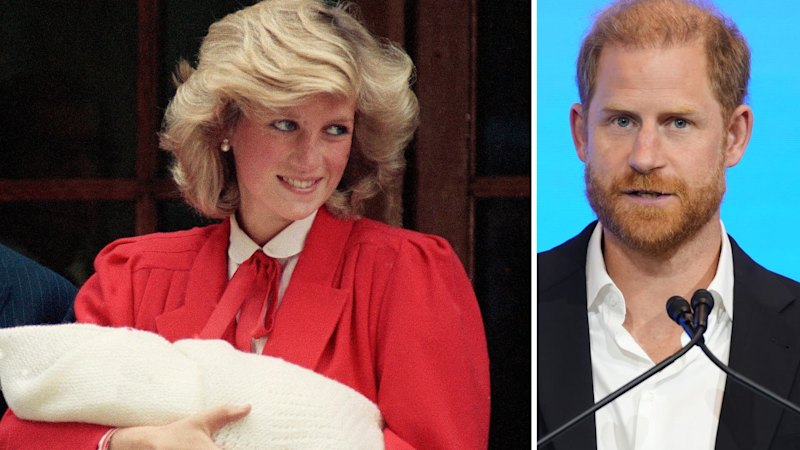
Prince Harry is reportedly exploring a new documentary project centered on his mother, Princess Diana, a development that instantly triggers a complex mix of public fascination and acute media skepticism. Rumors of this proposed audiovisual venture arrive at a precarious juncture for the Duke of Sussex, whose commercial partnership with major streaming giants faces intense scrutiny amid shifting industry priorities. For years, the life, sudden death, and enduring cultural footprint of Diana Spencer have served as an inexhaustible well for biographical books, television specials, and dramatic series. Yet returning directly to the source material through a personal lens raises hard questions about narrative ownership, commercial necessity, and the psychological cost of keeping a decades-old tragedy in active rotation.
To understand why this project surfaces now, one must examine the hard economic realities governing modern content production in Los Angeles and London. High-profile contracts signed during the immediate post-royal departure wave required immediate output, but the initial novelty of royal exposés has undeniably cooled. Audiences have grown sophisticated, and perhaps fatigued, by repeated tell-alls that rehash the same family fractures. A project focusing explicitly on Diana offers a reliable anchor. It commands global attention in a crowded media market where capturing eyeballs requires recognized historical gravity. However, repackaging the most scrutinized woman of the twentieth century also places Harry in direct competition with every archival project, unauthorized biography, and dramatic recreation that came before him. Meanwhile, you can find similar events here: Inside the Earl Spencer Memoir Controversy That Exposed the House of Windsor.
The mechanics of public grief and commercial enterprise have always maintained an uneasy partnership. When Diana died in a Paris tunnel in 1997, the world experienced a collective shock that permanently altered the relationship between the British monarchy and mass media. For her younger son, processing that trauma occurred in full view of international cameras. Decades later, translating that private wound into public entertainment creates a profound paradox. The stated goal of protecting a mother's legacy often collides with the gritty reality of production deals, subscriber metrics, and algorithm-driven visibility. When a prince uses his royal lineage as currency in the global marketplace, every retrospective feels transactional, regardless of the emotional sincerity behind it.
Controlling the narrative has been the central preoccupation of Harry and Meghan's post-working royal existence. From high-profile television interviews to bestselling memoirs, the overarching strategy involves bypassing traditional British editorial filters to speak directly to the public. Producing a dedicated project about Diana represents the ultimate expression of this autonomy. By shaping how her life and struggles are framed for a new generation, Harry reasserts ownership over a family history that was largely interpreted by others during his formative years. Yet total narrative control is an illusion in modern media. Once a documentary enters the public sphere, it surrenders to the same market forces, tabloid critiques, and polarized reactions that the Sussexes spent years trying to escape. To understand the bigger picture, check out the excellent report by Bloomberg.
The documentary landscape surrounding Princess Diana is already crowded with competing interpretations. Documentarians, investigative reporters, and royal biographers have combed through every available photograph, interview transcript, and audio recording. Finding a fresh angle requires moving beyond the well-worn tropes of royal isolation and media harassment to explore deeper historical context. It requires examining the institutional structures of the late twentieth century without reducing every complex political and social dynamic to personal villainy. Whether a production driven by close family members can achieve that detached level of analysis remains an open question. Proximity to the subject offers unique emotional insight, but it frequently compromises journalistic distance.
Public fatigue presents another formidable hurdle for any project dipping back into the royal archive. Media consumers are increasingly sensitive to recycled trauma. When public figures repeatedly revisit past grievances or familial tragedies, the initial wave of sympathy risks giving way to cynicism. Observers wonder when the retrospective reflection will transition into forward momentum. The danger for Harry lies in becoming permanently tethered to the past, defined entirely by a tragedy that occurred when he was a teenager rather than by his current endeavors, philanthropic goals, or future ambitions.
The financial stakes involved in modern streaming deals cannot be overstated. Major platforms invest heavily in celebrity-driven content expecting high retention rates and global reach. When initial projects underperform or fail to spawn widespread cultural conversations, pressure mounts to return to proven intellectual property. Diana remains the most potent piece of intellectual property associated with the House of Windsor. Utilizing her memory to maintain commercial viability is an effective short-term strategy, but it carries long-term reputational risks. It reinforces the narrative that the most compelling asset the Sussexes possess is their connection to the very institution they stepped away from.
Critics often point out the contradiction inherent in criticizing media intrusion while simultaneously participating in high-production-value biographical projects. This contradiction is not lost on industry analysts who track the delicate balancing act required to maintain privacy while selling personal history. Every interview, documentary, and written page reopens a public debate that the royal family in London prefers to ignore. While silence from Buckingham Palace is a calculated defensive maneuver, it frequently amplifies the volume of whatever project Harry chooses to release next, creating an endless cycle of accusation and counter-accusation across international headlines.
The technical execution of archival documentaries demands rigorous discipline. Sifting through hundreds of hours of historical footage requires a commitment to factual accuracy that avoids the temptation of sensational editing. If Harry participates in this project as an executive producer, interviewee, or guiding voice, his involvement will be scrutinized for bias. Historians and media critics will analyze whether the documentary offers genuine revelation or serves primarily as a hagiography designed to cement a specific personal viewpoint. In the realm of high-stakes documentary filmmaking, the line between historical investigation and public relations is exceptionally thin.
The cultural legacy of Princess Diana is too large for any single family member to fully contain or dictate. She belongs to a global public that interpreted her fashion, her activism, and her vulnerability through their own lived experiences. When a son attempts to reclaim that legacy on screen, he is competing with millions of personal memories and established opinions. No amount of privileged access or unseen family footage can override the public's established emotional investment in the Diana mythos. That mythos has taken on a life of its own, operating independently of both the British establishment and the wishes of her descendants.
As discussions continue behind closed doors in California production offices, the broader implications of this reported project extend far beyond streaming metrics. It touches on the fundamental question of how historical trauma is commodified in the digital age. Every time a royal figure returns to the events of 1997, they test the limits of public patience and reopen old wounds that refuse to scar over cleanly. The appetite for royal drama remains insatiable, yet the toll on those who feed the beast grows heavier with every iteration.
The project remains in development, subject to the shifting whims of executive suites and talent contracts, but its mere existence reveals the gravitational pull of the past. Prince Harry continues to orbit the legacy of his mother, finding that no amount of geographic distance or institutional independence can break the magnetic field of her memory.