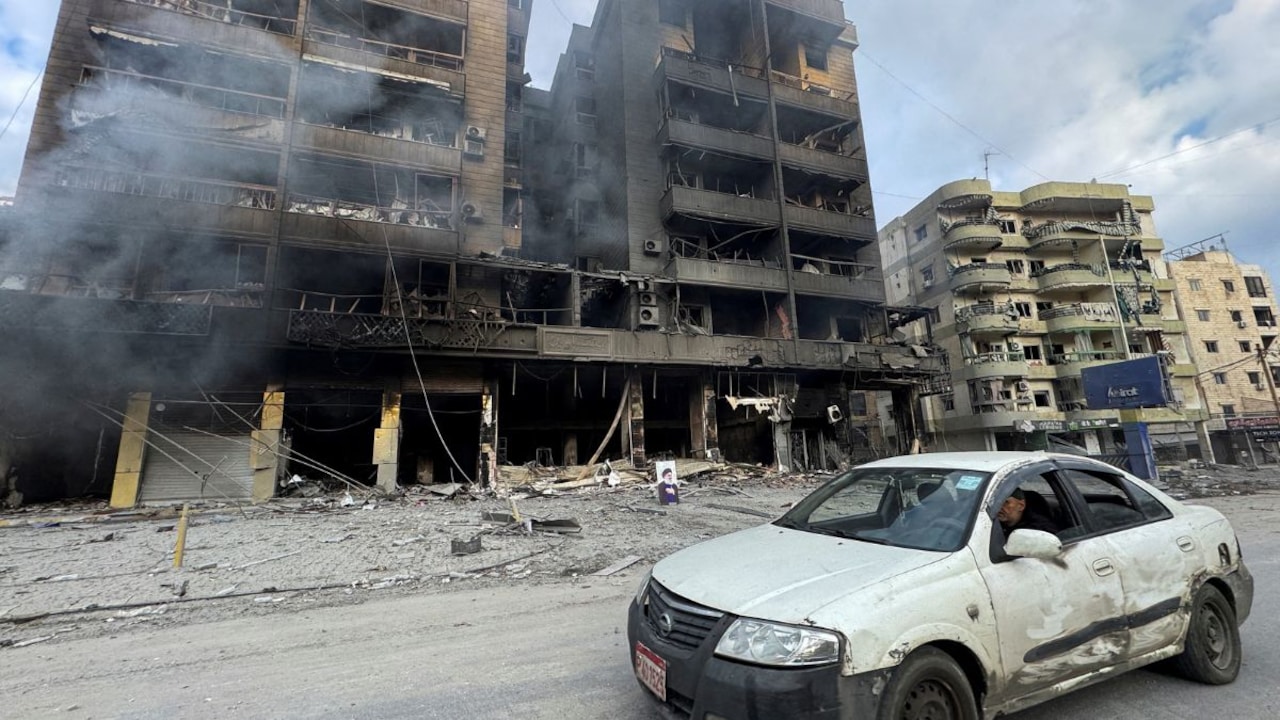
The sound of a modern war is rarely just the explosion. It is the silence that follows in the places the bombs never hit.
Thousands of miles away from the front lines, a mother named Amina stands in a small market in Cairo. She is not dodging shrapnel. She is not listening for air raid sirens. Yet, her hands shake all the same as she counts out Egyptian pounds that seem to shrink in value with every passing hour. The price of a single bag of flour has doubled. The lentils are a luxury now. Her children will sleep with half-empty stomachs tonight, victims of a conflict they only see on flickering television screens.
When conflict erupts in Iran and ripples across the region, the immediate coverage focuses on drone strikes, troop movements, and geopolitical alliances. But the United Nations food agencies are watching a different, far more devastating metric. Hunger.
War is an economic black hole. It swallows supply chains whole. It closes shipping lanes, spikes fuel costs, and turns the delicate global food web into a tangled, broken mess. For the millions of families already living on the edge of poverty across the Middle East and North Africa, a flare-up in regional violence is not just a headline. It is a direct threat to their survival.
The Invisible Pipeline
To understand how a missile defense system in one country translates to an empty bowl in another, you have to look at the arteries of global trade. The Middle East relies heavily on food imports. Wheat, grain, cooking oil—the basic building blocks of daily life—travel thousands of miles through narrow maritime choke points to reach consumer plates.
Consider the Strait of Hormuz or the Bab al-Mandab strait. These are the geographic bottlenecks of the world. When conflict intensifies involving a major regional power like Iran, insurance rates for cargo ships skyrocket. Some shipping companies refuse to sail the routes entirely. Others take the long way around Africa, adding weeks to transit times and burning millions of dollars in extra fuel.
That extra cost does not vanish. It is passed down. It travels from the shipping conglomerate to the regional distributor, from the distributor to the local wholesaler, and finally to the shopkeeper in a neighborhood market. By the time it reaches Amina, the price of feeding her family has crossed an impossible threshold.
This is the hidden mechanics of a regional food crisis. It is a slow-motion disaster that builds momentum with every closed port and every spiked oil barrel.
The Anatomy of Vulnerability
Why is the system so fragile? The truth is uncomfortable. Many nations in the region were already teetering on the brink of economic collapse long before the first shots were fired. Years of currency devaluation, political instability, and climate change-induced droughts had already eroded the safety nets.
When a shock like a major regional war hits, there is no buffer left.
- Subsidies crumble: Governments that traditionally subsidized bread to keep the peace can no longer afford the ballooning costs of importing grain.
- Aid budgets shrink: International humanitarian agencies find their funds stretched to the breaking point as they try to respond to immediate war zones, leaving less for the systemic hunger worsening next door.
- Local currencies plummet: As investor confidence flees the region, local money loses purchasing power rapidly, making foreign-bought food exponentially more expensive.
It is a compounding trap. The UN food agencies warn that we are not looking at a temporary shortage, but a structural shift in who can afford to eat. The line between those who are getting by and those who are genuinely starving is thinning to a thread.
The Human Cost Beyond the Headlines
Statistics have a numbing effect. Hearing that millions face acute food insecurity can feel abstract, like a math problem too large to solve.
But hunger is deeply personal. It changes the fabric of a community. When parents cannot provide food, older children are pulled out of school to find odd jobs. Rates of early marriage for young girls rise as families desperate to reduce the number of mouths to feed make agonizing choices. Health collapses. Malnutrition in early childhood leaves permanent scars on physical and cognitive development, stealing the future of a generation before they even have a chance to build it.
The aid workers on the ground see this transformation every day. They describe distribution centers where the queues grow longer each morning, filled not with refugees from the immediate combat zone, but with ordinary citizens whose livelihoods have been quietly erased by the macroeconomics of war. They are the collateral damage of a conflict they did not start and cannot stop.
The international community often treats food security as a secondary issue, a piece of cleanup to be handled once the political borders are settled and the ceasefires are signed. This is a catastrophic misunderstanding of how stability works. Hunger breeds desperation. Desperation breeds further unrest.
The empty plates of the region are not just a humanitarian tragedy; they are the fuel for the next crisis. Until the global community realizes that securing the food supply is just as critical as negotiating a peace treaty, the cycle will continue, dictated by the brutal arithmetic of a broken supply chain.
Amina walks home from the market, her bag lighter than it should be. The sun is setting over a city that remains at peace, yet lives under the heavy, suffocating shadow of a war just over the horizon.
.jpg)