The Gamble at the Clinic Door
The clock on the dashboard read 3:14 PM when Sarah pulled into the parking lot, her seven-year-old son strapped in the backseat, clutching an arm that had bent the wrong way on the monkey bars thirty minutes earlier.
She had checked the website before leaving her house. The urgent care center was supposed to be open until 8:00 PM. She felt the sudden, crushing relief every parent knows when they realize they might avoid an eight-hour ordeal in a main hospital waiting room.
Then she hit the glass doors.
A handwritten paper sign taped inside the glass delivered the verdict: Closed early due to patient volume. Please proceed to the nearest emergency department.
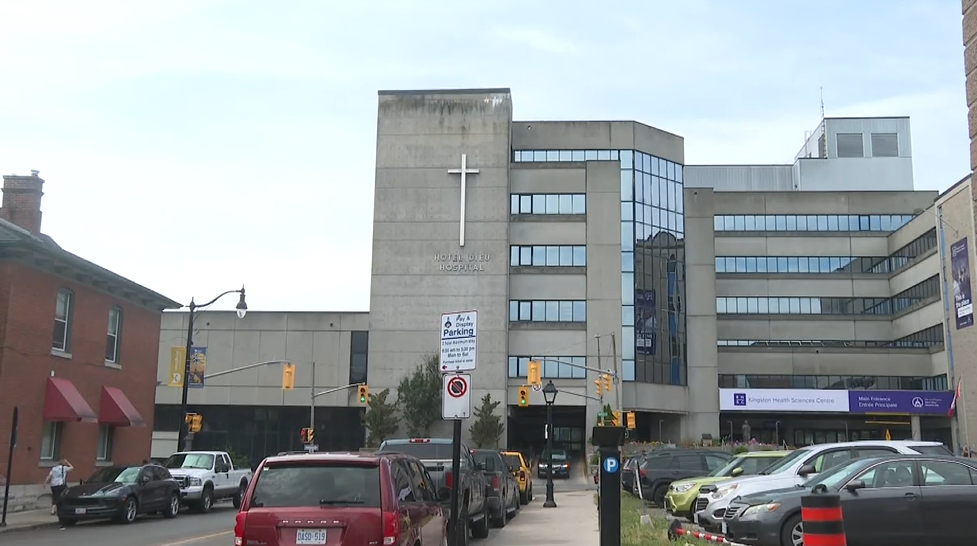
That moment—the sudden, sickening drop in the pit of your stomach—is not a medical problem. It is a failure of trust. For years, thousands of patients visiting the Kingston Health Sciences Centre urgent care clinic encountered that exact scene. On paper, the facility offered broad, generous hours. In practice, the doors locked whenever the queue grew longer than the small team of doctors and nurses could safely handle before midnight.
You left your home with a sick child or a gashing cut, drove through traffic, paid for parking, and walked up to a locked door.
Now, hospital administrators have made a decision that sounds counterintuitive on its face: they are cutting the clinic's official hours. Starting now, the clinic operates on a shorter, trimmed schedule.
To a casual observer, losing operating hours looks like a step backward for public healthcare. But to understand why this shift matters, you have to look past the schedule grid and look at how humans actually navigate medical crises.
The Illusion of Availability
When a hospital advertises that its doors are open until eight in the evening, it creates a silent contract with the community.
Imagine a hypothetical patient named Marcus. Marcus cuts his hand on a rusted nail while working in his garage at 2:00 PM. He cleans the wound, wraps it tightly, and decides he can wait an hour to finish his task before heading to urgent care. He knows the clinic closes at 8:00 PM, so he figures arriving at 4:00 PM gives him plenty of buffer time.
What Marcus does not know is that thirty other people had the exact same thought two hours earlier. By the time he walks up to the desk at 4:05 PM, the staff has already reached capacity for the day. If they take one more patient, the nurses will be charting until 2:00 AM, and the single doctor on duty will miss critical diagnostic details out of sheer exhaustion.
So the security guard turns Marcus away.
Marcus is now worse off than if the clinic had simply announced it was closed at 3:00 PM. Had he known the true deadline, he would have skipped finishing his garage work, driven straight to the center, or chosen a different care option entirely. Instead, he lost two crucial hours, burned gas, paid a parking fee, and now stands in a wind-chilled parking lot trying to decide whether to brave the main trauma center or risk an infected wound overnight.
Unpredictability in healthcare is worse than limited availability. When hours are uncertain, people delay seeking treatment. They gamble with their health. They arrive at emergency departments angry, tired, and distrustful of the system meant to save them.
What Happens Behind the Glass
Inside the clinic, the staff carried a different kind of weight.
Picture a charge nurse standing at the registration desk at 2:30 PM. The waiting room is full. Every examination room is occupied. The board shows three potential fractures, four severe lacerations, two high fevers in toddlers, and an elderly patient experiencing unexplained abdominal pain.
Outside, cars keep turning into the driveway.
The nurse knows the posted closing time is hours away. Yet, mathematically, there are not enough minutes left in the shift to treat the human beings already sitting in those vinyl chairs. Every new person who walks through the door adds a layer of quiet panic to the room.
When a clinic operates under the threat of sudden, unannounced shutoffs, staff morale disintegrates. Nurses spend half their shifts apologizing for a system they did not design. Doctors race through consults, haunted by the knowledge that dozens of people are waiting outside in the hallway. Burnout becomes an infectious agent. Staff members leave, shifting a heavier burden onto those who stay, which leads to even earlier door closures.
It was a downward spiral driven by an administrative promise the facility could no longer keep.
The Strategy of the Fixed Horizon
By shortening the official operating window and locking the schedule to a strict, predictable window, hospital leaders are attempting to fix the core broken promise.
The strategy hinges on a simple truth: certainty changes human behavior for the better.
If the public knows with absolute certainty that the clinic accepts patients from 8:00 AM until 3:00 PM—and that those doors will never close early during that window—their habits shift. Patients adjust their schedules. They do not wait until late afternoon to evaluate a worsening cough or a swollen ankle. They arrive early.
More importantly, it allows the hospital to balance its resources.
- Staffing levels align directly with patient influx, ending the daily panic of unexpected volume spikes late in the shift.
- The main emergency room can anticipate exactly when the urgent care facility will stop accepting walk-ins, allowing them to adjust triage staffing accordingly.
- Patients regain agency. They can make informed decisions about where to go based on real, reliable data rather than a coin flip.
This is not a story about expanding services. It is a story about honesty in public infrastructure.
The Broader Fracture in Local Medicine
This adjustment in operating hours does not exist in a vacuum. It is a symptom of a larger, quieter crisis playing out across modern medical systems.
For decades, community health systems relied on a safety margin that no longer exists. They relied on a surplus of family physicians to catch routine issues before they became urgent. They relied on an abundant pool of float nurses to fill unexpected gaps in the schedule. They relied on staff willing to work unpaid overtime out of a sense of duty.
That safety margin has evaporated.
When family doctor shortages force thousands of residents to use urgent care for routine prescription refills or minor infections, the urgent care clinic becomes an emergency room in all but name. When the emergency room overflows, patients spill back out into the streets.
Fixing clinic schedules is a bandage on a deeper wound, but it is a bandage that stops a specific, unnecessary bleed: the psychological toll of chaos.
The Weight of a Promise
Healthcare is fundamentally built on expectations.
When you feel a sudden pain or watch a loved one suffer, your sense of control vanishes. You turn to the medical system not just for clinical interventions, but for order. You need to know that someone is awake, that a light is on, and that the rules written on the door mean something.
A clinic that promises twelve hours of care and delivers eight causes double the distress of a clinic that promises six hours and delivers every single one of them.
The decision by Kingston Health Sciences Centre to restructure its urgent care schedule will undoubtedly frustrate those who need care after three in the afternoon. That frustration is real, valid, and dangerous if alternative care pathways are not built to absorb those evening patients.
Yet there is a quiet dignity in clarity.
The next time a parent drives toward the clinic with a injured child in the backseat, they will check the clock. If it reads 2:15 PM, they will know they are safe to proceed. They will not have to prepare themselves for a taped paper sign on a locked glass door. They will walk inside, sit down, and be seen.
In a system stretched to its absolute limit, knowing where you stand is the very first step toward healing.