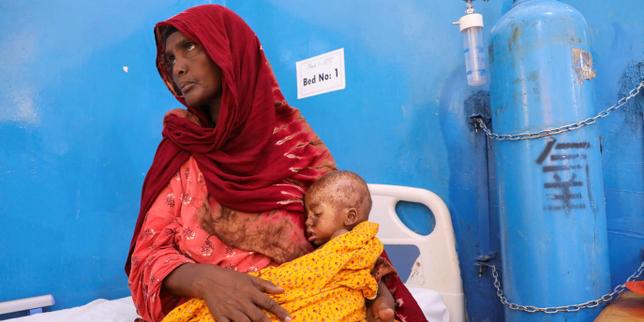
Every single time a crisis hits southwestern Somalia, the international aid complex rolls out the exact same tired playbook. Flash appeals go out. Cameras capture emaciated children in displacement camps. Donors empty their pockets. Relief agencies ship in tons of imported grain.
And the crisis gets worse. If you found value in this article, you should read: this related article.
We are staring at a headline claiming that half of the displaced children in the southwest suffer from acute malnutrition, and the knee-jerk reaction from every armchair humanitarian is identical: send more food. Pour more emergency rations into the camps. Build more tents.
That lazy consensus is killing people. For another look on this event, refer to the latest update from The Guardian.
For decades, I have watched well-meaning organizations treat chronic structural collapse like a short-term weather emergency. Every time we dump free, foreign-grown food into local markets, we deliver a fatal blow to the very farmers who actually grow food in Somalia. We undercut local agriculture, bankrupt pastoralists, and trap families in a permanent state of dependency inside squalid camps.
Stop trying to fix Somalia with sacks of imported wheat. You are feeding the symptom while manufacturing the disease.
The Myth of the Quick Fix
Let us get brutally honest about what a displacement camp in Baidoa or Kismayo actually is. It is not a sanctuary. It is a holding pen generated by systemic policy failures, climate shocks, and active conflict, sustained by an aid industry that measures its own success by how many tons of cargo it moves rather than how many people it puts out of business.
When you ship millions of dollars of international food aid directly into regional distribution hubs, local market prices crash. Sorghum and maize farmers in the Jubba and Shabelle valleys cannot compete with free handouts paid for by foreign taxpayers. So they abandon their land. They pack up their families, walk off their farms, and check into the very camps where their children end up chalking up statistics in malnutrition reports.
The aid pipeline creates the exact population it claims to rescue.
"Emergency aid without market integration is not humanitarianism. It is a subsidy for permanent displacement."
Economists call this the crowding-out effect. I call it professional negligence. By treating acute malnutrition as a logistics problem rather than an economic and political failure, we guarantee repeat performances year after year.
Dismantling the Camp Industrial Complex
If you ask the average donor why these children are starving, they will point to drought, climate change, and conflict. Those factors are real, but they are symptoms, not the primary engine of this disaster.
The primary engine is structural isolation. Somalia possesses arable land along its major river systems that could easily feed the Horn of Africa. Yet, generations of centralized neglect, fragmented governance, and weaponized resource control have crippled local supply chains.
When international agencies parachute in with quick-fix caloric packages, they bypass the local economy entirely. They procure food globally, ship it across oceans, truck it through dangerous corridors, and hand it out for free.
Imagine a scenario where every dollar spent on purchasing and shipping foreign grain was instead funneled directly into guaranteed purchase contracts for local Somali farmers. Imagine if we built cold-chain storage, rehabilitated defunct irrigation canals, and paid pastoralists fair market value to restock their herds instead of handing out bags of flour stamped with foreign flags.
You would see an immediate shock to the system. Prices would stabilize. Local production would surge. Families would stay on their land because farming would suddenly become viable again.
Instead, we prefer the optics of the humanitarian handout. It looks great on a fundraising brochure. It plays well on social media. But it is an economic narcotic.
The Brutal Realities of Cash-Based Interventions
To be fair, the aid sector has tried to adapt. Over the last few years, we have seen a pivot toward cash transfers—handing out mobile money or cash cards so displaced people can buy food in local markets.
It sounds smart on paper. It keeps markets functioning. But in a camp context where supply chains are broken and security is volatile, cash transfers often trigger hyperinflation. When thousands of camp residents receive cash on the exact same day in a town with limited food stock, local merchants simply hike prices. The purchasing power evaporates overnight, and the child in the camp remains malnourished.
Cash is only as good as the supply chain backing it up. If you inject cash into a vacuum, you are just feeding inflation.
Solving acute malnutrition requires fixing the entire ecosystem surrounding the vulnerable child, not just throwing liquidity at the end-user. That means securing trade routes, enforcing property rights for smallholders, and dismantling the informal checkpoints that bleed commercial transport dry before it ever reaches a market.
The Uncomfortable Truth About Resilience
Nobody wants to talk about the political economy of famine. Famine in modern Somalia is rarely just about a lack of rain. It is about who controls the water, who controls the land, and who profits from the perpetual state of emergency.
Aid agencies have multi-million dollar budgets tied to crisis response. If the crisis ends, the budget shrinks. There is an institutional incentive to manage the disaster rather than resolve it. As long as children remain malnourished in southwestern camps, the funding flows.
Break that cycle, and you threaten the status quo.
We need to pivot from emergency feeding to radical agricultural capitalization. We need to stop viewing rural Somalis as helpless victims waiting for airdrops and start treating them as undervalued entrepreneurs who need market access, credit facilities, and infrastructure.
The children in those camps are not suffering because the world is failing to send enough sacks of grain. They are suffering because we keep funding the system that keeps them there.
Cut off the endless cycle of dependency. Fund the farms, secure the supply chains, and let local markets do what foreign aid never could.


