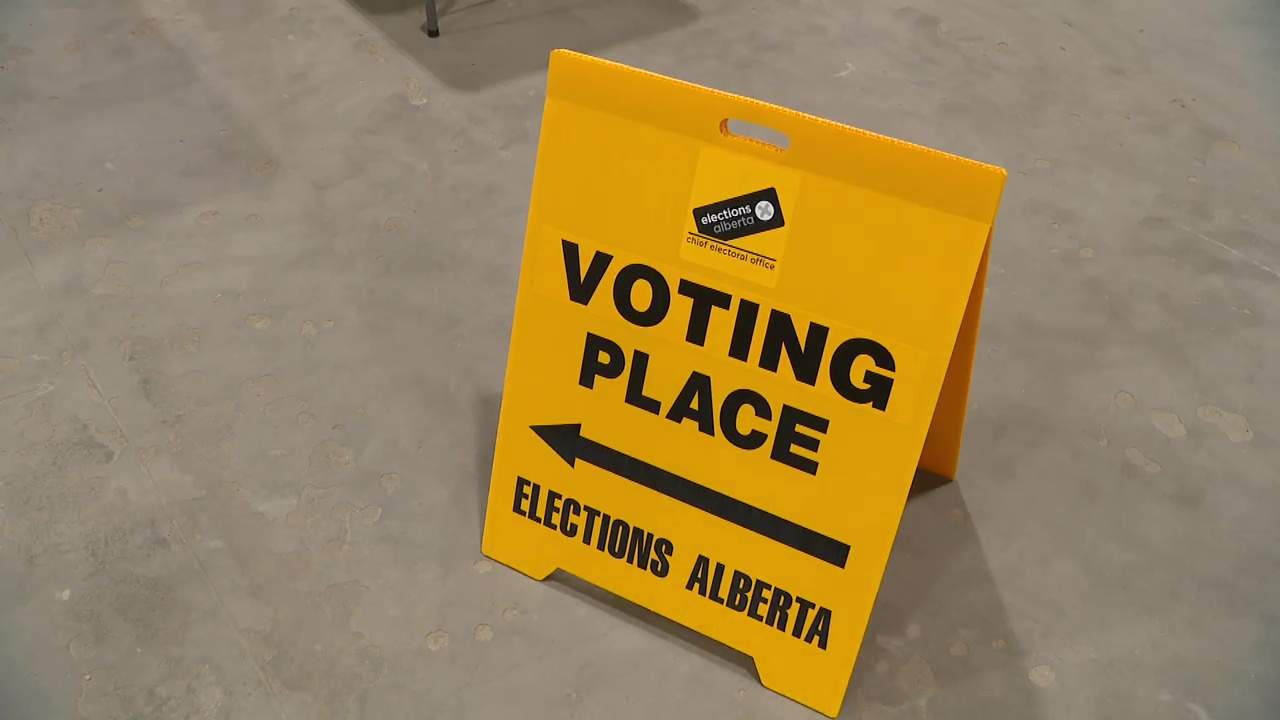
Fixed election date legislation exists to solve a specific agency problem in Westminster parliamentary democracies: preventing a sitting premier from timing a general election solely to maximize partisan advantage. In Alberta, that theoretical safeguard has collided with operational reality. Under the Election Act, Alberta's next provincial general election is scheduled for October 18, 2027—the third Monday in October four years after the 2023 vote. Yet Elections Alberta, the independent non-partisan agency tasked with administering the vote, has formally recommended shifting that date to avoid a severe logistical bottleneck: overlapping with Alberta's province-wide municipal elections, which are also scheduled for October 18, 2027. Despite the administrative friction flagged by the Chief Electoral Officer, the provincial government—voiced through the Minister responsible for democratic renewal and justice—has signaled its intent to maintain the October 2027 fixed date.
This standoff is not a minor scheduling dispute. It represents a fundamental clash between statutory predictability (the political and constitutional value of keeping a pre-committed election date) and administrative capacity (the physical, human, and financial constraints of running two massive electoral operations simultaneously across the same geographic footprint). Understanding why the Alberta government is resisting Elections Alberta's recommendation requires breaking down the institutional incentives, the operational failure points of concurrent elections, and the legal mechanics governing fixed-date laws in Canada.
The Structural Collision of October 2027
Alberta's electoral calendar was engineered around a four-year cycle that inadvertently synchronized two distinct tiers of government. Following the May 2023 provincial election, the governing United Conservative Party (UCP) amended the Election Act to move the fixed provincial election date from May to the third Monday in October, starting in 2027. The stated rationale was practical: avoiding spring flooding, wildfire evacuations, and agricultural seeding seasons that frequently disrupt rural voting and campaign operations in late May.
However, moving the provincial vote to October placed it on a direct collision course with the Local Authorities Election Act (LAEA). Under the LAEA, Alberta municipalities and school boards hold general elections every four years on the third Monday in October. Because the previous municipal cycle fell in October 2025—or under adjusted quadrennial schedules depending on statutory alignment—the calendar alignment creates an exact date overlap on October 18, 2027.
When two distinct electoral authorities execute province-wide logistics on the exact same day, they do not operate in separate vacuums. They compete for the exact same finite pool of resources within a closed 30-to-60-day operational window.
The Four Operational Bottlenecks of Concurrent Elections
Elections Alberta's recommendation to alter the 2027 date is rooted in four measurable resource constraints that degrade electoral integrity when provincial and municipal cycles overlap:
- The Poll Worker Labor Pool: Running a provincial election requires recruiting, vetting, and training tens of thousands of temporary election officers across 87 electoral divisions. Municipal returning officers draw from the exact same demographic—primarily retirees, students, and civic-minded residents available for 14-hour shifts. Simultaneous elections halve the available labor supply per jurisdiction, driving up wage costs and increasing the risk of understaffed polling stations, which directly causes longer wait times and higher ballot spoilage rates.
- Physical Polling Infrastructure: Schools, community halls, church basements, and municipal recreation centers serve as the backbone of accessible voting locations. Under both provincial and municipal accessibility standards, venues must meet strict criteria for parking, transit access, and barrier-free entry. When two separate returning officers attempt to book the same gymnasium on the third Monday in October, one jurisdiction is forced into secondary, less accessible locations, creating voter confusion and suppressing turnout.
- Voter Cognitive Load and Ballot Confusion: Provincial elections and municipal elections operate under entirely different rules regarding campaign finance, third-party advertising, voter identification, and ballot structure. In major urban centers like Calgary and Edmonton, a voter navigating concurrent elections faces separate candidate slates for Member of the Legislative Assembly (MLA), Mayor, City Councillor, and Public or Separate School Board Trustee, alongside potential plebiscite questions. Mixing provincial partisan branding with non-partisan municipal races increases the rate of rejected ballots and depresses down-ballot completion.
- Supply Chain and Printing Capacity: Specialized ballot paper, privacy screens, tabulators (where permitted under evolving provincial rules), and secure transport containers must be procured and distributed months in advance. Simultaneous procurement strains regional printing and logistics vendors, eliminating the buffer capacity needed if a recount or emergency re-vote is required.
The Political Calculus Behind Maintaining the 2027 Date
If the operational risks identified by Elections Alberta are clear, why does the provincial minister back keeping the October 2027 fixed election date? The decision rests on three political and strategic calculations that outweigh purely administrative efficiency in the eyes of the governing caucus.
1. Credibility Costs of Moving the Goalposts
In parliamentary politics, altering an election date after it has been legislated carries a high reputational penalty. When the Alberta government shifted the fixed date from May 2027 to October 2027, opposition parties and political commentators immediately framed the five-month extension as an attempt to buy the governing party extra time in office. Moving the date a second time—whether pushing it into spring 2028 or pulling it forward into 2026—exposes the government to renewed accusations of electoral manipulation. For a sitting minister, defending an existing statutory date is politically cheaper than justifying a legislative amendment that opponents will characterize as self-serving.
2. Turnout Dynamics and Partisan Asymmetry
Election timing alters the composition of the electorate. Municipal elections historically suffer from significantly lower voter turnout than provincial general elections, often hovering between 30% and 40% in major Alberta cities compared to 55% to 65% in provincial contests. Conversely, provincial campaigns generate massive media saturation, door-knocking infrastructure, and partisan get-out-the-vote (GOTV) machinery.
Holding a provincial election alongside municipal votes creates a turnout spillover effect. High-propensity municipal voters are drawn into provincial polling booths, while provincial partisan mobilization drives higher overall foot traffic that alters municipal outcomes. Depending on a party's internal polling and voter-file modeling, synchronizing the dates can be viewed as a net advantage for mobilizing specific geographic bases—particularly suburban and rural voters where municipal engagement often tracks closely with provincial conservative networks.
3. Legislative Bandwidth and Policy Sequencing
Every legislative session has a finite number of sitting days. Reopening the Election Act to adjust the 2027 date is never a simple one-line bill; it opens the floor to opposition amendments regarding campaign finance limits, third-party advertiser rules, the use of electronic vote tabulators, and mail-in ballot verification. By refusing to reopen the calendar debate early, the minister preserves legislative floor time for priority economic, energy, and healthcare bills while forcing Elections Alberta to plan around the existing statutory baseline.
The Legal Reality of Fixed Election Dates in Canada
A critical flaw in most public commentary surrounding Alberta's 2027 election date is the assumption that a "fixed" election date is legally binding in an absolute sense. Under Canada's constitutional framework, it is not.
Section 4 of the Canadian Charter of Rights and Freedoms sets the maximum lifespan of a legislative assembly at five years from the date fixed for the return of the writs. Within that five-year ceiling, Section 50 of the Constitution Act, 1867 and the foundational conventions of responsible government vest the prerogative to dissolve the legislature in the Lieutenant Governor, acting on the advice of the Premier.
Every fixed-date election law in Canada—including Section 38.1 of Alberta's Election Act—contains an explicit constitutional savings clause stating that nothing in the section affects the powers of the Lieutenant Governor, including the power to dissolve the Legislature at the Lieutenant Governor's discretion.
This creates a profound asymmetry between statutory constraint and executive discretion:
- Elections Alberta must plan, budget, and sign leases as if October 18, 2027, is an immovable deadline.
- The Premier retains the unilateral constitutional authority to visit Government House and request an early dissolution in 2026 or spring 2027 if polling, economic conditions, or federal-provincial friction create a favorable window.
- The Legislature retains the sovereign authority to amend the Local Authorities Election Act rather than the Election Act, shifting municipal elections to a different month or year while leaving the provincial date untouched.
Alternative Resolution Mechanisms
Because the conflict is strictly statutory rather than constitutional, the Alberta government has four distinct mechanisms to resolve the October 2027 overlap without sacrificing its stated commitment to the provincial fixed date.
| Mechanism | Statutory Target | Operational Impact | Political Risk |
|---|---|---|---|
| Status Quo Co-execution | None | Severe strain on poll workers, venues, and ballot clarity; requires unprecedented joint protocols between Elections Alberta and municipal clerks. | High risk of Election Day administrative failures (long lines, supply shortages) blamed on the province. |
| Shift Municipal Date | Local Authorities Election Act | Eliminates overlap entirely; preserves provincial October 2027 target and avoids spring weather disruptions. | Moderate pushback from Alberta Municipalities and school boards over shortened or lengthened council terms. |
| Shift Provincial Date to 2028 | Election Act | Gives Elections Alberta a clean operational window; aligns with the 5-year constitutional maximum (May 2028). | High political backlash; framed by opposition as extending a mandate past four years without a fresh vote. |
| Early Snap Call | Executive Prerogative | Avoids October 2027 entirely via a spring 2027 or autumn 2026 campaign; renders the fixed-date debate moot. | Eliminates fixed-date credibility; incurs significant sunk-cost write-offs for pre-booked 2027 election logistics. |
The second option—amending the Local Authorities Election Act to decouple municipal elections from the third Monday in October—represents the path of least resistance for a government determined to defend its 2027 provincial timeline. The provincial legislature holds plenary authority over municipalities under Section 92(8) of the Constitution Act, 1867. Moving municipal elections to September or November 2027, or shifting the municipal cycle by a full year, satisfies Elections Alberta's operational warning without forcing the minister to retreat on the provincial date.
Limitations of Legislative Scheduling
Even if the Alberta government adopts a clean statutory separation between provincial and municipal dates, fixed-date frameworks remain vulnerable to external shocks that no legislative calendar can contain:
- Minority or Fractured Caucus Dynamics: While the current government holds a majority, internal party splits or a loss of confidence in the Legislative Assembly automatically override any fixed date, triggering an immediate snap election under constitutional convention.
- Federal Election Overlap: Canada's federal fixed election law sets the next federal vote for October 2029, but minority dynamics in Ottawa frequently trigger off-cycle federal elections. If a federal snap election is called for autumn 2027, Alberta faces the exact same poll-worker and venue collision with Elections Canada—an entity over which the provincial legislature has zero statutory control.
- Force Majeure Events: Moving the election from May to October reduces exposure to spring wildfires and flooding, but introduces vulnerability to early-season prairie blizzards in northern ridings like Athabasca-Barrhead-Westlock or Peace River, which can sever rural road networks on Election Day.
The Strategic Play for Electoral Governance
Backing the October 2027 fixed election date while ignoring Elections Alberta's operational warning is an unsustainable posture if both levels of government remain locked onto October 18, 2027. Attempting to run two separate, full-scale democratic exercises on the same day across the same polling infrastructure invites preventable administrative failure—and in modern elections, long queues or ballot confusion quickly metastasize into broader public distrust of electoral outcomes.
The optimal strategic move for the Alberta government is to hold firm on the October 18, 2027 provincial fixed date to preserve political credibility, while simultaneously introducing targeted amendments to the Local Authorities Election Act before the end of the 2026 legislative session to move municipal elections to a separate month. Decoupling the two calendars protects the province from accusations of manipulating its own mandate, eliminates the resource bottleneck flagged by Elections Alberta, and ensures that provincial partisan warfare does not overwhelm local municipal governance on the ballot.



