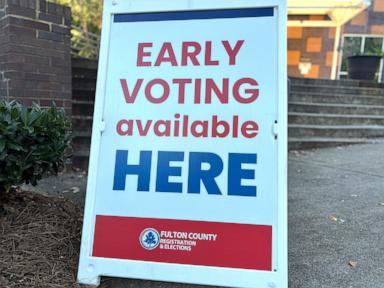
The October 27, 2026 Israeli legislative election did not produce a governing mandate; it exposed a structural paralysis built into closed-list proportional representation. Surface-level reporting treats the ballot-casting appearances of Prime Minister Benjamin Netanyahu alongside his wife Sara, and primary challenger Gadi Eisenkot alongside his spouse, as human-interest theater. In reality, these synchronized public appearances represent calculated signaling mechanisms within an electoral architecture where individual personalities compensate for fragmented party lists, and where a 3.25% threshold dictates the survival of entire ideological blocs.
The Mechanics of Symbolic Ballot Casting
In parliamentary systems operating under closed-list proportional representation, voters select a party slate rather than an individual candidate. Yet modern Israeli campaigning functions through hyper-personalization. When party leaders—including Netanyahu of Likud, Gadi Eisenkot of the newly formed Yashar party, and Naftali Bennett of Together—stage televised ballot-casting rituals with their spouses, they execute a specific political function: anchoring abstract party lists to recognizable executive archetypes.
- Institutional Continuity Signaling: Incumbents utilize domestic normalcy at the polling station to project stability following systemic shocks. Entering the October 2026 vote, the 25th Knesset had completed a full four-year term—the first legislature to do so without early dissolution since 1988—yet did so amidst mass protests over judicial overhauls, the fallout of the October 7, 2023 attacks, the prolonged Gaza conflict, and recurring coalition crises over Haredi military conscription.
- Challenger Legitimacy Framing: Former military chiefs entering civilian politics, such as Eisenkot, face the challenge of transitioning from institutional command to partisan brokerage. Appearing at the ballot box in civilian attire alongside family converts military authority into relatable civic participation, softening the perceived rigidity of a security-focused platform.
- Turnout Mobilization Triggers: Because Israeli elections take place in a single nationwide constituency of 120 seats, every marginal ballot affects the national quota. High-profile morning appearances by party principals generate immediate media saturation designed to overcome voter fatigue and drive base turnout above the national baseline.
The Structural Mathematics of the 26th Knesset
The visual symmetry of rival leaders casting single ballots masks the asymmetric mathematics governing seat allocation. Under Israel's electoral law, any party list failing to clear 3.25% of valid votes receives zero representation, and its votes are discarded rather than redistributed. Once lists clear this barrier, the remaining seats are allocated using the D'Hondt method—known locally as the Bader-Ofer system—which slightly favors larger lists and penalizes fragmented blocs.
In the 2026 race, 38 lists competed for 120 seats, with total voter turnout reaching 77.98%, a 7.35 percentage point increase over the prior cycle. Despite high participation, the distribution of mandates produced a mathematical deadlock where neither traditional bloc secured the 61 seats required for a parliamentary majority:
- The Incumbent Coalition Erosion: Netanyahu's Likud captured 20.51% of the vote, translating to 27 seats—a net loss of 9 mandates. Alongside traditional partners Otzma Yehudit (7 seats), United Torah Judaism (7 seats), Shas (6 seats, down 5), and RZP-Zehut (6 seats, down 1), the outgoing governing bloc contracted by 11 seats overall, stalling at 53 mandates.
- The Opposition Fragmentation: Opposition votes dispersed across newly established vehicles and veteran factions. Eisenkot's Yashar secured 16.05% (21 seats), Bennett's Together won 9.35% (12 seats), Yair Golan's Democrats rose to 6.44% (8 seats), and Avigdor Lieberman's Yisrael Beiteinu took 5.93% (7 seats). Combined, these non-Arab opposition parties totaled 48 seats—leaving them 13 seats short of a governing majority.
- The Arab Bloc Expansion: High mobilization among Palestinian citizens of Israel drove Arab-led lists to 19 seats, a net gain of 9 mandates. The Joint List secured 8.80% (11 seats, up 6), while Mansour Abbas's Ra'am captured 5.93% (8 seats, up 3).
This distribution created an acute veto architecture. The 19 seats held by Arab parties sit directly between the 53-seat incumbent bloc and the 48-seat Jewish opposition bloc. Because both Likud and key opposition figures including Eisenkot ruled out forming a formal governing coalition with Arab parties, the Knesset entered a state of structural gridlock immediately upon the close of polls.
Surplus-Vote Agreements and the Bader-Ofer Distortion
Standard election coverage rarely accounts for pre-election surplus-vote agreements (heskemei odafim), yet these bilateral pacts frequently determine the final seat count in tight races. Under the Bader-Ofer formula, two parties that sign a surplus-vote treaty pool their leftover fractional votes after initial seat allocation. If the combined remainder entitles the pair to an additional seat, the formula is applied a second time between the two allies to award the mandate.
For the 2026 election, six distinct pairings executed surplus-vote treaties:
- Likud aligned with RZP-Zehut.
- Shas paired with United Torah Judaism.
- Yashar partnered with The Democrats.
- Together aligned with Yisrael Beiteinu.
- The Joint List paired with Ra'am.
- Brit Olam aligned with Fixing the Electoral and Governing System.
This mechanism creates a secondary layer of strategic risk. A party can maximize its own turnout, yet lose a marginal seat because its treaty partner suffered a collapse in vote share, leaving the combined remainder below the threshold required to claim a leftover mandate. Conversely, disciplined remainder pooling allows mid-sized parties to extract an extra seat without winning a single additional ballot.
Information Warfare and Post-Poll Legitimacy Contests
When seat margins tighten to single-digit differentials, the political battlefield shifts from vote acquisition to vote validation. On the morning of October 27, 2026, Israeli police arrested three suspects in a Bedouin town, seizing envelopes of cash under suspicion of vote-buying on behalf of Ra'am. The incumbent apparatus immediately amplified the arrests to frame the surge in Arab turnout as illegitimate.
Operational scrutiny revealed the fragility of this narrative:
- Evidentiary Collapse: Within days, a judge ordered all suspects released without charges due to an absence of evidence.
- Institutional Rebuttal: Following consultations with the Shin Bet internal security service, the Central Elections Committee formally concluded there was no evidence of voter bribery on a scale capable of altering election outcomes.
- Attribution Reversal: Subsequent reporting traced the initial tip to a former adviser on Arab affairs who passed unverified claims to the Prime Minister's chief of staff, prompting the Attorney General to freeze an internal police probe and examine communications between the Prime Minister's Office and law enforcement prior to election day.
This sequence demonstrates a core vulnerability in polarized proportional systems: delegitimization campaigns carry low upfront costs on election day but inflict severe reputational penalties once institutional oversight bodies audit the claims. By attempting to discredit the 19-seat Arab bloc, the outgoing coalition alienated potential parliamentary abstention partners while failing to overturn a single mandate.
Institutional Leverage Before Coalition Formation
Even without a 61-seat governing cabinet, a legislative majority can alter the operational environment through parliamentary procedure. Following President Isaac Herzog's decision on November 8, 2026 to task Gadi Eisenkot with forming the next government, the opposition executed a procedural maneuver prior to securing a coalition deal. On November 17, 2026, an opposition majority elected Eisenkot ally Matan Kahana as Speaker of the Knesset, replacing Likud's Amir Ohana.
Controlling the Knesset Speakership provides immediate institutional leverage regardless of cabinet negotiations:
- Agenda Control: The Speaker governs the legislative calendar, dictating the speed at which bills advance to committee and plenum votes.
- Legislative Reversal: Immediately following the leadership shift, opposition factions introduced bills to establish prime ministerial term limits, launch a state inquiry into the October 7, 2023 security failures, and repeal judicial overhaul legislation passed by the 37th government.
- Negotiating Asymmetric Pressure: By stripping the outgoing coalition of procedural control over the parliament, the challenger bloc raises the cost of delay for incumbent allies, forcing them to negotiate from a position of diminishing institutional authority.
Strategic Imperatives for Post-Election Coalition Architecture
The 2026 Israeli election proves that traditional two-bloc campaigning is obsolete when a third bloc commands nearly 16% of the legislature. Political strategists operating within this framework must abandon the pursuit of a pure ideological majority and execute a three-stage operational sequence to break the 61-seat barrier:
- Decouple Confidence Votes from Cabinet Participation: When ideological red lines prevent formal coalition agreements between Jewish opposition lists and Arab parties, the mandate holder must negotiate external confidence-and-supply arrangements. Securing targeted abstentions on the investiture vote lowers the effective majority threshold from 61 to a simple plurality of participating members, bypassing the political cost of ministerial appointments.
- Weaponize Legislative Sequencing: Before finalizing complex budgetary or ideological compromises, the incoming majority must use its control of the Knesset Speakership and the Arrangements Committee to pass structural reforms—specifically judicial restoration and state commission inquiries—that lock in institutional changes even if the resulting government proves short-lived.
- Exploit Wedge Issues Within the Incumbent Bloc: The 11-seat contraction of the outgoing coalition exposes deep fault lines between ultra-Orthodox parties focused on conscription exemptions and secular nationalists. Rather than attempting to fracture Likud directly, coalition builders should offer targeted statutory guarantees on municipal budgets and religious services to peel off a single Haredi faction, permanently breaking the 53-seat defensive veto.
Netanyahu Casts Vote With Wife Sara As Israel Faces Crucial Election Battle provides visual documentation of the staged election-day polling station appearances by the outgoing leadership that initiated this legislative cycle.