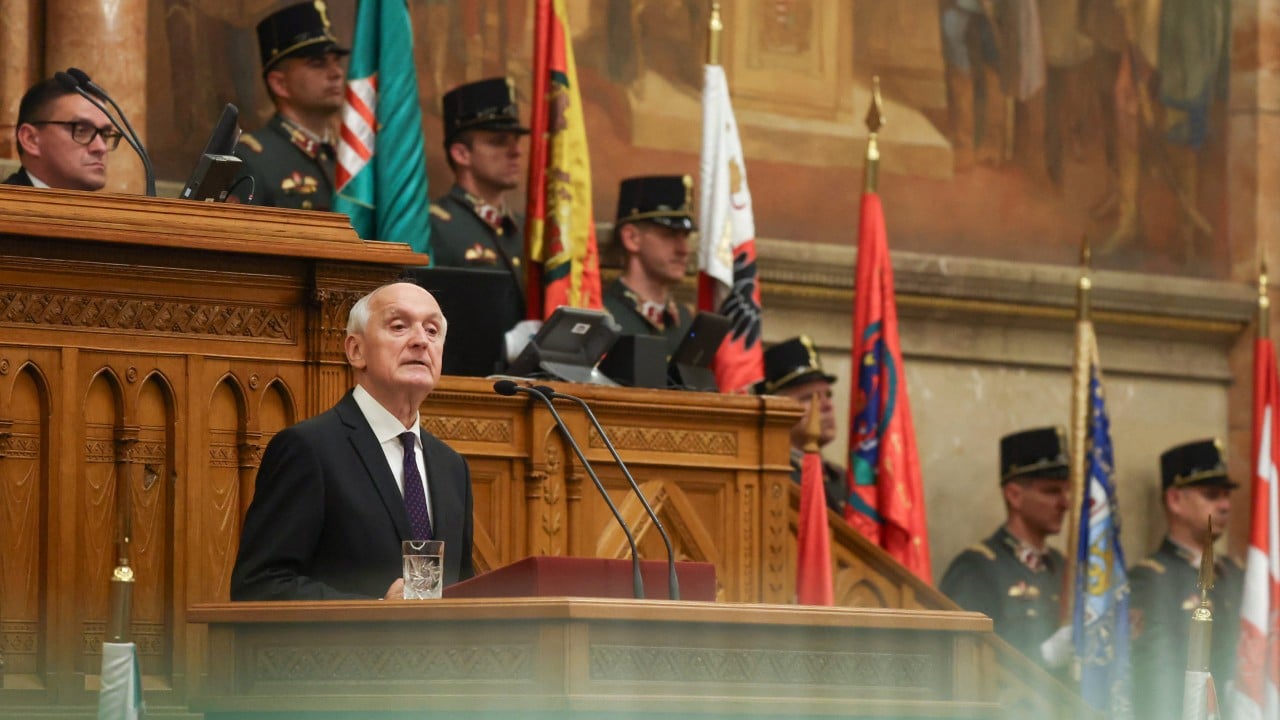
The western press treats every Hungarian political maneuver like an episode of a high-stakes constitutional drama. When parliament greenlights a figure known for past critiques of Viktor Orban to occupy the ceremonial office of the presidency, the headlines write themselves. Pundits reach for words like turning point, realignment, and resistance.
They are wrong. Recently making news in related news: The Map at the Kitchen Table How Neighbors Shape the World.
Observing Eastern European governance from a distance breeds a comforting delusion. Foreign analysts want to see a Hollywood script where every institutional appointment signals a crack in the monolith. I have watched analysts project western democratic norms onto a system designed to bypass them entirely for a decade and a half. The assumption that placing a critic inside a glass-tower office changes the mechanics of power is worse than naive. It is lazy.
Let us dismantle the core myth: the idea that the Hungarian presidency holds independent executive leverage capable of disrupting Fidesz dominance. Additional information into this topic are covered by The New York Times.
The Architecture of Power Versus the Illusion of Office
To understand why this appointment is a non-event, you must look at the constitutional boundaries of the Hungarian head of state. Executive power in Budapest does not reside in the Sándor Palace. It resides across the river in the Prime Minister's office.
The presidency is largely symbolic. The officeholder cuts ribbons, signs laws passed by a loyalist parliamentary supermajority, and represents the nation at diplomatic dinners. A critic holding the seal of state has about as much operational control over government policy as a mascot has over a football franchise.
Imagine a scenario where a corporation hires a vocal critic of the CEO to sit on the board of directors as a non-voting observer. Does corporate strategy shift? Does the business model pivot? Of course not. The critic occupies a chair, drinks the coffee, and watches the engine run exactly as intended by the majority shareholder.
Fidesz did not lose control of the state apparatus by approving this candidate. They engineered a pressure release valve. By installing a figure with opposition credentials into a neutered role, Budapest gets to flash its democratic credentials to Brussels without ceding an inch of actual legislative or fiscal authority. It is a masterclass in domestic optics, disguised as a concession.
The Media Trap of Projecting Western Norms
Foreign journalism suffers from a persistent provincialism. Correspondents assume that institutions function everywhere the way they do in London, Washington, or Berlin. They see checks and balances where there are only rubber stamps.
When a critic enters the presidential palace, western desks report it as a victory for institutional resistance. This misses how power actually operates under prolonged dominant-party rule. Power in this framework is structural, legal, and financial. It is embedded in the media landscape, public procurement contracts, and the rewriting of electoral districts over fifteen years.
A single individual, no matter their personal philosophy or past statements, cannot override a system built brick by brick to insulate itself from judicial or administrative friction. To think otherwise is to misunderstand the difference between holding a title and wielding authority.
Real power does not care about your resume. It cares about who controls the budget, the security services, and the voting rules.
Why the Opposition Falls for the Bait
The domestic political opposition falls into the same trap because acknowledging the toothlessness of the presidency means admitting their own structural irrelevance. Accepting this appointment as a major milestone allows opposition figures to pretend they are still engaged in a dynamic, competitive parliamentary struggle.
It keeps the illusion alive that the system can be reformed from within by playing by rules written by the dominant party.
I have seen political movements bleed millions of dollars and countless hours chasing symbolic victories while losing the boring, unsexy ground game of local institution-building. Chasing the narrative of presidential resistance is a distraction. It provides emotional comfort to urban liberals while cementing the structural status quo in the countryside.
What Actually Matters Moving Forward
If you want to understand where Hungary is heading, stop looking at high-profile personnel swaps in ceremonial offices. Pay attention to three things that actually drive the country's trajectory:
- EU Fund Distribution: The mechanical release or withholding of European Union financial transfers remains the primary external constraint on the regime.
- Municipal Consolidation: How local governments handle utility pricing, tax revenues, and regional administration outside of Budapest tells you far more about political health than presidential speeches.
- Corporate Consolidation: Watch the ownership churn inside the banking, energy, and telecommunications sectors. That is where real leverage lives.
The new president will give polite speeches, perhaps occasionally raise an eyebrow at a controversial piece of legislation, and ultimately sign every bill placed on the mahogany desk. The machinery of the state will hum along uninterrupted.
Stop looking for plot twists in a script that has already been written.


