Stop staring at the Pacific.
Every year, the same tired script plays out. A few warming pixels appear on a Sea Surface Temperature (SST) map in the Nino 3.4 region, and the alarmism begins. Weather portals start screaming about "early arrivals" and "monsoon failure." They treat El Nino like a monolithic deity that dictates the fate of billions with a single thermal shift.
It is lazy science. It is even worse journalism.
The obsession with El Nino as the sole arbiter of the Indian monsoon is a relic of 20th-century meteorology. If you are making investment decisions or agricultural pivots based on a surface-level El Nino forecast, you are gambling on a half-truth. I have watched analysts burn through millions in commodity hedges because they ignored the structural complexity of the atmosphere in favor of a catchy headline.
We need to stop talking about El Nino in isolation and start talking about the actual mechanics of moisture transport.
The Correlation Fallacy
The "lazy consensus" assumes a linear relationship: El Nino equals drought, La Nina equals floods.
History disagrees.
In 1997, the world witnessed one of the most powerful El Nino events on record. By the logic of the current panic-mongers, India should have been a dust bowl. Instead, the monsoon was perfectly normal. Conversely, we have seen "neutral" years result in devastating deficits.
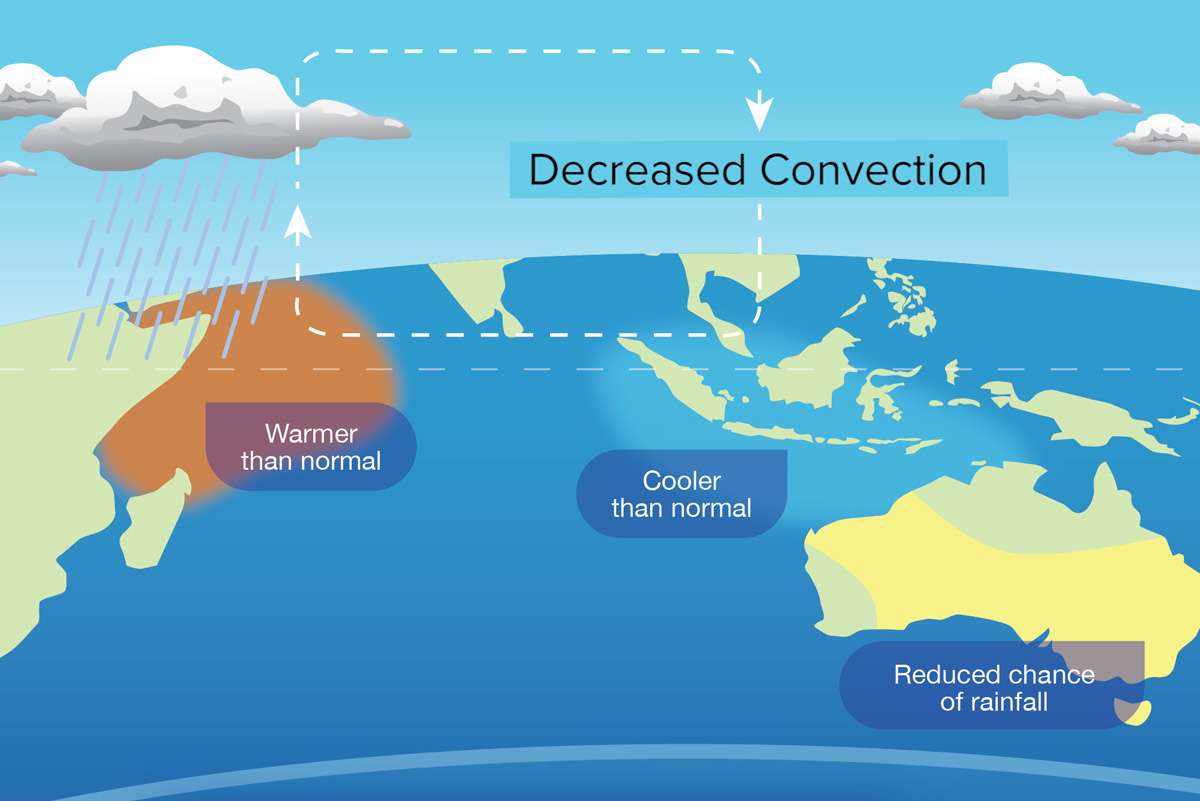
Why? Because the Pacific is only one player in a high-stakes global game. When you focus exclusively on El Nino, you ignore the Indian Ocean Dipole (IOD) and the Madden-Julian Oscillation (MJO).
Think of the global climate as a massive, pressurized hydraulic system. El Nino is just one valve. If the IOD is in a "positive" phase—meaning the western Indian Ocean is warmer than the eastern—it can completely neutralize the drying effects of a Pacific El Nino. It acts as a counter-pump, shoving moisture back toward the subcontinent regardless of what is happening off the coast of Peru.
The competitor's fear-mongering about an "early arrival" ignores the fact that a strong positive IOD is often triggered by the very same thermal shifts they are panicking about. They see a threat; the data sees a potential equilibrium.
The Timing Myth
The "Early El Nino" narrative is particularly deceptive. Speed does not equal intensity.
Meteorological models often struggle with the "Spring Predictability Barrier." Forecasting the strength of a warming trend in March or April is notoriously unreliable. The atmosphere is turbulent, and the coupling between the ocean surface and the winds above—what we call the Walker Circulation—takes time to lock in.
A rapid onset of warming in the Pacific often peters out before the monsoon’s critical July-August window. By screaming about it in May, weather outlets are effectively reporting on the first lap of a marathon as if it were the finish line.
The Real Threat is Not Heat, But "Internal Variability"
If you want to know why the monsoon actually fails, stop looking at SSTs and start looking at Synoptic Variations.
The monsoon is not a single, continuous rain event. It is a series of pulses. You can have a "Strong El Nino" year where the total rainfall is technically below average, but the timing of the rain is perfect for crop cycles. You can also have a "Great Monsoon" year where the rain falls all at once in June, causes massive flooding, and then vanishes during the crucial flowering stage in August.
The "Total Seasonal Rainfall" metric is a vanity stat. It is useless for farmers and even more useless for the economy.
The industry fixation on El Nino obscures the more dangerous trend: the increasing volatility of Monsoon Depressions in the Bay of Bengal. We are seeing fewer low-pressure systems, but the ones that do form are more intense and less predictable. This has nothing to do with the Pacific and everything to do with local atmospheric thermodynamics.
Stop Asking if it is El Nino
The question "Is El Nino coming?" is the wrong question.
The right question is: "Is the atmospheric coupling strong enough to disrupt the moisture corridor?"
I have sat in rooms with hedge fund quants who treat ENSO (El Nino Southern Oscillation) data as gospel. They ignore the Eurasian Snow Cover. Heavy spring snow in the Himalayas and Tibet creates a cold landmass. A cold landmass fails to create the thermal contrast needed to "pull" the monsoon winds from the ocean. You could have a perfect La Nina, but if the Tibetan Plateau is too cold, the monsoon will still be weak.
The competitor's article doesn't mention snow cover. It doesn't mention the IOD. It gives you a scary boogeyman because boogeymen get clicks.
Data Literacy Over Headlines
To actually navigate the coming season, you must disregard the binary "Early/Late" or "Dry/Wet" labels.
- Watch the IOD Index: If the Dipole goes positive, the El Nino risk is largely mitigated. This is your primary hedge.
- Track the MJO: This "wave" of rain travels around the globe every 30 to 60 days. An active MJO pulse entering the Indian Ocean can override an El Nino drought for weeks at a time.
- Ignore June: June rainfall accounts for a small fraction of the total output and has almost zero correlation with the final seasonal outcome. A dry June is often followed by a record-breaking July.
The High Cost of Being "Safe"
There is a massive economic cost to this preemptive panic. When "insider" reports scream about monsoon failure, credit markets tighten. Fertilizer shipments are delayed. Seed varieties are swapped for less productive, drought-resistant strains.
If the El Nino fails to materialize or is neutralized by the IOD—which happens more often than the "experts" admit—the resulting "missed opportunity" cost is measured in billions of dollars of lost agricultural GDP.
Being "cautious" based on incomplete data isn't smart; it’s expensive.
The atmosphere is a chaotic, non-linear system. Attempting to reduce it to a single variable like El Nino is not just a simplification; it is a distortion. The "risk" isn't growing because the Pacific is warming. The risk is growing because we are still using 1980s logic to forecast a 2026 climate.
Burn the spreadsheets that only look at Nino 3.4. Start looking at the whole map.
The monsoon isn't a servant of the Pacific. It is the king of its own domain.
Stop treating it like a casualty.