The fluorescent lights at Taiwan Taoyuan International Airport hum at a frequency that feels like a low-grade migraine after a fourteen-hour flight. You stand in the arrivals hall, exhausted, watching the immigration officer examine your passport under an ultraviolet lamp. Thud. The blue ink hits the page. You are in.
Now imagine that exact rubber stamp hitting the same passport eight separate times. Don't forget to check out our recent coverage on this related article.
Eight entries. Eight exits. Each time, a clean bill of passage through one of the most heavily scrutinized borders in the Indo-Pacific. And yet, according to recent intelligence disclosures out of Taipei, the person carrying that passport was not merely a tourist, a tech enthusiast, or a harmless business associate. Taiwanese authorities allege that a Chinese operative—someone with documented links to the orbit of Nvidia chief executive Jensen Huang—slipped into the island nation eight times without triggering the tripwires designed to keep Beijing's intelligence apparatus at bay.
Silence. If you want more about the history of this, ZDNet provides an in-depth breakdown.
That is the sound of a billion-dollar semiconductor ecosystem realizing the perimeter was never actually secure.
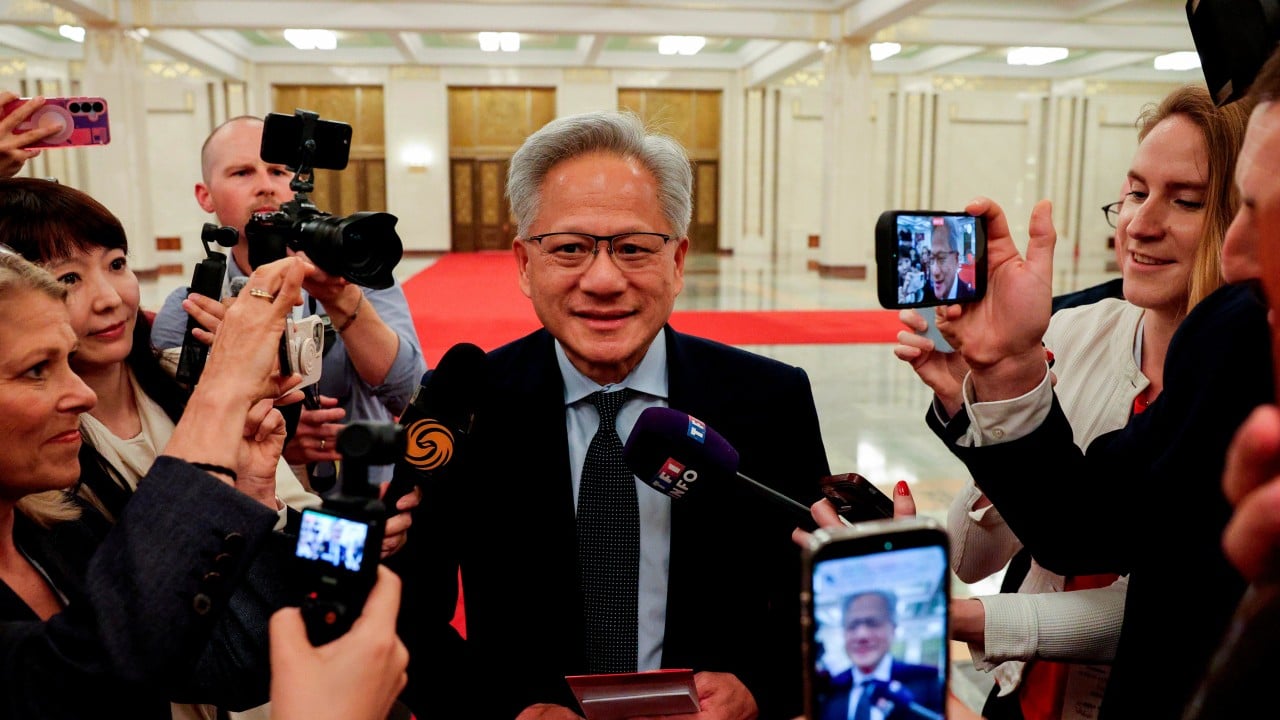
When news broke that Taiwan had identified a suspected Chinese spy connected to Nvidia's chief executive, the headlines read like a breathless thriller written by an algorithm. People clicked because of the juxtaposition of two potent cultural symbols: the charismatic, leather-jacket-wearing billionaire who turned a graphics card company into the engine of the artificial intelligence boom, and the shadowy world of cross-strait espionage. The cold facts on the wire were sparse, clinical, and stripped of context. Eight trips. A connection to Jensen Huang. Counterintelligence alarms ringing in Taipei.
If you stop at the headline, you miss the actual story. You miss the quiet, suffocating paranoia that defines life inside Taiwan's silicon shield, and you miss the brutal reality of how modern espionage actually works in an era where the most valuable state secrets are etched onto wafers smaller than a fingernail.
The Man in the Night Market and the Ghost in the Crowd
To understand why those eight passport stamps carry the weight of a diplomatic earthquake, you have to understand what Jensen Huang means to Taiwan.
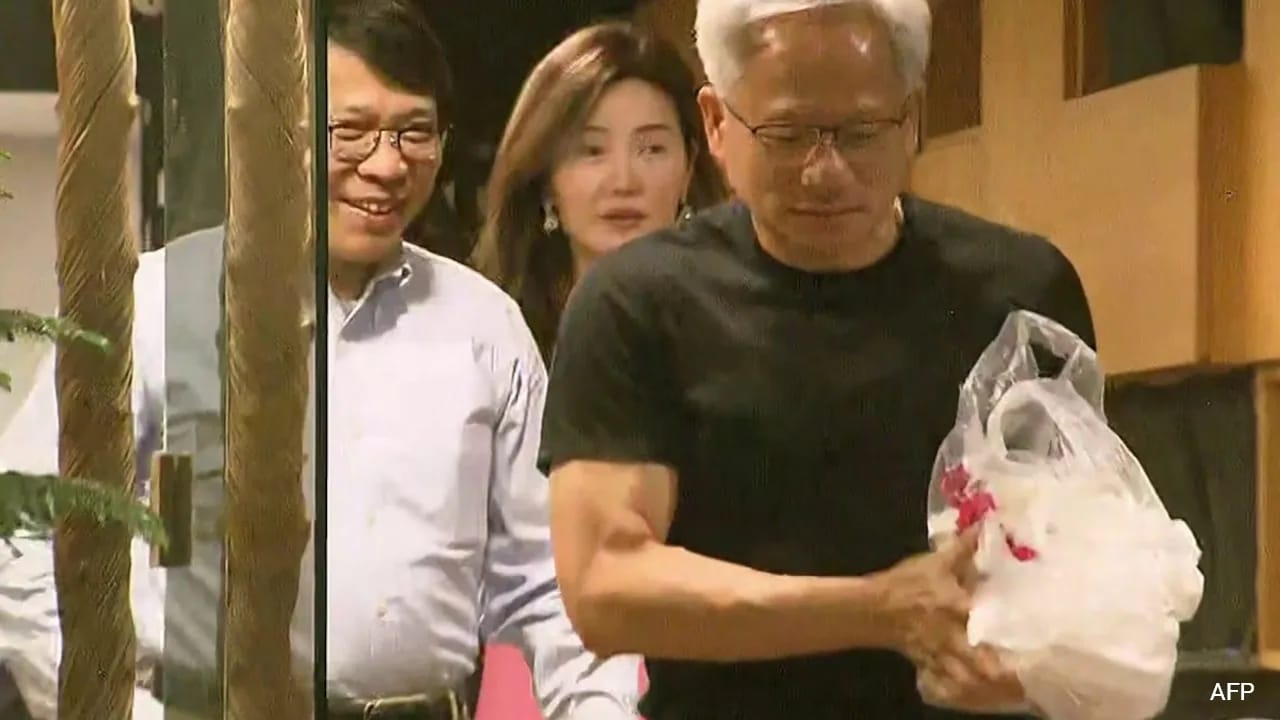
When Huang lands in Taipei for Computex or to visit the engineering teams at Taiwan Semiconductor Manufacturing Company, he is not treated like a visiting corporate executive. He is treated like a returning folk hero. Born in Tainan before immigrating to the United States as a child, Huang walks through the crowded stalls of the Ningxia Night Market surrounded by throngs of locals holding up smartphones, cheering as he buys oyster omelets and greets vendors in Hokkien. For Taiwan, a democratic island living perpetually under the threat of annexation by Beijing, Huang is living proof that the world's technological future runs directly through their backyard. Without Taiwan's foundries, Nvidia's Blackwell chips do not exist. Without Nvidia's orders, Taiwan's geopolitical leverage shrinks dramatically.
Now, picture that same night market scene. Picture the warmth of the frying pans, the smell of sweet potato balls and pepper buns, the press of warm bodies, and the absolute lack of physical distance between the most important chief executive in the global artificial intelligence supply chain and the general public.
Let us construct a hypothetical scenario—a composite sketch based on how counterintelligence officials in Taipei actually track illicit networks—to see how a compromise happens in plain sight.
Call him Lin. In our hypothetical model, Lin is not a trench-coated villain lurking behind a potted palm with a miniature camera. That is Hollywood nonsense. Real intelligence collection in the semiconductor sector looks like an ordinary Tuesday. Lin is a mid-level logistics consultant, a diaspora association organizer, or a venture liaison with a pristine resume, dual-market fluency, and a legitimate reason to be in the room at industry banquets, alumni mixers, and supply-chain summits. He knows the people who organize the dinners. He shakes hands with the people who manage the schedules. He takes photos that end up on social media, establishing a paper trail of benign proximity.
Once. Twice. Three times. By the eighth visit through Taoyuan International Airport, Lin is no longer an anomaly to the border algorithms. He is a regular.
Why Eight Visits Matter More Than One
Amateur observers often ask why an operative would risk crossing a hostile border eight separate times when digital espionage exists. Why not just hack a server from a nondescript office building in Shanghai or Shenzhen?
Because you cannot hack human trust over fiber-optic cables.
High-end semiconductor manufacturing is arguably the most complex industrial choreography humanity has ever attempted. You can steal blueprints, you can exfiltrate CAD files, and you can bribe an engineer to walk out the door with a thumb drive, yet still fail miserably when you try to replicate the yield rates of a three-nanometer fabrication plant in Hsinchu. The real secrets live in the tacit knowledge—the undocumented adjustments, the supply-chain bottlenecks, the personal relationships between executives, and the precise timeline of upcoming hardware architectures.
To map that human terrain, an intelligence service needs boots on the ground. They need someone who can sit across a dinner table, read body language, notice who is drinking too much, identify which mid-level manager is bitter about being passed over for a promotion, and observe who has the ear of top leadership.
Consider what happens next when a figure like Jensen Huang visits the island.
Every movement of Nvidia's chief executive sends ripples through the global stock market and shifts geopolitical calculations in Washington and Beijing. If Beijing's Ministry of State Security wants to know how Nvidia plans to navigate tightening American export controls, or which Taiwanese packaging partners are quietly expanding capacity for next-generation AI accelerators, they do not need to bug Jensen Huang's phone. Doing so would trigger immediate alarms from American intelligence agencies and corporate security teams.
Instead, they look at the concentric circles radiating outward from the center of power.
Think of corporate security like an onion, except the center is a nuclear reactor and the outer layers are made of wet tissue paper. The core—Huang himself, his immediate executive staff, his encrypted communications—is hardened against state-level intrusion. The outer layers—the event coordinators, the childhood acquaintances, the local business associations, the extended vendor networks—are porous, welcoming, and desperate to be helpful. An operative linked to the outer rings of a high-profile figure gains something priceless: reflected legitimacy. When you stand close enough to the sun, people stop checking your credentials because they assume someone else already did.
Living Inside the Glass House
I have spent years reporting on and working alongside engineers in Taipei and Hsinchu, and there is a specific kind of exhaustion you see in their eyes that nobody in Silicon Valley truly understands.
In California, intellectual property theft is a lawsuit. You hire white-shoe attorneys, you file an injunction in federal court, and you argue over trade secrets in front of a judge. In Taiwan, intellectual property theft is an existential threat to national survival. Every engineer working on advanced lithography or AI chip packaging carries the unspoken weight of knowing that their daily work is the primary reason major superpowers care whether their island remains free.
I remember sitting in a cramped coffee shop near the Hsinchu Science Park a few years ago with a senior process engineer—let us call him David, to protect his identity. Rain was hammering against the windowpane, blurring the neon signs across the street. David kept glancing at the door every time the bell chimed. He was not paranoid by nature; he was an ordinary guy who liked road cycling and complained about housing prices. Yet he told me that he had stopped attending his university alumni reunions because old classmates who had taken lucrative jobs on the mainland kept asking overly specific questions about his team's fabrication timelines.
"They don't ask you to betray your country," David told me, stirring his iced coffee until the ice melted completely. "They ask you how your kids are doing. They tell you about a consulting gig that pays three times your annual salary for two weekends of 'market research' in Hong Kong. By the time you realize you're giving away proprietary yield data, you've already cashed the check, and they own you."
That confession stuck with me because it strips away the melodrama and exposes the mundane mechanics of coercion. When Taiwanese authorities announce that a suspected Chinese spy entered the country eight times, people like David do not feel surprised. They feel vindicated, and then they feel cold.
The Architecture of Denial and the Export Control Trap
To grasp the urgency driving this intelligence operation, you have to look at the geopolitical vise squeezing Beijing's technology sector.
Over the past several years, Washington has erected a wall of export restrictions designed to prevent China from acquiring the advanced Nvidia chips required to train frontier artificial intelligence models. For Beijing, this is not merely a commercial inconvenience; it is a strategic emergency. Artificial intelligence sits at the heart of modern military logistics, cyber warfare, surveillance systems, and economic productivity. Without access to Nvidia's premier hardware—or the ability to manufacture domestic equivalents at scale—China risks falling permanently behind in the defining technological race of the twenty-first century.
When legitimate front doors slam shut, intelligence agencies kick open the side windows.
The suspected operative's eight trips to Taiwan represent a classic human-intelligence probing operation during a period of acute technological desperation. Notice the specific phrasing in Taiwan's disclosures: the individual was "linked" to Nvidia's CEO. That ambiguity is deliberate and revealing. It rarely means the chief executive personally vetted or befriended an intelligence officer. Rather, it signals that the operative successfully penetrated the social, philanthropic, or commercial periphery surrounding Huang—perhaps through shared hometown networks, alumni circles, or vendor events—using that proximity as a skeleton key to unlock doors across Taiwan's tech sector.
Imagine the utility of that connection. If you are a Chinese intelligence handler trying to recruit a mid-level executive at a Taiwanese server manufacturer, walking up cold is suicide. Walking up while casually mentioning a shared dinner or a mutual acquaintance in Jensen Huang's orbit changes the psychological dynamic entirely. The target's guard drops. The conversation shifts from guarded suspicion to professional camaraderie. Information flows freely over glasses of Kavalan whisky.
The Vulnerability of Openness
Here is the uncomfortable truth that few in the technology industry want to admit aloud: the very qualities that make Taiwan and Silicon Valley innovative are the exact vulnerabilities that make them easy to infiltrate.
Innovation thrives on frictionless collaboration. It requires open conferences, fluid movement of talent, casual networking, and a culture where executives mingle freely with suppliers, journalists, and fans. You cannot build a global supply chain inside a bunker. When Jensen Huang walks through a Taipei night market without an army of Secret Service agents pushing citizens into the gutter, he is demonstrating the vitality and openness of a free society.
Authoritarian intelligence services weaponize that openness against itself.
They exploit visa regimes designed to encourage business travel. They exploit cultural affinity, shared language, and the natural pride people feel when a native son achieves global superstardom. And they exploit the bureaucratic blind spots between corporate security and national counterintelligence.
Let us be honest about those blind spots. A multinational corporation like Nvidia exists to maximize shareholder value and ship products to global markets, including compliant variants for the Chinese market. Its security team is focused on protecting corporate assets, executive physical safety, and network integrity. Taiwan's National Security Bureau, on the other hand, is fighting a silent, relentless war against state-sponsored subversion, disinformation, and industrial hollowing-out. Those two missions overlap, yet their incentives do not always align.
When a foreign national with ambiguous ties enters Taiwan eight times, corporate security might
Eight Stamp Marks at the Border and the Invisible War for Silicon
technology, business, news
Eight times.
That is how often the passport slid across the polished counter at Taiwan Taoyuan International Airport, catching the harsh fluorescent light of the immigration hall before the mechanical thud of the entry stamp echoed through the queue. Eight times a man whose name would later surface in legislative hearings and intelligence briefings walked past the baggage carousels, stepped out into the humid subtropical air of Taipei, and disappeared into the glass-and-steel arteries of the world’s most consequential island.
On paper, he was just another traveler moving through the frictionless corridors of global commerce. In reality, Taiwan’s national security officials alleged he was something far more delicate—an intelligence operative linked to Beijing, moving in the outer orbit of the supply chain surrounding Jensen Huang, the leather-jacketed chief executive of Nvidia.
Pause there. Let that image settle.
When headlines flash with words like spy, Nvidia, and Taiwan, our brains immediately reach for cinema. We picture trench coats in rain-slicked alleys, encrypted microdots hidden inside cufflinks, or midnight handoffs beneath neon signs in Ximending. I used to think espionage looked like that, too. Years ago, sitting in cramped briefing rooms in East Asia listening to counterintelligence veterans dissect corporate breaches, I realized how dangerously romantic—and outdated—my assumptions were. Modern espionage rarely wears a disguise. Usually, it wears a conference lanyard. It drinks lukewarm espresso in hotel lobbies. It asks polite, hyper-specific questions about packaging yields and thermal dissipation over soup dumplings.
The Architecture of Proximity
To understand why eight border crossings set off alarms in Taipei’s intelligence apparatus, you have to understand the geography of power in the twenty-first century.
Right now, the global economy rests on an inverted pyramid, and the sharp point at the bottom sits on an island roughly the size of Maryland. Every major artificial intelligence model—every chatbot drafting emails, every protein-folding simulation, every autonomous defense system—depends on advanced semiconductors designed by companies like Nvidia and fabricated almost exclusively by Taiwan Semiconductor Manufacturing Company (TSMC).
Think of Nvidia as the master architect drawing the blueprints for the world’s fastest engines, and Taiwan as the only foundry on earth with furnaces hot enough and hands steady enough to cast the metal.
For decades, this arrangement functioned as what strategists called the "silicon shield." The logic was comforting in its symmetry: neither Washington nor Beijing could afford a military conflict over Taiwan because blowing up the island’s fabs would plunge the entire planet into an immediate technological depression.
Yet shields do not stop whispers. They do not stop handshakes.
Consider a hypothetical engineer—let’s call him Lin—working mid-level logistics for a Taiwanese server-rack supplier in Hsinchu Science Park. Lin doesn’t have top-secret clearance. He doesn't guard nuclear codes. What Lin knows, however, is which exact cooling manifolds are shipping next Tuesday, which boutique testing house in Taoyuan is struggling with defect rates on a next-generation board, and which executives are flying in for closed-door dinner meetings ahead of Computex.
Now imagine an operative entering Taiwan eight separate times over several years. Under Taiwan’s immigration rules, business travelers, academic researchers, and mainland professionals operating through third-country entities or specialized permits can cross the strait legitimately—or semi-legitimately—provided their paperwork aligns with approved exchange categories. Each visit lasts a few days. A trade show here. A alumni banquet there. A casual introduction facilitated by a mutual acquaintance who happens to know someone on Jensen Huang’s sprawling itinerary.
Nobody steals a blueprint on visit number one.
Visit number one is about learning the names of the gatekeepers. Visit number three is about remembering their children’s birthdays. By visit number seven, the conversation naturally drifts toward production bottlenecks, talent poaching, and which engineers at key suppliers might be frustrated with their year-end bonuses.
Why the Orbit Matters More Than the Sun
When Taiwan’s Mainland Affairs Council and national security officials confirmed that an individual flagged for intelligence ties had entered the island eight times—and drew scrutiny due to proximity or connections brushing against Nvidia’s ecosystem—the immediate public reaction split into two predictable camps.
One side panicked, imagining Beijing’s agents peering directly over Jensen Huang’s shoulder at unreleased Blackwell or Rubin chip architectures. The other side shrugged, dismissing the whole affair as political theater in Taipei’s perennially polarized legislature.
Both reactions miss the true mechanism of industrial intelligence.
You do not need to sit in the CEO’s chair to map the empire. In fact, trying to penetrate the inner sanctum of a three-trillion-dollar company is a fool’s errand; the digital perimeters around Nvidia’s core intellectual property are hardened like orbital bunkers. The smarter play—the quieter, patient play—is to map the constellation around the sun.
When Jensen Huang visits Taipei, he becomes a gravitational anomaly. Supply chain chiefs from Quanta, Foxconn, Wistron, and TSMC orbit him publicly. Night market vendors hand him fruit; cameras track every step he takes from his hotel to banquet halls. That public spectacle creates a sudden, concentrated gathering of the exact human capital that underpins global AI dominance.
If you are an intelligence service tasked with helping your domestic chip industry bypass American export controls, you don't need to hack a server in Santa Clara. You just need to be in the right dining room in Taipei when the people who actually build the hardware let their guard down. You listen to who is hiring. You note which sub-tier component maker in Taichung is quietly expanding cleanroom capacity. You gather fragments—tiny, seemingly innocuous tiles—until, back in a quiet analytical office across the Taiwan Strait, the mosaic snaps into focus.
The Invisible Bleeding
I remember speaking with a former semiconductor executive in Taipei who had spent thirty years building supply chains across both sides of the strait. We sat in a quiet tea house near Da’an Forest Park, watching rain streak the windows, while he explained the psychological toll of living inside this gray zone.
"In the nineties and two-thousands," he told me, "we were all heroes for building bridges. You took Taiwanese management, mainland labor, American design, and you made miracles happen. Now, every old classmate from university who took a job in Shenzhen or Shanghai is a potential compliance nightmare. You don't know who is asking how your family is doing out of genuine affection, and who has to file a report on Monday morning."
That is the human cost of the chip war that rarely makes the quarterly earnings calls.
Trust, once fractured, cannot be patched with a software update. For Taiwanese engineers and executives, the revelation that a suspected operative moved through their professional circles eight times lands like a cold draft in a warm room. It forces every founder, every logistics coordinator, and every dinner host to retroactively audit their own memories. Who sat at table four? Who introduced us? What did I mention about our third-quarter capacity?
Meanwhile, Taiwan’s counterintelligence apparatus faces an impossible balancing act. Lock the borders down too tightly, scrutinize every mainland-born executive or third-passport holder with suffocating suspicion, and you strangle the very openness that makes Taiwan an indispensable hub of global innovation. Leave the doors too wide, and you allow state-backed talent hunters and intelligence collectors to treat Taipei’s tech corridors like an open-air buffet.
Eight Crossings and a Warning
Look back at that number again: eight.
Not one lucky slip through customs. Not an isolated clerical oversight at an immigration booth. Eight distinct arrivals, eight departures, spanning a timeline in which artificial intelligence transformed from an academic curiosity into the primary currency of geopolitical power.
Each stamp in that passport represents a failure of friction—a moment where routine bureaucratic procedure met an adversary playing a much longer, much quieter game. It exposes the vulnerability of an era that assumed commerce could remain neatly insulated from statecraft, as if silicon wafers were no different from sneakers or soybeans.
They are not. Wafers are sovereignty compressed into nanometer-scale canyons of crystal.
Somewhere in Taipei right now, another conference badge is being printed. Another dinner reservation is being confirmed under a private room name at a Michelin-starred restaurant near Xinyi District. Outside, the neon reflects off wet asphalt, the servers hum inside windowless data centers, and the border gates at Taoyuan continue their rhythmic, unblinking work—sliding passports across glass, weighing each traveler’s story against what cannot be seen.