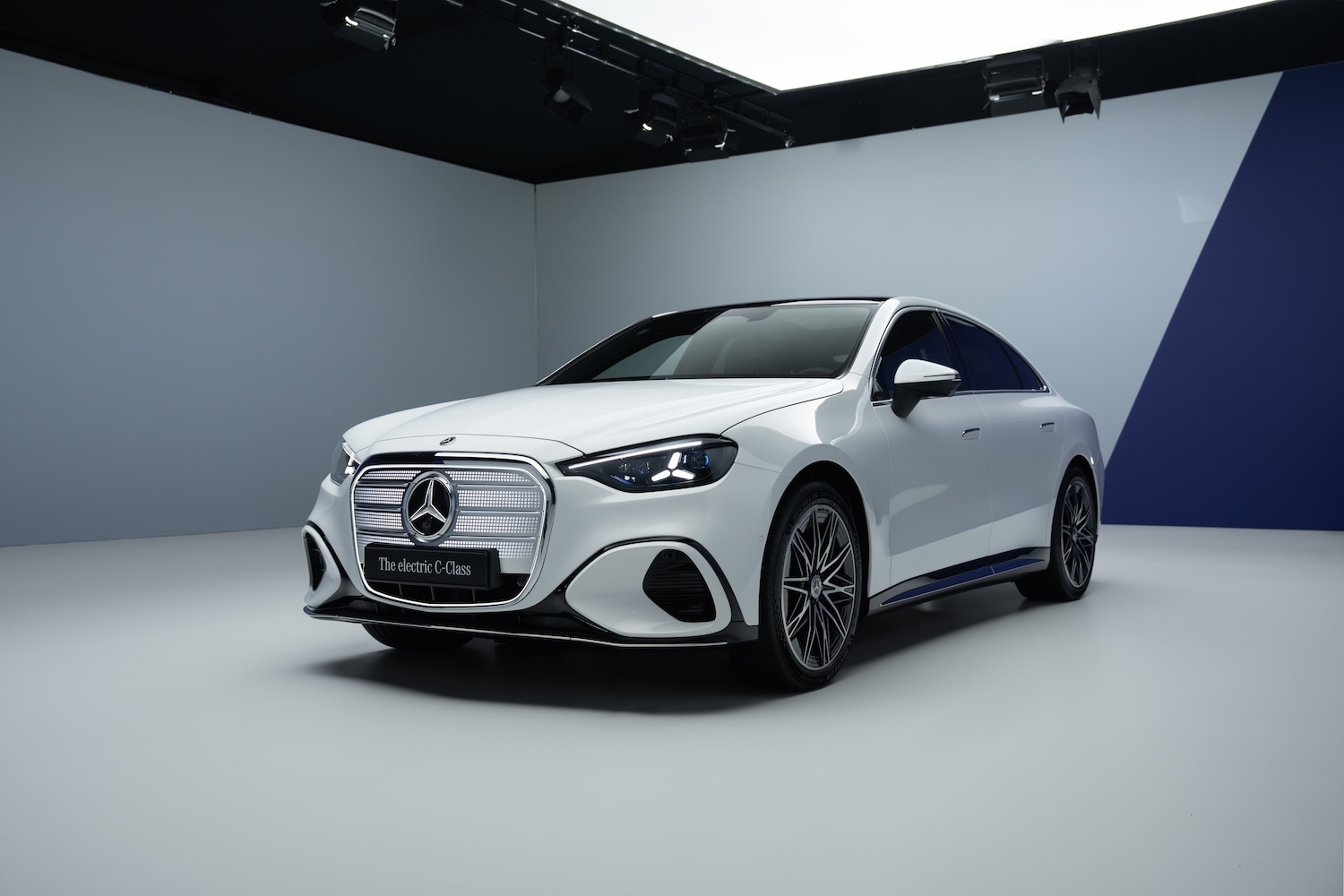
The engineering of the 2026 Mercedes-Benz C-Class EV marks a departure from the "luxury-first" design philosophy toward a "physics-first" mandate. While the headline 762km range figure captures consumer attention, the true strategic shift lies in the vehicle's volumetric efficiency and the transition to the Mercedes-Benz Modular Architecture (MMA). This platform represents a calculated move to solve the persistent conflict between high-density battery packaging and the aerodynamic constraints of a mid-sized sedan.
The viability of this vehicle depends on three technical pillars: power density optimization, thermal regulation of the 800V system, and the mitigation of drivetrain drag. For a closer look into similar topics, we suggest: this related article.
The MMA Platform and Structural Energy Density
Traditional EV manufacturing often treats the battery pack as a discrete component bolted into a frame. The MMA platform utilizes the battery as a structural element, which reduces the total mass of the chassis. This mass reduction is the primary driver behind the 762km range.
Efficiency in this context is defined by the energy-to-weight ratio. By integrating the cells directly into the frame—a concept often referred to as cell-to-chassis—Mercedes minimizes the "parasitic" weight of heavy mounting brackets and separate protective casings. To get more information on this development, comprehensive coverage can also be found on MIT Technology Review.
The Chemistry of Range
The reported range is achieved through a high-silicon anode battery chemistry. Standard lithium-ion batteries use graphite anodes; however, silicon has a theoretical capacity to hold significantly more lithium ions. The technical hurdle has always been the physical expansion of silicon during the charging cycle, which can cause the anode to fracture. Mercedes’ implementation utilizes a matrix that accommodates this expansion, allowing for a higher energy density within the same physical footprint as the current C-Class.
Calculations for range (R) generally follow the simplified function:
$$R = \frac{E \cdot \eta}{C_d \cdot A \cdot v^2 + m \cdot g \cdot f_{rr}}$$
Where:
- $E$ is total energy capacity.
- $\eta$ is powertrain efficiency.
- $C_d$ is the drag coefficient.
- $A$ is frontal area.
- $m$ is total vehicle mass.
The MMA platform focuses on reducing $m$ while maximizing $E$. By utilizing a silicon-dense chemistry, the vehicle increases $E$ without a linear increase in $m$, breaking the traditional weight penalty associated with long-range EVs.
800V Architecture and the Heat Dissipation Bottleneck
The move to an 800V system is not merely about "fast charging." It is a fundamental shift in electrical engineering aimed at reducing resistive losses. According to Joule's First Law ($P = I^2R$), doubling the voltage allows the current ($I$) to be halved for the same power output. This reduction in current results in significantly less heat generation within the wiring and components.
Charging Dynamics and Thermal Throttling
While the C-Class EV claims high-speed charging capabilities—potentially adding 300km of range in 15 minutes—this performance is contingent on the vehicle's thermal management system. High-speed charging triggers an exothermic reaction within the battery cells. If the cooling system cannot evacuate this heat, the Battery Management System (BMS) will throttle the intake of power to prevent cell degradation.
The C-Class EV employs a liquid-cooled plate system that interfaces with each module. The bottleneck here is the "thermal resistance" of the materials between the cell and the coolant. Mercedes has addressed this by using thinner, more conductive thermal interface materials (TIMs), ensuring that the delta between cell temperature and coolant temperature remains narrow. This allows the vehicle to maintain peak charging speeds for a larger portion of the charging curve (typically from 10% to 80% State of Charge).
Dual-Motor Vectoring and Drivetrain Decoupling
The 762km range is a peak figure, likely achieved in a single-motor configuration or through aggressive drivetrain management in the dual-motor variant. The dual-motor setup presents a specific engineering challenge: the "drag" of the secondary motor when it is not in use.
The Disconnect Unit (DCU) Strategy
To optimize efficiency, the C-Class EV utilizes a mechanical disconnect unit on the front axle. At cruising speeds where high torque is unnecessary, the front motor is physically decoupled from the wheels. This eliminates the electromagnetic drag (cogging torque) and mechanical friction that would otherwise sap energy.
- Active Engagement: During hard acceleration or low-traction events, the DCU engages in milliseconds.
- Passive Conservation: During highway cruising, the car operates as a rear-wheel-drive vehicle, maximizing the efficiency of the primary permanent magnet synchronous motor (PSM).
The rear motor itself is a high-efficiency unit featuring "hairpin" winding technology. This replaces traditional round wire coils with flat copper bars, increasing the "fill factor" of the motor housing. More copper in the same space allows for higher torque density and better heat conduction away from the stator.
Aerodynamic Optimization vs. Aesthetic Identity
The C-Class EV must balance a low drag coefficient with the brand's visual language. The target for this vehicle is a $C_d$ below 0.23. Achieving this requires a holistic approach to the vehicle's "wetted area."
- Active Grille Shutters: These remain closed to streamline airflow unless the thermal system requires active cooling.
- Wheel Design: Turbulent air around the wheel wells accounts for roughly 25% of a vehicle's total aerodynamic drag. The C-Class EV uses "aero-bladed" wheels that create a laminar flow across the side of the car.
- Underbody Sealing: Because there is no exhaust system or driveshaft tunnel, the MMA platform allows for a perfectly flat underbody. This reduces lift and drag, acting as a venturi tunnel to accelerate air out the rear of the vehicle.
The trade-off is a shorter hood and a more cab-forward silhouette, which departs from the "long hood, short deck" proportions of traditional internal combustion engine (ICE) luxury sedans. This is a functional necessity; the space saved by a smaller front motor compartment is redistributed to increase interior volume and improve the approach angle for airflow.
The Economic Logic of the MMA Architecture
Mercedes-Benz is pivoting away from the "EQ" sub-brand naming convention, integrating EVs directly into the core C-Class lineup. This is a strategic move to normalize electric propulsion and streamline manufacturing costs.
CAPEX and Scale
Developing a dedicated EV platform like MMA requires massive capital expenditure (CAPEX), but it yields lower operational expenditure (OPEX) per unit compared to "bridge" platforms that accommodate both gas and electric powertrains. Multi-energy platforms are inherently compromised; they carry the "dead weight" of unnecessary structural reinforcements for components that may or may not be present.
By committing the C-Class to a dedicated EV-first architecture, Mercedes avoids these compromises. The manufacturing line is optimized for a skateboard-style assembly, where the chassis and powertrain are mated in a single "marriage" step, reducing assembly time and complexity.
The Luxury Margin Trap
The C-Class has traditionally been a high-volume, lower-margin vehicle compared to the S-Class. The high cost of the 800V system and high-silicon batteries threatens these margins. Mercedes' strategy to maintain profitability relies on "software-defined" features. The vehicle hardware is over-provisioned (e.g., all cars might have the hardware for advanced driver assistance), and features are unlocked via digital subscriptions or one-time purchases. This shifts the revenue model from a one-time hardware sale to a recurring service model.
Limits of Current Infrastructure and Tech
Despite the technical prowess of the 762km range, two external bottlenecks remain:
- Grid Parity at Scale: The 800V charging system requires 350kW chargers to reach its potential. In many regions, the existing grid cannot support multiple vehicles charging at this rate simultaneously without localized battery storage at the charging station.
- Weight-to-Class Ratio: Even with high-silicon anodes, the C-Class EV will likely be heavier than its ICE counterpart. This impacts tire wear and road tax classifications in certain jurisdictions. The "weight spiral"—where more range requires more battery, which requires a heavier suspension, which requires more energy to move—has been slowed but not entirely stopped.
Competitive Positioning and Market Realignment
The C-Class EV enters a market currently dominated by the Tesla Model 3 and the BMW i4. Its primary differentiator is the 800V architecture, which both competitors currently lack in their mid-sized offerings. This provides a "time-to-refill" advantage that is critical for buyers transitioning from gasoline vehicles.
The strategic forecast for the C-Class EV suggests a shift in the "luxury" definition. Historically, luxury was defined by engine displacement and NVH (Noise, Vibration, Harshness) isolation. In the EV era, luxury is being redefined as "frictionless mobility"—the ability to travel long distances with minimal interruption.
The 762km range is not a luxury in itself; it is a buffer. It compensates for the current inconsistencies in charging infrastructure. As charging density increases, the engineering focus will likely shift from maximizing range to minimizing battery size to further reduce vehicle weight and cost. For now, Mercedes is using the MMA platform to establish a "range ceiling" that sets a new benchmark for the segment.
Investors and competitors should monitor the yield rates of the high-silicon anodes. If Mercedes successfully scales this chemistry, it will render current graphite-only battery packs obsolete in the premium segment within three years. The primary risk remains the supply chain for silicon-anode materials, which is currently less mature than the graphite supply chain.
The move to integrate the C-Class EV into the main brand identity signifies that Mercedes-Benz no longer views electric propulsion as a niche experiment, but as the baseline for the brand’s survival in the mid-size executive segment. The 762km range is the opening salvo in a war of efficiency where thermal management and structural integration are the primary weapons.