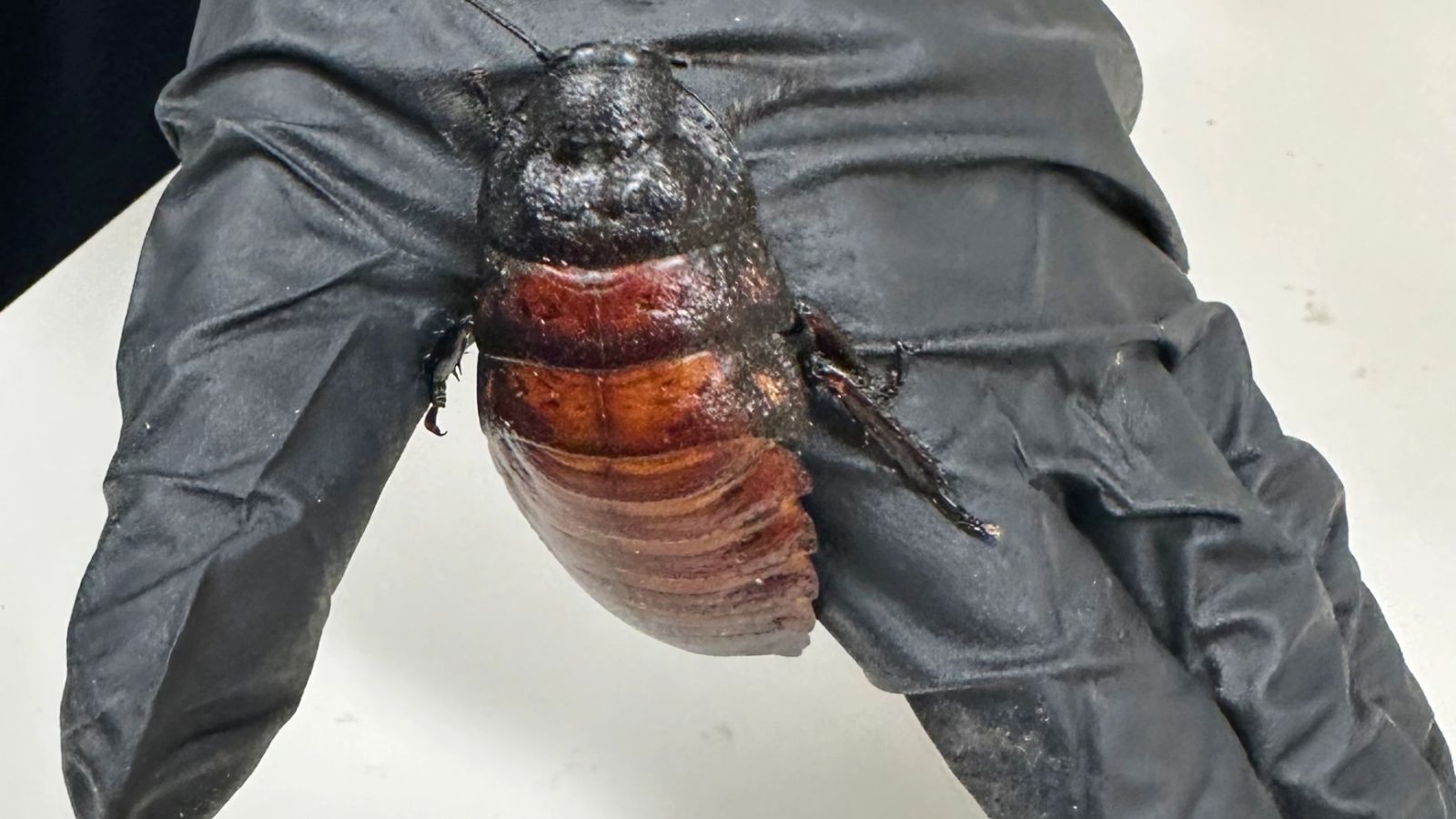
The illicit trade in exotic wildlife is traditionally framed around charismatic megafauna or highly prized reptiles. However, the seizure of more than 100,000 live exotic cockroaches from a commercial breeding operation in Bathurst, New South Wales, exposes a highly organized, high-density gray market functioning directly underneath national biosecurity frameworks. The haul, consisting entirely of Madagascar hissing cockroaches (Gromphadorhina portentosa) and Dubia cockroaches (Blaptica dubia), carried an estimated market valuation of AUD 200,000 (approximately USD 142,000). This operation represents the largest confiscation of prohibited invertebrates in Australian history, signaling an urgent shift in how national biosecurity risk must be calculated and managed.
Analyzing this intervention requires moving past the shock value of the species involved to examine the economic incentives driving the supply chain, the operational bottlenecks within biosecurity enforcement, and the compounding ecological risks introduced by unassessed exotic vectors.
The Supply Chain Mechanics of Invertebrate Biosecurity
The Bathurst operation was not a casual hobbyist collection; it was a high-yield commercial node optimized for production density. Understanding the economic viability of this underground market requires breaking down the core market drivers that allowed an illicit invertebrate colony to reach a scale of six figures.
The Cost-Benefit Arbitrage of Exotic Feeder Insects
The demand for these specific prohibited species is fundamentally driven by nutritional efficiency and operational cost-reductions within the domestic reptile-keeping market.
- Biomass-per-Unit Efficiency: Standard legal feed options in Australia, such as domestic crickets (Acheta domesticus) or native wood cockroaches (Blatta lateralis), offer significantly lower biomass per individual organism. A mature Madagascar hissing cockroach grows up to 8 centimeters (3 inches) in length, yielding exponentially higher caloric and protein density per unit.
- Operational Feed Ratios: Reptile owners and commercial breeders utilize these larger exotic invertebrates to optimize feeding schedules. Because a single large exotic insect replaces multiple smaller native insects, the labor cost of feeding and the volume of feed purchases decrease significantly.
- Colony Stability and Yield: Dubia cockroaches are highly favored in international breeding circles due to their inability to climb smooth vertical surfaces, their lack of flight, and their low odor production. These biological traits significantly lower the operational barriers to high-density, low-overhead domestic farming compared to volatile cricket populations, which are prone to disease die-offs and cannibalism.
http://googleusercontent.com/image_content/240
The Gray Market Pipeline
Because both Madagascar hissing and Dubia cockroaches are entirely excluded from Australia’s Live Import List under the Environment Protection and Biodiversity Conservation Act 1999, they cannot be legally imported, kept, bred, or traded regardless of origin. This total prohibition creates an immediate supply bottleneck, driving prices up and encouraging localized commercial breeding to avoid detection at international border checkpoints. Once a small founder population is successfully smuggled past primary customs, the high fecundity of the species allows a skilled operator to scale up production exponentially in a closed facility, completely bypassed by standard agricultural oversight.
Quantification of Ecological Risk and Regulatory Gaps
Australia's biosecurity protocol is historically geared toward protecting a multi-billion dollar agricultural sector from macro-pathogens and obvious invasive threats. The emerging trend of high-density exotic invertebrate propagation presents a distinct multi-layered threat vector that standard enforcement frameworks struggle to contain.
[Illicit Invertebrate Colony]
       │
       ├──► Zero Environmental Risk Assessment (Unquantified Pathogen Load)
       │
       ├──► High Climate Compatibility (Sub-tropical Match) ──► Feral Establishment
       │
       └──► Regulatory Enforcement Gaps (Low Penalties / Lack of Trackable Supply Chain)
The Three Pillars of Environmental Vulnerability
The Department of Climate Change, Energy, the Environment and Water (DCCEEW) bases its enforcement mandates on three unassessed risk domains:
- The Absence of Environmental Risk Assessments: Neither species has undergone formal scientific screening to determine its interaction with Australian ecosystems. Without controlled trial data, the baseline reproductive rate ($R_0$) of these insects in the wild remains a dangerous unknown.
- Pathogen and Parasite Vectors: Unlike legal, commercially monitored live feed options, wild-caught or unregulated exotic invertebrate strains can host a variety of mites, internal nematodes, and dangerous bacterial pathogens. If these organisms escape into the local environment, they risk introducing novel diseases to vulnerable native insect and reptile populations.
- Climate Synchronization: Large portions of New South Wales and broader Australia feature sub-tropical and temperate climates that match the environmental tolerances of these highly adaptable species. If feral populations establish themselves, they run the risk of outcompeting native detritivores, altering forest floor nutrient cycling, and disrupting local food webs.
Operational Enforcement Obstacles
The fact that a colony could scale to over 100,000 individuals before intervention highlights a critical structural gap in domestic biosecurity monitoring. Primary border screening is rigorous, but post-border domestic compliance relies heavily on whistleblowers, localized wildlife handlers, or accidental discoveries.
The low entry barrier to breeding invertebrates—requiring only climate-controlled indoor space, basic organic waste for feed, and plastic storage bins—means large-scale commercial operations can exist within standard residential or industrial zoning without triggering traditional agricultural or environmental alarms. Furthermore, the light penalties traditionally handed out for invertebrate possession fail to create a financial disincentive strong enough to counter the lucrative margins of the reptile feed black market.
Strategic Shift for Domestic Biosecurity Defenses
To counter the expanding global trend of keeping and breeding exotic invertebrates, Australia's biosecurity framework must pivot from a reactive, border-centric defense to a proactive, data-driven domestic containment model.
1. Supply-Side Market Substitution
Enforcement agencies cannot rely solely on punitive raids. To permanently depress the black market value of illegal species, the domestic agricultural sector must scale up the production of high-performance legal alternatives. This involves investing in the selective breeding and commercial optimization of large native Australian invertebrates, such as giant burrowing cockroaches (Macropanesthia rhinoceros), to offer reptile owners an equivalent biomass-per-unit alternative without the accompanying biosecurity risks.
2. Digital Supply Chain Surveillance
Because the distribution of these insects depends heavily on specialized online communities, reptile forums, and encrypted social media marketplaces, biosecurity agencies must deploy automated web-scraping and keyword-monitoring tools. Tracking the velocity of digital listings for "high-yield feeders" or obscure exotic terminology will allow investigators to identify anomalous supply spikes and locate underground breeding operations long before they reach a 100,000-unit distribution scale.
The total eradication and subsequent euthanasia of the Bathurst haul serves as a stark reminder of the scale of this underground market. Without systemic changes to domestic surveillance and market-driven alternatives, the structural demand for efficient bio-mass feed will continue to incentivize high-density, illicit breeding operations across the country.
Record bust seizes more than 100,000 exotic cockroaches - This news segment covers the operational details and formal statements issued by Australia's biosecurity officials following the record-breaking invertebrate seizure.