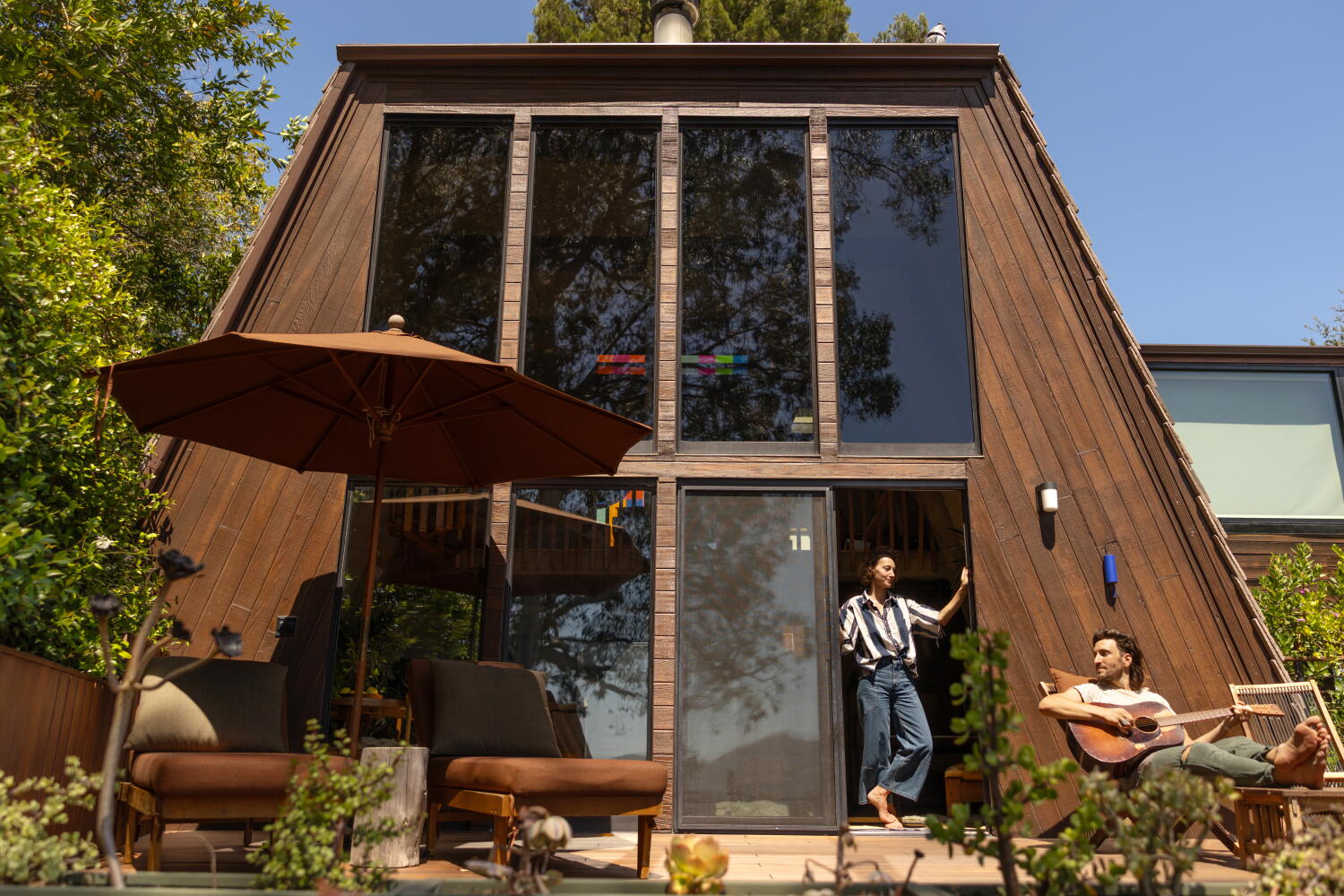
The modern creative economy exacts a high cognitive toll. Continuous connectivity, algorithmic content cadences, and the fragmentation of attention routinely push working artists toward psychological exhaustion. Under these conditions, the physical environment functions either as an amplifier of noise or as an intentional structural barrier against it. The conversion of a rundown Topanga Canyon A-frame structure into a dual-purpose sanctuary for musical composition and psychological recovery offers a case study in spatial arbitrage. By treating a residential property as a functional instrument rather than a passive living space, independent artists can engineer conditions that alter both their creative output and their capacity for burnout recovery.
This analysis deconstructs the mechanics of that transformation, mapping the financial inputs, structural constraints, and psychological return on investment inherent in turning a compromised piece of real estate into an operational creative laboratory.
The Cost Function of Creative Burnout
Burnout in independent music is rarely a failure of will; it is a systematic depletion of psychological capital caused by structural friction. Touring schedules, administrative overhead, and the pressure of public visibility consume the cognitive bandwidth required for deep work. When artists attempt to recover within standard urban or suburban environments, the home frequently mirrors the chaos of the profession. Ambient noise, digital connectivity, and social obligations prevent the nervous system from entering the restorative states necessary for long-form composition.
To quantify this, consider the production function of an independent artist:
$$Output = f(Time, Focus, Energy)$$
Where focus is an exponentially decaying variable based on environmental interruptions. Urban living spaces maximize interruptions, driving the effective focus coefficient toward zero.
A remote, structurally isolated property like a Topanga Canyon A-frame alters this equation by imposing a high barrier to entry for external stimuli. The physical geography—steep topography, dense brush, and physical distance from urban commercial centers—acts as a natural firewall. The cost function of acquiring and renovating a distressed property must therefore be weighed against the alternative cost of prolonged creative stagnation or career interruption.
Spatial Architecture as a Cognitive Catalyst
The A-frame architectural typology possesses unique geometric properties that influence acoustic propagation and psychological perception. Unlike compartmentalized box-style homes, the vaulted, triangular ceiling profile of an A-frame creates an expansive vertical volume.
From an acoustic perspective, non-parallel angular walls naturally break up standing waves and early reflections, reducing flutter echo without requiring extensive acoustic treatment. This structural feature allows raw spaces to double as tracking rooms for acoustic instruments. For an indie folk duo whose primary medium relies on organic textures—wood, breath, string vibration—the room becomes an active participant in the recording process. The sound of the room is baked into the master recording, eliminating the sterile sheen of modern digital production and replacing it with place-based authenticity.
Psychologically, vertical volume alters spatial cognition. High ceilings induce a sense of psychological expansiveness, lowering cortisol levels and encouraging abstract, divergent thinking. Conversely, low ceilings promote narrow, detail-oriented focus. An A-frame structure inherently provides both: expansive common areas under the apex for creative generation, and compressed loft spaces beneath the eaves for introspection and rest.
The Renovation Mechanics of Distressed Assets
Transforming a dilapidated mid-century structure into a high-performance sanctuary requires rigorous capital allocation and a clear understanding of structural triage. Properties in topographically challenging areas like Topanga Canyon typically present three primary failure points: foundation instability, outdated mechanical systems, and compromised building envelopes.
- Structural Triage: Before any aesthetic upgrades can occur, load-bearing timber frames must be evaluated for moisture damage, rot, and seismic vulnerability. In an A-frame, the roof acts as the walls; structural integrity is absolute. Reinforcing the ridge beam and tying the foundation plates together secures the asset against environmental shifts.
- Envelope Optimization: Thermal regulation in canyon environments fluctuates wildly between micro-climates. Upgrading insulation along the triangular roofline—transitioning from unconditioned cavities to sealed, high-density spray foam or rigid exterior insulation panels—stabilizes internal temperatures without destroying the exposed wood interior finish.
- Acoustic Isolation: While open-concept architecture aids creativity, it destroys acoustic privacy. Strategic separation of the workspace from living quarters via solid-core doors, floating