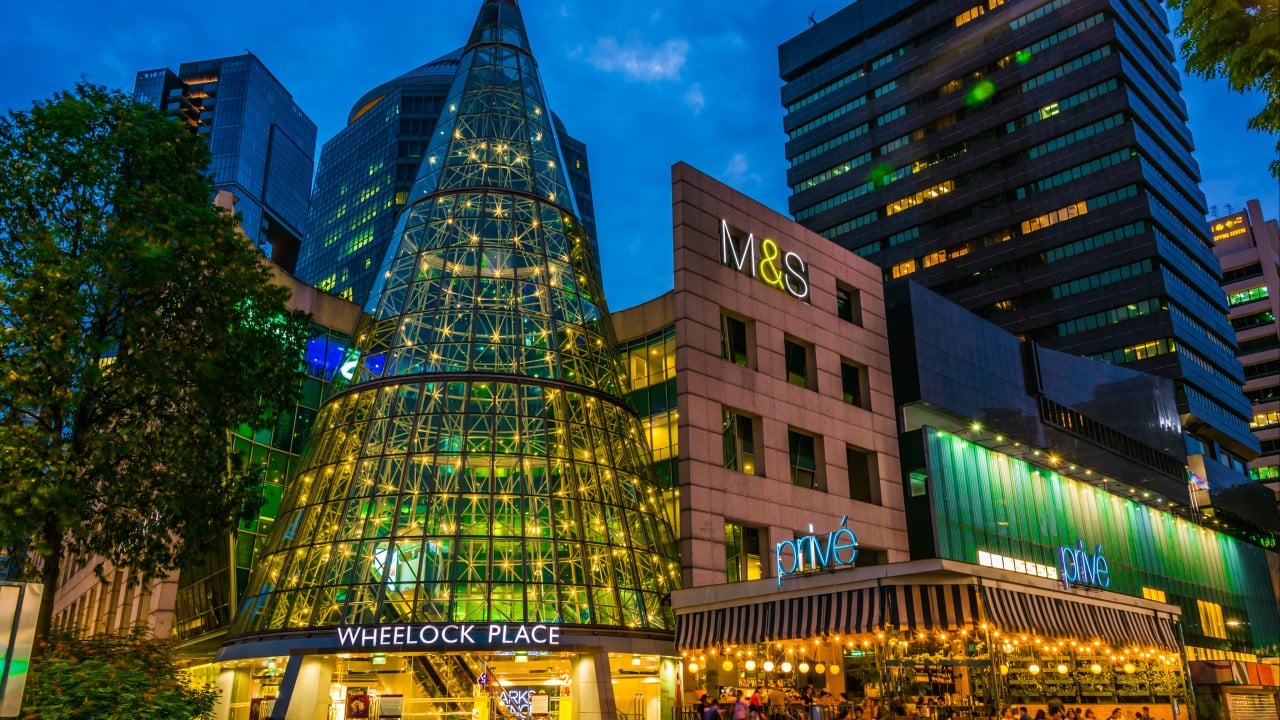
Capital allocation within Southeast Asian commercial real estate follows strict structural rules governed by land tenure decay, yield compression, and the transition from balance-sheet heavy models to asset-light fee-generating structures. Hongkong Land's acquisition of Wheelock Place via its newly minted Singapore Central Private Real Estate Fund for 1.1 billion Singapore dollars ($900 million) provides a textbook study in institutional portfolio reengineering.
Evaluating this transaction requires moving past generic announcements of corporate expansion to examine the underlying financial mechanics: fund-level asset-under-management scaling, leasehold depreciation curves, and the deliberate pivot toward recurring fee income.
The Fund Architecture and Asset Under Management Scaling
The primary vehicle for this transaction is the Singapore Central Private Real Estate Fund, established in February with an initial asset base of 8.2 billion Singapore dollars. The acquisition of Wheelock Place from Wharf Real Estate Investment Company pushes total assets under management to 9.4 billion Singapore dollars, stepping directly toward a stated long-term target of 15 billion Singapore dollars.
This structure alters Hongkong Land's corporate risk profile through two distinct channels:
- Fee Generation Mechanics: By acting as both the fund manager and the single largest unitholder, Hongkong Land captures management fees proportional to total assets under management rather than relying purely on rental yields. Every billion-dollar deployment expands the top-line fee baseline.
- Capital Efficiency: Rather than absorbing 100% of the asset's capital expenditure requirements on its corporate balance sheet, Hongkong Land deploys co-investment equity alongside external capital partners while maintaining operational control.
The transaction price translates to roughly 2,385 Singapore dollars per square foot across a gross floor area of 43,280 square meters, matching independent third-party valuations. This valuation reflects a stable entry point into the Orchard Road corridor, a submarket historically segregated from the core financial district yet vital for integrated retail and office strategies.
The Spatial Logic of Dual-Node Concentration
Hongkong Land's deployment strategy in Singapore relies on strict geographic clustering. Corporate disclosures indicate that the fund restricts its mandate to two precise spatial coordinates: office assets within the Marina Bay financial district and retail-weighted mixed-use assets along Orchard Road.
Wheelock Place fits this spatial constraint precisely. Located at a major intersection with direct underground connectivity to the Orchard Mass Rapid Transit station, the 21-story commercial tower combines prime office space with a multi-level retail podium. This dual-node strategy creates operational efficiencies:
- Tenant Cross-Pollination: Luxury and corporate tenants requiring both high-visibility storefronts and boutique office administration find consolidated options within the fund's expanding ecosystem.
- Leasing Risk Hedging: Office cash flows operate on multi-year staggered lease renewals, whereas retail yields adjust more dynamically to consumer spending variations. Blending these asset classes inside a single vehicle dampens portfolio volatility.
The property sits on a 99-year leasehold site with approximately 63 years remaining. This structural constraint introduces a finite depreciation timeline that must be offset by active yield optimization and rental rate growth over the medium term.
The Cost Function of Leasehold Decay and Yield Accretion
Every acquisition of a leasehold asset in Singapore triggers a predictable valuation decay curve as the remaining lease tenure drops below the 70-year threshold. At 63 years remaining, Wheelock Place demands active capital expenditure to maintain premium rental rates against newer, longer-tenure or freehold completions.
To ensure the purchase remains accretive to underlying earnings upon its completion in August, the operational strategy must exploit several levers:
- Tenant Mix Upgrades: Replacing legacy retail yields with high-margin luxury or experiential concepts that command higher base rents plus turnover rent percentages.
- Operational Expense Rationalization: Centralizing facility management across the fund's broader portfolio to compress property-level operating costs.
- Financing Cost Arbitrage: Funding the acquisition through a mixture of partner equity and optimized debt structures that yield a spread above the cost of capital.
Wharf Real Estate Investment Company realized an unaudited pre-tax profit of approximately 128 million dollars on the sale following a competitive bidding process, signaling that prime Orchard Road assets retain robust institutional liquidity even in high-interest rate environments. For Hongkong Land, absorbing this asset validates the viability of scaling private real estate vehicles as traditional direct ownership models face balance-sheet constraints.
Execute the next phase of capital deployment by targeting operational synergies across the combined Marina Bay and Orchard Road portfolios, prioritizing rent-roll optimization in retail podium spaces where foot traffic conversion rates outpace broader market averages.