The wind across the Waun Mawn commons doesn't just blow. It bites. It sweeps down from the Preseli Hills in southwest Wales, carrying the scent of damp peat and ancient salt. If you stand there in the gray drizzle of an autumn afternoon, your boots sinking into the sodden earth, it feels like the edge of the world. It feels empty.
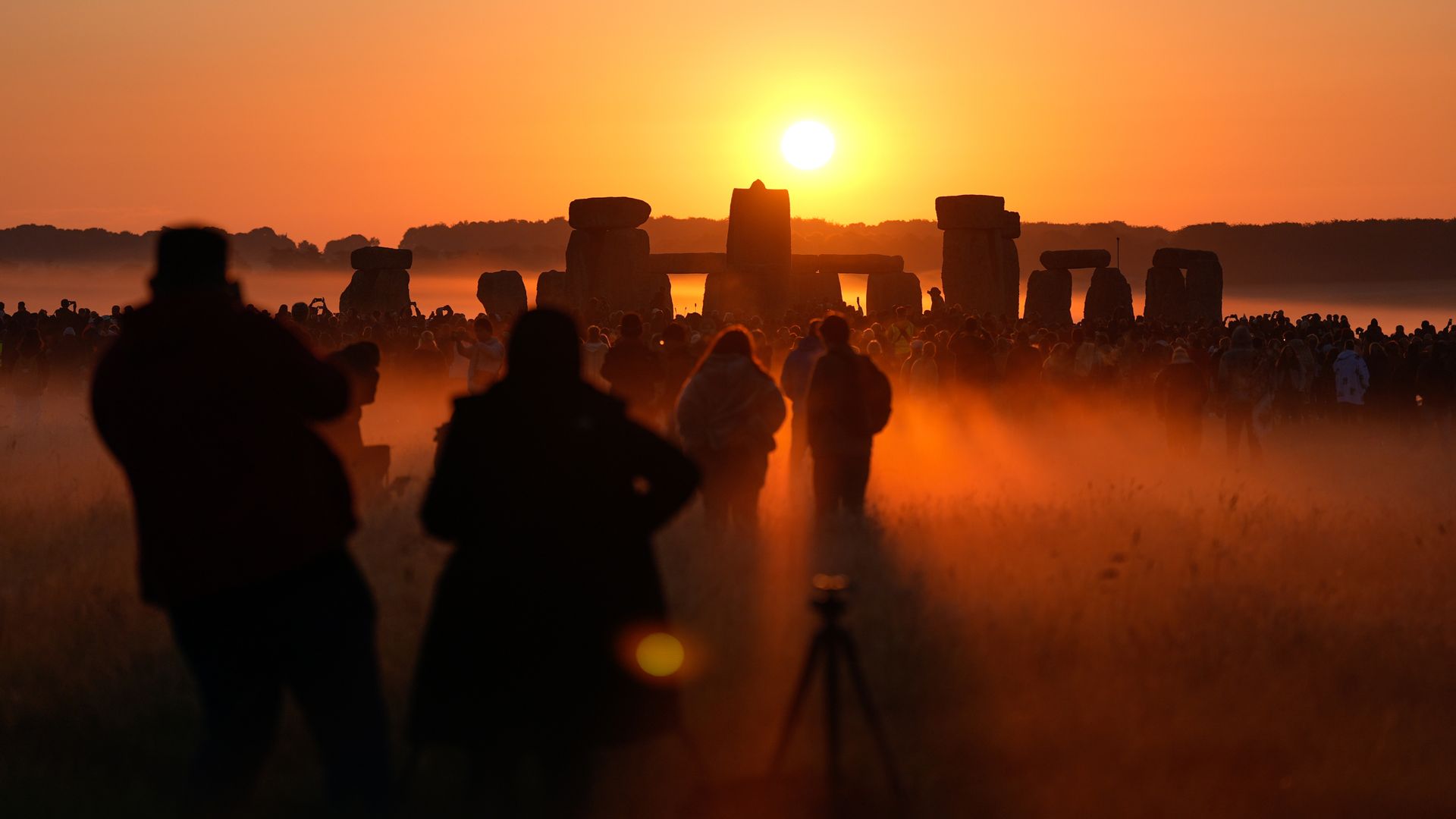
For centuries, we looked at this desolate plateau and saw nothing but a few scattered, forgotten rocks. We saved our awe for Wiltshire. We saved our postcards for Stonehenge, that towering monument of monolithic power standing proud on the Salisbury Plain. Stonehenge is the celebrity of the ancient world. It is clean, it is grand, and it feels entirely deliberate.
But history is messy. It doesn't begin with a masterpiece. It begins with a rough draft.
Archaeologists digging into the wind-scoured earth of Waun Mawn uncovered something that shifts our entire understanding of how our ancestors interacted with the landscape, with community, and with the concept of home. They didn't just find another archaeological site. They found a ghost.
Waun Mawn was the prototype.
Before the grand architectural triumph in Wiltshire, there was a heartbreak in the Welsh hills.
The Ghost in the Dirt
Imagine a young woman named Gwen. She lived five thousand years ago, during the Neolithic transition. Her fingers are permanently stained with charcoal and her shoulders ache from the daily grind of survival. Yet, her life isn’t defined by the struggle for food. It is defined by the heavy, dark blue stones that her community has spent generations hauling from the nearby quarries.
To Gwen and her people, these bluestones aren't just rocks. They are ancestors. They are the physical manifestation of their lineage, their stories, and their gods.
For years, archaeologists wondered why the inner ring of Stonehenge was constructed from Welsh bluestones, transported over 140 miles across land and sea to Wiltshire. It was an engineering nightmare. It defied logic. Why not just use the local sarsen stones available right there on the Salisbury Plain?
The answer lay buried in the Welsh mud.
When researchers analyzed the empty sockets at Waun Mawn, the truth emerged with startling clarity. The stone circles weren't just similar; they matched. One of the unique, unshaped bluestones at Stonehenge has a highly unusual cross-section that fits perfectly into one of the empty holes left behind at Waun Mawn.
This wasn't a separate monument. It was the original. Waun Mawn was a great stone circle, one of the largest in Britain, aligned precisely with the midsummer solstice sunrise.
Then, around 3000 BC, the people vanished. And they took their temple with them.
The Great Migration
Society didn't just expand; it migrated. We often view ancient people as static, rooted to the soil where they were born. But the evidence suggests a massive, sweeping movement of people from western Wales to the east.
They didn't leave because of war. The archaeological record shows no signs of a brutal massacre or a scorched-earth invasion. Instead, it feels more akin to a collective, deliberate decision to move toward a new center of gravity.
But imagine the psychological weight of that journey. You are leaving the hills that have sheltered your family for centuries. You are walking away from the valleys that know your name. How do you maintain your identity when you move to a completely foreign territory?
You pack up your gods.
Dismantling Waun Mawn must have been an agonizing, monumental task. The bluestones weigh up to four tons each. Pulling them out of the Welsh earth required massive wooden levers, thick ropes of braided hide, and the combined muscle of hundreds of people. They dragged these colossal weights over rugged terrain, floated them on primitive rafts along the coast, and hauled them up onto the Salisbury Plain.
They rebuilt their sacred circle at Stonehenge, incorporating the ancient Welsh stones into the new, grander design. It was the ultimate act of cultural continuity. By placing the old stones at the heart of the new monument, they ensured that their ancestors were still watching over them. They brought their home with them.
Why the First Attempt Matters
We live in a culture obsessed with the finished product. We celebrate the launch of the polished app, the opening of the towering skyscraper, the unveiling of the masterpiece. We rarely look at the cracked foundations, the discarded blueprints, or the failed first attempts that made the triumph possible.
Stonehenge is magnificent, but it is also sterile in its perfection. Waun Mawn is where the human grease is. It is where the mistakes were made.
At Waun Mawn, the alignment with the solstice isn't quite as perfect as it became later. The spacing of the stones shows the trial-and-error of a society learning how to calculate the movements of the heavens using nothing but giant rocks and human sightlines. It represents the raw, unpolished dawn of human engineering.
Consider what happens next when a society outgrows its cradle. The move to Wiltshire wasn't just a change of address; it was a massive scaling up of human ambition. On the Salisbury Plain, the Welsh bluestones were eventually surrounded by the massive sarsen stones, creating the iconic silhouette we know today.
But without the practice run in the Welsh hills, the grand vision of Stonehenge could never have been realized.
The Silence of the Hills
Today, Waun Mawn is quiet again. Only a few stones remain, scattered and leaning like broken teeth against the Welsh sky. The rest are sitting in Wiltshire, surrounded by millions of tourists every year, roped off and guarded.
There is a profound loneliness to the Welsh site. It feels like an abandoned hometown, the place everyone left behind to chase a brighter future in the big city. The crowds flock to Stonehenge to marvel at the scale of human achievement, completely unaware that the soul of the monument was forged in the damp, quiet solitude of Waun Mawn.
Standing on that Welsh hillside, watching the fog roll over the ridges, the true scale of the ancient world hits you. It wasn't a world of isolated tribes living in darkness. It was a world of connection, of massive migrations, and of a shared human desire to build something that would outlast the flesh.
The true magic of these monuments isn't the mystery of how they were built. It is the deeply human reason why they were built. We build because we are terrified of being forgotten. We move stones because we want to anchor ourselves to the earth, to tell the universe that we were here, that we loved this place, and that we mattered.
The wind continues to howl across the empty sockets of Waun Mawn, whispering the names of the people who carried their gods across the world, leaving behind nothing but holes in the dirt and an echo that took five thousand years to hear.


