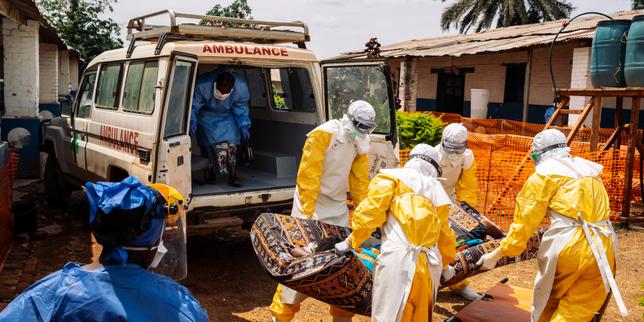
Western media loves a tragedy it can neatly package into a two-minute video segment. A somber journalist stands before a backdrop of red dirt in the Democratic Republic of Congo, whispering into a microphone about how "Congolese people continue to die in silence at home." The camera pans to a weeping relative. The background music swells. The underlying narrative is always the same: locals are ignorant, fearful, or stubborn, and if we just send more foreign aid workers, more vaccines, and more Western cameras, the crisis will vanish.
It is a comforting lie. It is also completely wrong.
The standard humanitarian playbook treats Ebola outbreaks as purely medical emergencies wrapped in a PR problem. They claim the primary barrier to ending an outbreak is "misinformation" or a lack of international funding. I have spent years tracking how public health interventions actually play out on the ground in conflict zones, and the reality is ugly.
The conventional wisdom misses the entire point. Congolese citizens are not dying in silence because they do not know Ebola is dangerous. They are avoiding Westernized Ebola Treatment Centers (ETCs) because, based on a perfectly rational calculation of their own self-interest, entering one looks like a death sentence.
The Rationality of Avoiding the "White Tents"
Let us dismantle the premise that community resistance to Ebola response teams is driven by backward superstition.
When an international NGO rolls into a town in North Kivu or Equateur province, they don’t just bring medicine. They bring heavily armed escorts, biometric tracking, and white plastic isolation tents that look remarkably like detention centers. They separate mothers from their children. They demand that traditional burial practices—the cornerstone of community cohesion and spiritual grief—be replaced by body bags and lime pits managed by strangers in hazmat suits.
To a resident of a region that has suffered decades of state neglect, armed conflict, and foreign exploitation, this does not look like healthcare. It looks like a hostile occupation.
Consider the numbers. Historically, early Ebola treatment centers had mortality rates hovering around 50% to 70%. If a family member enters a tent and never comes out, the community does not credit the virus; they blame the tent. When the World Health Organization (WHO) or Doctors Without Borders (MSF) floods a zone with millions of dollars while the local clinic down the street lacks basic antibiotics and clean running water, the locals see the hypocrisy instantly.
Why does the West only care when a disease threatens to cross an international border? If you are a Congolese parent whose child is far more likely to die of malaria, measles, or malnutrition, the hyper-fixation on Ebola feels deeply cynical.
The Perverse Incentives of the Aid Industrial Complex
The competitor’s piece mourns the lack of trust. What they fail to mention is that the international aid apparatus actively destroys trust through its funding structures.
An Ebola outbreak is a multi-million-dollar economy. When a crisis is declared, a massive influx of capital enters a highly fragile local ecosystem.
- Daily stipends for foreign consultants dwarf the annual salaries of local doctors.
- Landlords jack up rents for SUV-driving humanitarians.
- Local politicians realize that keeping the outbreak "active" ensures a steady stream of resources.
This creates a perverse incentive structure. The longer the panic lasts, the longer the funding flows. The moment the crisis ends, the circus packs up, leaving the local health infrastructure just as gutted as it was before.
I have watched public health agencies pour millions into high-tech experimental therapeutics while refusing to fund basic PPE for local nurses who are the true first responders. We treat the local population as passive victims to be saved, rather than the primary architects of their own survival.
Stop Educating the Public; Start Listening to Them
The standard response to community resistance is always "more sensitization campaigns." This is code for flying in Western experts to lecture locals on hygiene.
It is patronizing, and it fails.
During the 2018–2020 Kivu outbreak, the turning point did not come from a slick media campaign or a foreign journalist’s exposé. It happened when the response was decentralized. When local community leaders, respected pastors, and local health workers were given the resources—and the authority—to manage isolation spaces within existing, trusted community clinics, the narrative flipped.
When you remove the heavily armed escorts and the alienating plastic barriers, compliance skyrockets. When you allow families to see their loved ones safely through clear glass and participate in modified, dignified burials, the "silence" disappears.
The downside to this contrarian approach? It requires Western organizations to relinquish control. It means acknowledging that a local tribal elder has more epidemiological authority in their village than a Harvard-trained researcher with a laptop. It requires admitting that our top-down, command-and-control medical model is fundamentally incompatible with deeply rooted cultural realities.
The Real Question We Refuse to Ask
Public health forums are flooded with flawed questions: "How do we overcome community resistance?" or "How do we stop people from dying at home?"
The real question is: "What has our response done to make dying at home look like the safer option?"
Until international agencies stop treating community distrust as an irrational defect to be corrected and start viewing it as a logical reaction to a broken system, people will keep dying in silence. The solution isn't more cameras, more money, or more pity. It is radical humility and the complete deconstruction of the top-down humanitarian model.
Stop trying to fix the Congolese people. Fix the intervention.