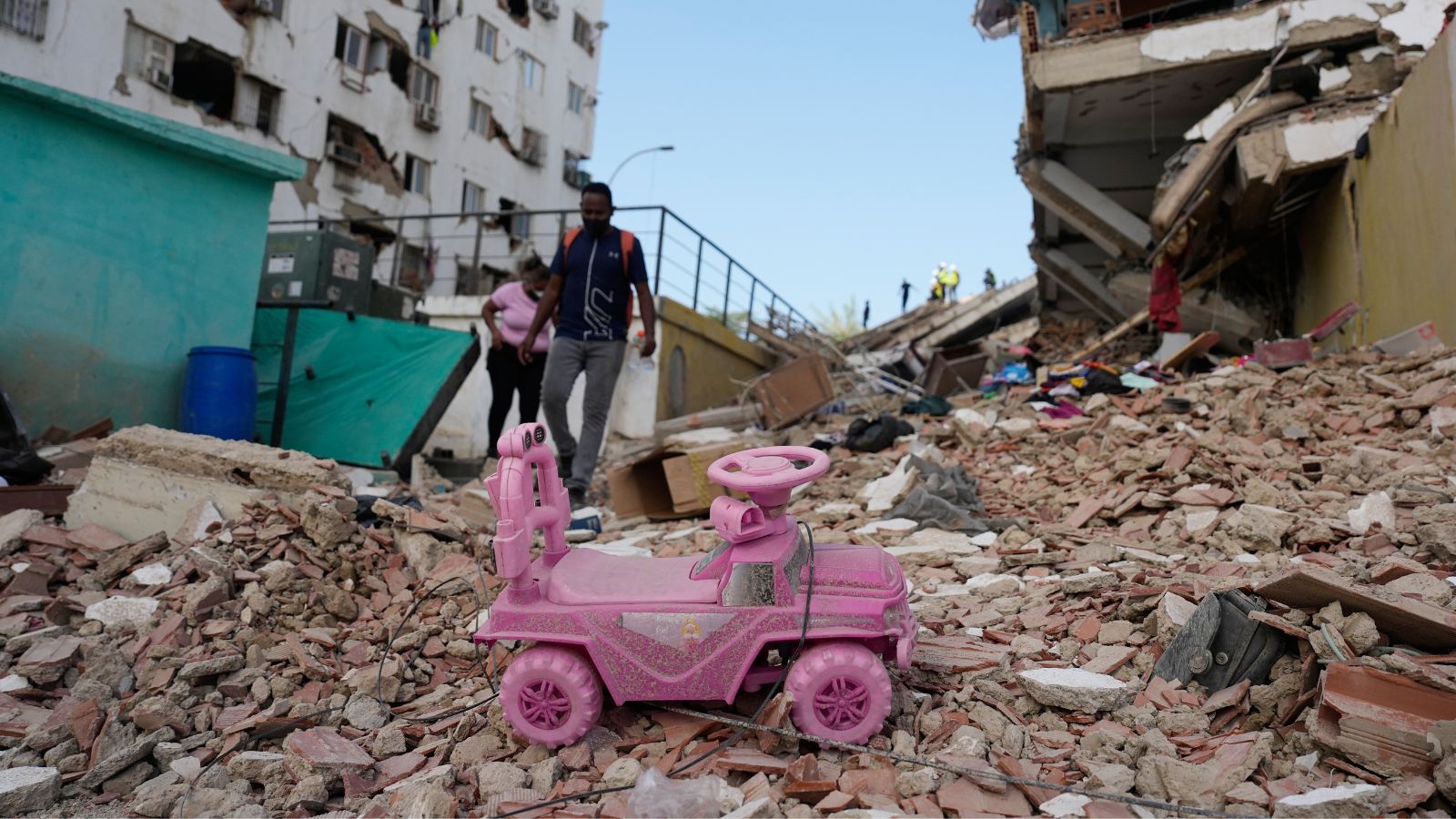
The sound did not begin with a crash. It began with a low, sub-audible shudder that vibrated through the soles of bare feet before it ever reached the ears. In the Sucre district, just as dusk was bruising the Venezuelan sky into shades of deep purple, the ground simply forgot how to be solid.
Concrete turned to liquid. Bricks became shrapnel.
When the earth finally stopped screaming, a terrifying, heavy silence fell over the towns. Then came the dust—a thick, gray powder made of pulverized homes, schoolbooks, and memories that hung in the air, coating the throats of the survivors.
Official dispatches from Caracas offer cold arithmetic to explain the nightmare. The spreadsheets and news tickers now read 1,430 dead. It is a number that expands by the hour as rescue teams claw through the debris. But numbers are an anesthesia. They numb the mind to protect it from the scale of the horror. To understand what is actually happening in the fractured streets, you have to look past the tally and into the gray mist.
Imagine a man named Alejandro. He is not a statistic; he is a schoolteacher whose fingernails are currently split and bleeding from shifting chunks of a collapsed wall. Beneath that wall is his daughter’s bright blue backpack. He does not know if she is still beneath it too. His reality is not a crisis vector discussed in international aid forums. It is the weight of a single stone he cannot lift alone.
This is the human face of the disaster gripping Venezuela.
The Anatomy of the Collapse
Earthquakes do not just destroy buildings; they shatter the fragile infrastructure of daily survival. In the immediate aftermath of the tremor, the primary threat is obvious—falling debris. But as the hours bleed into days, the secondary disaster begins its quiet, lethal march.
Clean water vanished the moment the main pipelines snapped beneath the shifting plates. The electrical grid, already fragile before the disaster, flickered out across multiple states, plunging hospitals into darkness. Surgeons are operating by the glow of smartphones, their hands steady despite the chaos, fighting to keep the injured from joining the official count.
Consider the compounding math of a disaster in a region already strained by economic hardship. Heavy machinery is scarce. Fuel to run the excavators must be trucked in over roads that have been split wide open by the fault lines.
The rescue effort is largely manual. It is a slow, agonizing process of human chains passing buckets of rubble down lines of volunteers. Neighbors who barely spoke last week are now bound together in a desperate race against the clock, their hands caked in the same gray dust.
The Invisible Clock
Time operates differently in a disaster zone. The first seventy-two hours are known among search and rescue teams as the golden window. During this period, the adrenaline is high, and the hope of finding survivors trapped in air pockets keeps exhaustion at bay.
But as that window slams shut, the atmosphere changes. The air grows heavier. The smell of ruptured gas lines and decaying matter begins to dominate the senses.
The psychological toll on the survivors is a quiet epidemic. The ground beneath their feet, the one thing that human beings instinctively trust to remain stable, has betrayed them. Every minor aftershock sends a jolt of pure panic through the crowds huddled in makeshift camps in public parks. They refuse to go back inside any building that still stands. They prefer the vulnerability of the open sky to the threat of another ceiling coming down.
Aid organizations are scrambling to navigate the logistical labyrinth. Blankets, medical supplies, and water purification tablets are piling up at border checkpoints and airports, caught in the friction of bureaucracy and damaged transport links. Every hour a pallet of supplies sits on a tarmac, the stakes rise for those shivering in the rain in the valleys of Sucre.
Beyond the Rubble
The narrative broadcast to the outside world often focuses on the immediate drama of the rescue—the miraculous extraction of a child from a void, the cheers of the crowd, the flashing cameras. But the cameras eventually leave. The news cycle moves on to the next tremor, the next political scandal, the next economic shift.
The people left behind face a decade of picking up the pieces.
Rebuilding a community requires more than just pouring new concrete. It requires healing the collective trauma of a population that watched their world dissolve in a matter of seconds. It means answering the hard questions about building codes, emergency preparedness, and why certain neighborhoods suffered so much more than others. The poorest areas, built precariously on the hillsides with substandard materials, bore the brunt of the kinetic energy released by the earth. Poverty, it turns out, has a terrifyingly high seismic vulnerability.
As the sun sets again, casting long, eerie shadows over the ruins, the search lights click on. They are powered by noisy, sputtering generators that puncture the night air. Alejandro is still there, his hands raw, his voice hoarse from calling out a name into the gaps between the concrete slabs. He will not stop until the light fails completely, and even then, he will likely sit on the rubble, waiting for the dawn to show him where to dig next.
The true cost of the earthquake cannot be measured by the length of a graveyard or the decimal points of a financial damage report. It is measured in the quiet desperation of a father who refuses to leave a pile of stones, holding a blue backpack against his chest as the cold night air settles over the valley.