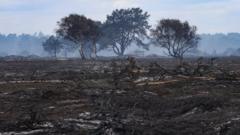
Flames don't care about rare habitats or local memories. They just consume. When a massive wildfire tore through Dunwich Heath in Suffolk, it left behind a stark, charred landscape where vibrant purple heather used to thrive.
If you've ever walked those coastal paths, the sheer scale of the destruction hurts to look at. Fourteen fire appliances rushed to the scene near Leiston at the height of the blaze. Crews worked around the clock to contain a disaster that turned miles of precious lowland heath into smoking ash.
Right now, the situation is finally stabilizing. Suffolk Fire and Rescue Service scaled back overnight operations to eight appliances after carving out critical firebreaks. But getting the region back on its feet requires much more than just putting out hot embers.
The True Cost to Local Wildlife
Lowland heath is one of the rarest habitats across the United Kingdom. About 92 percent of it has vanished in England over the past century and a quarter. Losing a chunk of it to an uncontrollable blaze deals a massive blow to local biodiversity.
National Trust director-general Hilary McGrady didn't sugarcoat the reality, calling the aftermath total devastation. Ground-nesting birds like nightjars, skylarks, and the elusive Dartford warbler lost vital breeding grounds. Reptiles and rare insects—including adders, slow worms, and the silver-studded blue butterfly—took the brunt of the fast-moving wall of fire.
When habitats vanish this quickly, populations struggle to bounce back. Nature needs a hand. That's why waiting around for things to fix themselves won't work.
Stepping Up Through Emergency Fundraising
You can't just throw water on a crisis and walk away. Restoring an ecosystem requires serious capital, physical labor, and a long-term plan.
The National Trust launched an emergency public fundraising appeal to rescue the reserve. Every pound donated goes straight toward regrowing native plants, rebuilding wildlife corridors, and turning the landscape into a climate-resilient space.
Charities rely heavily on public pockets when natural disasters strike. If you want to help, contributing directly to the National Trust's Dunwich Heath appeal is the fastest way to get boots on the ground for restoration.
What Recovery Looks Like Now
Fire crews still maintain a watchful eye over the smouldering perimeter. Local roads and footpaths remain shut tight to keep civilian traffic out of the way of heavy emergency vehicles.
If you live nearby or planned a weekend trip, stay away from the area. Let the crews finish their job. Once the smoke clears completely, the real rebuilding begins. Share the fundraiser, support local conservation efforts, and give Dunwich Heath the fighting chance it needs to bloom again.