The Official Line Is A Comforting Fiction
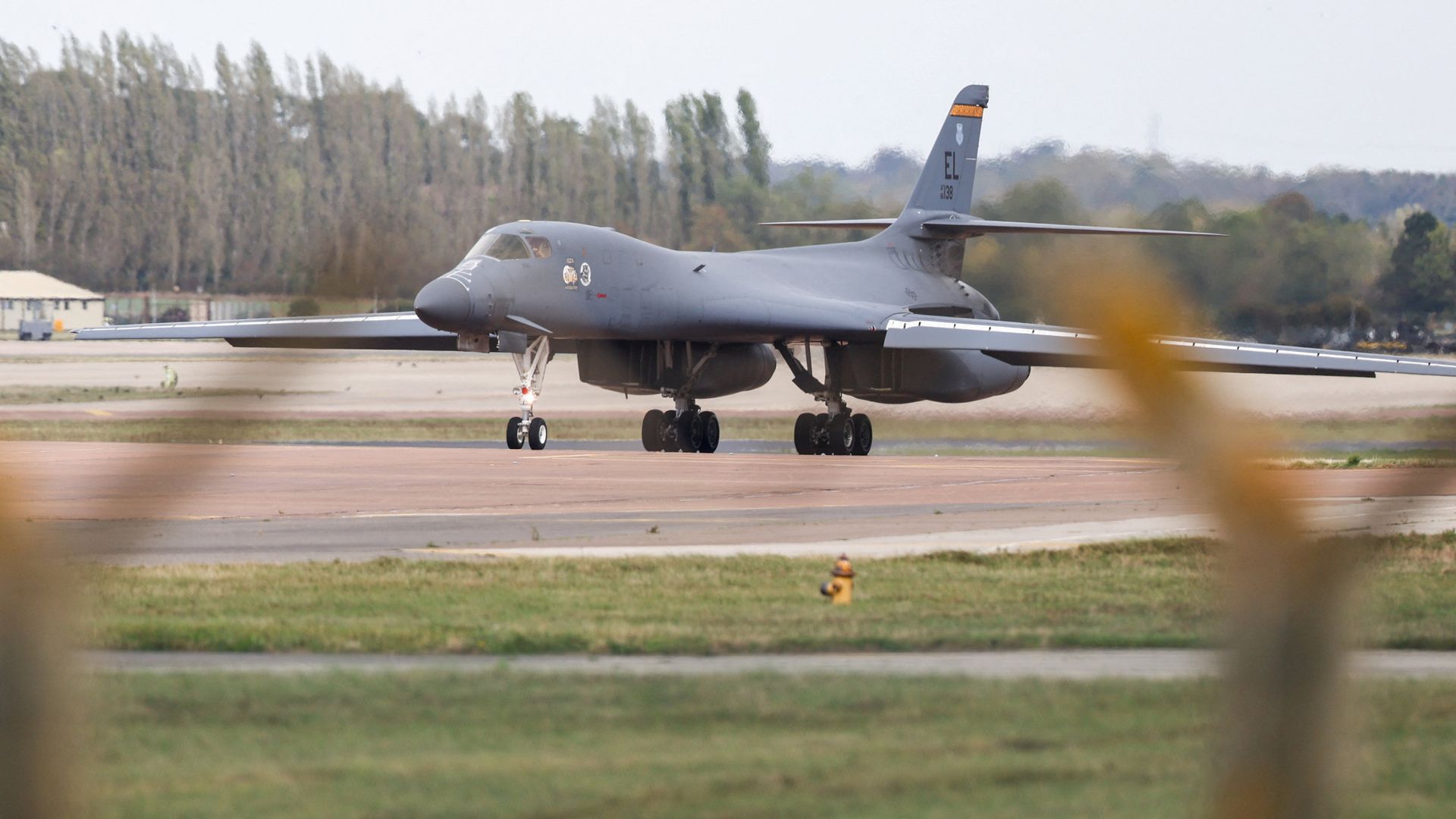
No 10 wants you to sleep soundly. When the B-52s packed up and flew back across the Atlantic from RAF Fairford, the official spin machine whirred into motion instantly. Everything is fine. The base remains completely secure. Strategic deterrence suffers zero friction. It is all routine maintenance, rotational deployment scheduling, and bureaucratic housekeeping.
Absolute nonsense.
I have spent the better part of two decades tracking military logistics, force posture shifts, and the quiet mechanics of transatlantic defense agreements. When strategic heavy bombers pull out of a forward operating location without an immediate, equivalent replacement, defense analysts do not shrug and consult the press office. We check our flight logs. We look at tanker availability. We look at the cracks in the alliance architecture.
The lazy consensus in mainstream reporting accepts Downing Street’s assurances at face value. The lazy
Why Downing Street Is Lying To You About RAF Fairford And Bomber Withdrawals
news
No 10 wants you to sleep soundly. That is their primary job during a geopolitical tremor. When Downing Street issues a flat denial, insisting that RAF Fairford remains completely safe and strategically vital despite a sudden withdrawal of United States strategic bombers, they are not reporting reality. They are managing your anxiety.
The lazy consensus in mainstream defense reporting treats a bomber rotation as mere administrative housekeeping. The official line reads like a bureaucratic sedative: planes leave, planes return, the hangar doors stay oiled, and the nuclear umbrella remains firmly overhead.
That narrative is dangerously naive.
I have spent decades watching military infrastructure pivot behind closed doors. When Washington pulls its heavy metal out of Gloucestershire without a permanent, equal-weight replacement parked on the tarmac, it signals a quiet reallocation of risk. It means the United States Air Force just decided that keeping B-52s or B-2s exposed inside the range of modern contested airspace in Western Europe is a bad bet.
Let us look at what actually happened. The bombers departed. Local officials shrugged. Westminster claimed operational security and business as usual. But deterrence is not about concrete runways or fuel bladders. Deterrence is about forward-deployed vulnerability. If you pull the teeth out of an advanced staging post, you are not projecting strength. You are retreating to a safer geopolitical zone and leaving your allies holding the bag.
The Geography of Illusion
To understand why Downing Street is spinning this withdrawal, we need to dismantle the geographic myth of RAF Fairford.
For decades, military analysts have treated Fairford as an irreplaceable node in the North Atlantic Treaty Organization architecture. It boasts the longest runway in the United Kingdom capable of handling heavy strategic assets. During the Cold War, during the Balkans conflicts, and during operations in the Middle East, it served as the literal launchpad for American global power projection.
Military planners love concrete because concrete does not talk back. But fixed forward bases in an era of hypersonic glide vehicles and long-range cruise missiles are stationary targets.
Imagine a scenario where a peer adversary launches a coordinated saturation strike using low-observable cruise missiles from submarines in the Norwegian Sea. A massive, concentrated parking lot of multi-million-dollar strategic bombers sitting in rural Gloucestershire is not a deterrent. It is a wet dream for a targeting officer.
When the Pentagon pulls bombers from Fairford, they are adapting to a brutal tactical truth: fixed megabases inside the European theater are fast becoming liabilities rather than assets. The cost-to-intercept ratio has shifted. Defending a static airbase against asymmetric, high-volume aerial bombardment drains resources faster than building new defenses can fix.
Downing Street cannot admit this because it shatters the core political illusion of the special relationship. Admitting that Fairford is too exposed to host continuous strategic bomber rotations means admitting that the frontline of deterrence has shifted thousands of miles west, or that the nature of air power has moved away from sprawling runways toward disaggregated, agile combat employment.
The Disaggregation Myth
The counter-argument from defense apologists usually points to Agile Combat Employment. They will tell you that the United States is not abandoning Fairford; they are simply adopting a more flexible posture. They will argue that bombers can fly non-stop from the continental United States, refueled in mid-air, striking targets in Europe or beyond without ever needing to touch British soil for extended periods.
This argument sounds sophisticated, but it collapses under basic logistical scrutiny.
Flying a B-52 or a B-2 from Whiteman or Barksdale Air Force Base straight into a European crisis zone sounds impressive on a PowerPoint slide at a think tank symposium. In practice, it introduces immense friction. It burns through airframe lifespans at an unsustainable rate. It ties up critical tanker fleets that are already stretched thin across multiple theaters, particularly with mounting tensions in the Indo-Pacific. And most importantly, it robs commanders of response time.
A bomber parked at Fairford can spool up, launch, and be over a contested boundary in hours, backed by deep regional intelligence networks. A bomber crossing the Atlantic requires days of diplomatic clearances, complex staging coordination, and vulnerable tanker chains.
When the bombers leave Fairford and are not replaced, operational tempo drops to zero. You cannot project continuous strategic ambiguity from a thousand miles away with a handful of visiting aircraft that drop in for a photo opportunity twice a year.
Dismantling the Official Spin
Let us look at the specific language coming out of Whitehall. When No 10 says the base remains safe, they are playing a semantic game with the word "safe."
They mean the base is not closing. They mean the lease is secure, the local economy is not collapsing, and the property values in Lechlade are fine. They are talking about real estate management.
They are deliberately avoiding the strategic definition of safety. A military base is only as safe as its utility. If a facility cannot perform its primary wartime mission—hosting and launching strategic nuclear and conventional strike packages under threat of peer-level retaliation—then the base is strategically dead, regardless of how many flags are flying at the gate.
The real reason the bombers were pulled traces back to a quiet pivot in Washington's strategic priorities. The Pentagon is bracing for a multi-front reality. Resources are finite. The Pacific theater is consuming an increasing share of high-end strategic assets, while European capitals are expected to shoulder more of their own conventional defense burden.
By pulling the heavy bombers back, the US military is quietly forcing European members to reckon with their own vulnerabilities. For years, British defense policy has relied on the psychological comfort of the American nuclear and strategic umbrella stationed conveniently on English soil. When that umbrella gets folded up and carried away for indefinite maintenance, the illusion of perpetual protection vanishes.
The Cost of Complacency
We are witnessing the slow-motion erosion of legacy defense architectures. Pretending that everything is fine because a press secretary read a reassuring script does not change the physics of modern warfare.
If Fairford is no longer deemed secure enough or necessary enough for permanent bomber rotations, then the entire British strategic posture needs a radical audit. Continuing to pretend that we hold a premier card in global strategic strike while our runways sit empty is a dangerous delusion.
Security is not bought with comforting words from a podium. It is bought by acknowledging vulnerability before the enemy exploits it. Downing Street wants you to look away from the empty hangars and trust the briefing notes.
Do not. The bombers left because the math changed, and nobody in power has the courage to tell you why.