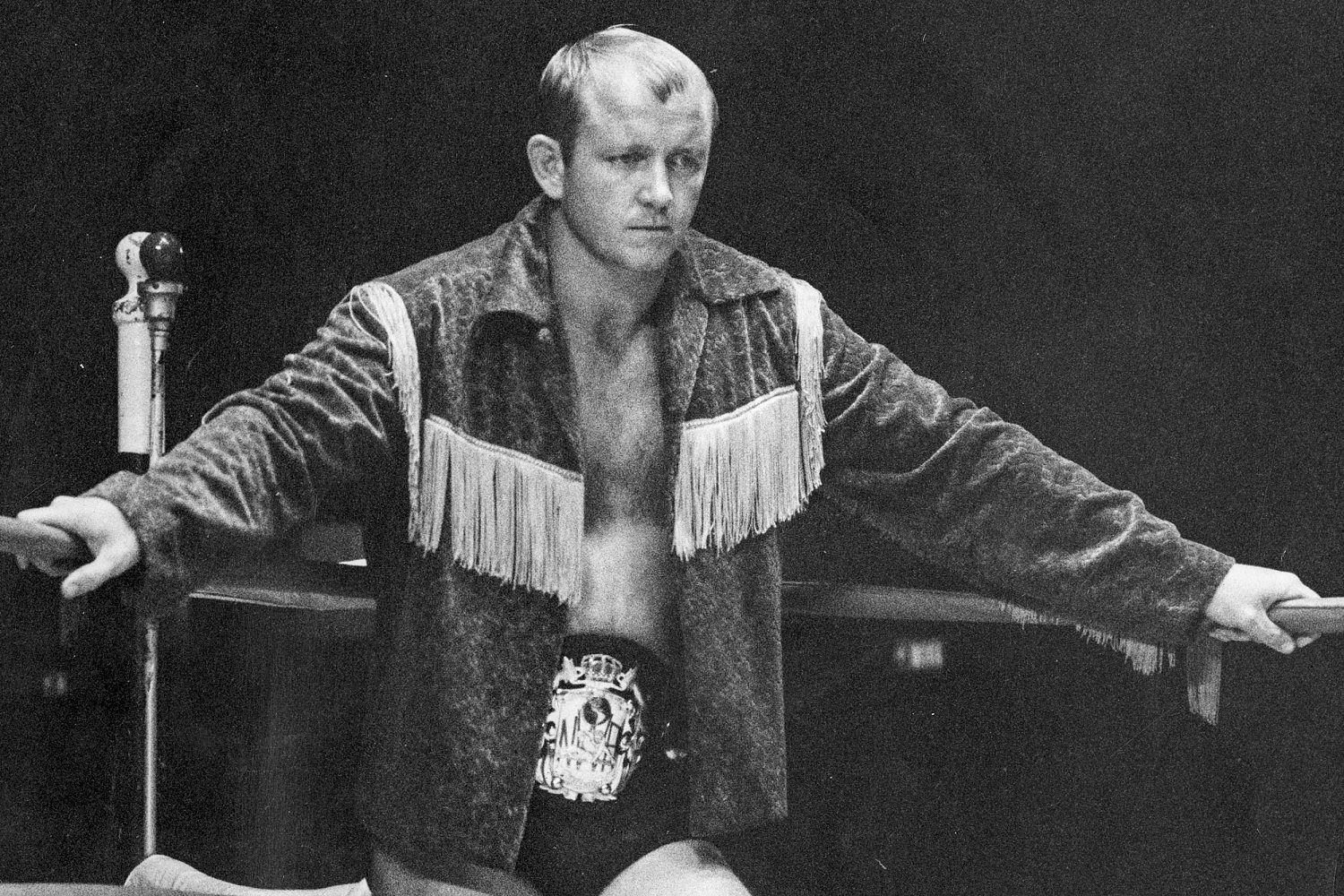
Professional wrestling lost its structural anchor when Dory Funk Jr. passed away at the age of 85 under hospice care in Ocala, Florida. Operating out of the public eye during his final years, his death marks the closing chapter of the Funk dynasty, following his brother Terry’s passing in 2023. For seven decades, the Funk name was synonymous with uncompromising realism, physical endurance, and a style of sports entertainment that treated the squared circle with the gravity of a combat zone.
Modern audiences know wrestling as a globally coordinated, multi-million-dollar television property. Dory Funk Jr. belonged to a different ecosystem entirely. He was the product of regional territories, relentless road schedules, and an athletic philosophy forged by his father, Dory Funk Sr.
The Four-Year Stranglehold on History
On February 11, 1969, Dory Funk Jr. defeated Gene Kiniski in Tampa, Florida, to capture the National Wrestling Alliance (NWA) World Heavyweight Championship. What followed was an astonishing 1,563-day title reign.
In the contemporary landscape of short title reigns and rapid belt transitions designed for weekly television pops, a four-year championship run sounds absurd. Back then, it was an operational necessity. The NWA champion was the traveling anchor of a sprawling alliance of independent promoters. Funk lived out of rental cars and airplanes, defending the ten pounds of gold against local heroes across North America, Japan, and beyond.
He was not a high flyer. He was a master of European mat work, submission grappling, and psychological pacing. His matches relied on the illusion of legitimate struggle. Every hold had a counter; every transition told a story. When he lost the belt to Harley Race in Kansas City on May 24, 1973, he left behind a benchmark that only Lou Thesz ever surpassed in duration.
Blueprint for the Trans-Pacific Bridge
Long before modern promotions looked toward international expansion as a corporate growth strategy, Dory Funk Jr. and his brother Terry built a permanent bridge between the United States and Japan.
Through deep relationships with All Japan Pro Wrestling (AJPW) and legendary promoter Giant Baba, the Funks established a standard for how American wrestlers could successfully adapt to the Japanese preference for fierce, strike-heavy competition. Dory did not just tour Japan; he anchored it. He served as the chairman of the Pacific Wrestling Federation (PWF), earning the deep respect of competitors and fans who valued fighting spirit above character theatrics.
This cross-pollination transformed the industry. American mat technicians learned the stiffness of Japanese pacing, while Japanese superstars incorporated the gritty brawling style of the Texas territories.
The Factory of Hard Knocks
When his active full-time days on the road slowed down, Funk turned his attention to preservation. He opened the Funking Conservatory in Ocala, Florida, alongside his wife Marti.
The training facility was infamous for its lack of modern comforts and its abundance of discipline. Aspiring wrestlers did not go to Funk’s school to learn choreography; they went to learn how to protect themselves and their opponents while making violence look authentic.
During the late 1990s, when the World Wrestling Federation utilized his school as an incubator camp, future icons such as Kurt Angle, Edge, Christian, and the Hardy brothers passed through his doors. They absorbed a philosophy rooted in ring safety, crowd management, and old-school accountability. Dory demanded respect for the mat. If a trainee treated the business casually, the exit door was always open.
The Last Surviving Pillar
The death of Dory Funk Jr. closes the book on an architectural era of professional wrestling. The territory system is long gone, replaced by corporate conglomerates and algorithmic content strategies. The grueling, year-round accountability of a traveling world champion has been modified to protect asset health.
Yet, every time a modern performer relies on chain wrestling to build heat, or every time a veteran coach corrects a young athlete's posture in a training camp, the ghost of the Double Cross Ranch remains present. The industry has evolved past its regional roots, but the foundation was poured by men who bled on canvas floors across a fragmented globe. Dory Funk Jr. carried that weight longer than almost anyone else in history, leaving a blueprint that modern spectacle can inherit, but can never truly replicate.