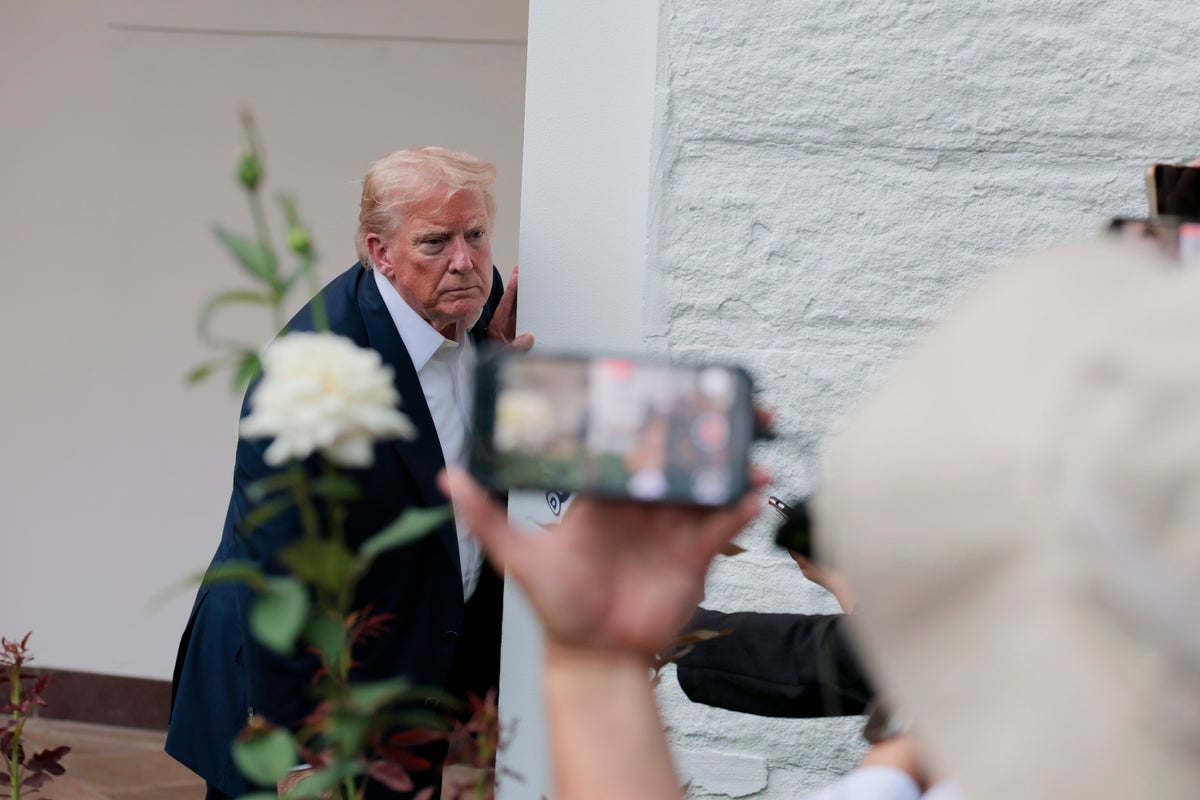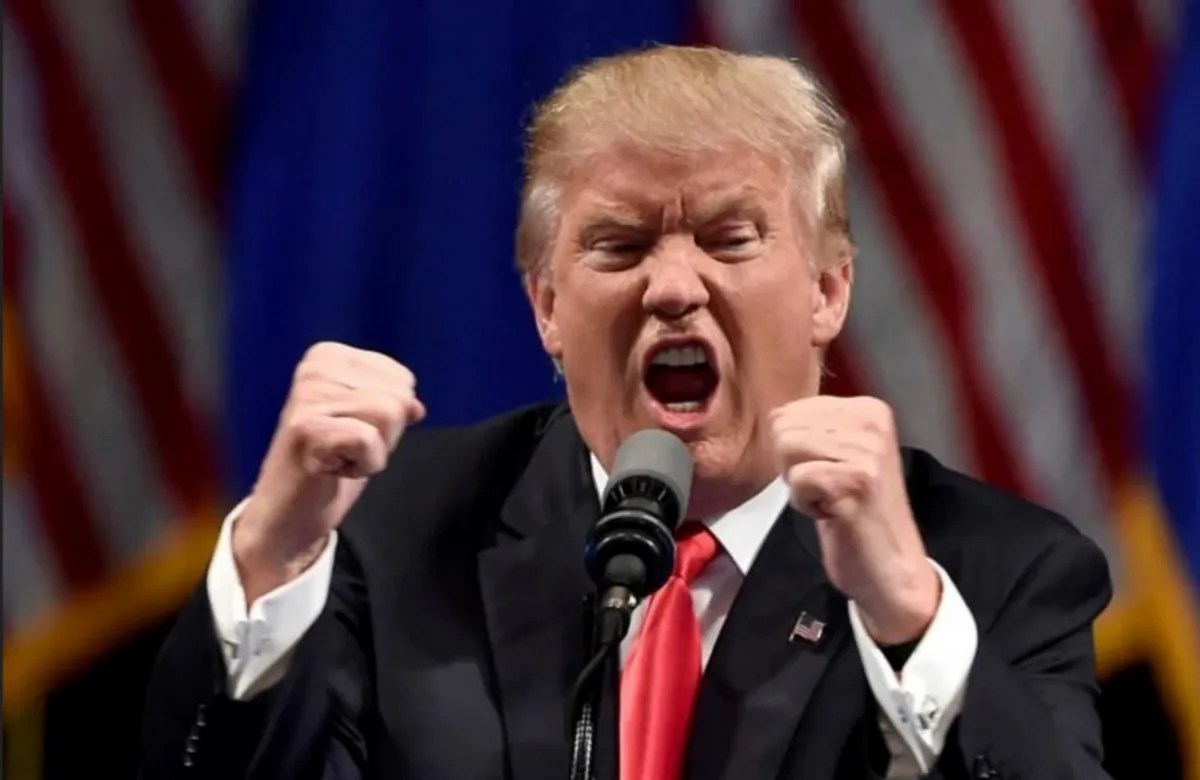
Trump is shouting again. The headlines are screaming about "Iran’s killing machine" and the "need to dismantle it." It is a tired script. It is a script written for 24-hour news cycles and voters who think foreign policy is a game of Risk. But if you are actually looking at the board, you know that calling Iran a "killing machine" isn't just hyperbole—it is a massive strategic distraction.
The media wants you to believe we are on the verge of a binary choice: total war or total submission. Trump wants you to believe his "maximum pressure" is a precision tool. It isn't. It’s a sledgehammer being swung in a dark room. Most analysts are so busy debating the ethics of his rhetoric that they fail to see the fundamental economic and geopolitical mechanics at play. Iran isn't a "machine" that you can just unplug. It is a deeply integrated, resilient, and cynical regional actor that thrives on the very chaos Trump is currently stirring. You might also find this related story useful: Paul Revere Still Rides Through Boston Every April.
The Sanction Paradox Why Pressure Breeds Persistence
The lazy consensus says that if you squeeze an economy hard enough, the regime will collapse or crawl to the negotiating table. History is littered with the corpses of that logic. From Cuba to North Korea, external pressure often acts as a structural reinforcement for authoritarian regimes rather than a solvent.
When you block Iran from the global banking system, you don’t stop the money from flowing. You simply drive it into the "gray market." I’ve watched commodity traders in Dubai and Singapore make fortunes off these inefficiencies. By forcing Iran out of the light, the West has inadvertently created a sophisticated, clandestine financial network that is now immune to conventional Western leverage. As reported in recent articles by TIME, the results are significant.
This "shadow economy" is where the real power lies. It’s controlled by the IRGC (Islamic Revolutionary Guard Corps). Every time Trump ramps up the "killing machine" rhetoric, the IRGC’s grip on the internal economy tightens. They become the only ones capable of moving goods, the only ones with the keys to the black market. You aren't weakening the regime; you are killing the Iranian middle class—the only group that actually had a stake in a Western-facing, modernized Iran.
The Fallacy of the "Quick Fix"
The competitor articles suggest that Iran’s refusal to talk is a sign of weakness or irrationality. That is a fundamental misunderstanding of Persian diplomacy. Iran plays the long game. They have survived centuries of being a buffer state between empires. They see Trump’s four-year (or eight-year) cycles as a temporary weather pattern.
To an Iranian strategist, "Maximum Pressure" is a sunk cost. They have already built the infrastructure to bypass it. They have pivoted to the East. While Washington debates whether to "finish" them, Tehran is busy cementing its role in the "Axis of Resistance" and deepening ties with Beijing and Moscow.
Why the "Killing Machine" Label Backfires
- It grants them the boogeyman status they crave. In the Middle East, being feared is a currency. Trump is essentially doing Iran’s marketing for them.
- It ignores the "Proxy Insulation." Iran doesn't fight its own wars. It uses Hezbollah, the Houthis, and various militias. Destroying the "machine" in Tehran does nothing to stop a drone being launched from a hidden valley in Yemen.
- It creates a "Rally Round the Flag" effect. Even Iranians who loathe the mullahs will side with them when an outsider threatens to "annihilate" their nation.
The Oil Reality Nobody Admits
Let’s talk about the math. The world’s energy markets are a delicate ecosystem. The rhetoric of "shutting down Iran" assumes that the global economy can handle the sudden removal of millions of barrels of oil without a catastrophic spike in prices.
Imagine a scenario where the Strait of Hormuz is actually closed. We aren't talking about a 10% increase at the pump. We are talking about a global depression. The "killing machine" isn't just Iran’s military; it’s their ability to hold the global energy supply hostage. Trump knows this. The markets know this. This is why, despite the fire-breathing speeches, the actual military strikes are usually surgical and symbolic.
The true cost of a full-scale confrontation with Iran would be paid in the devaluation of the dollar and the collapse of Western manufacturing. Is the American voter ready to pay $12 for a gallon of gas to "dismantle" a regime that will likely just go underground?
The Diplomacy of the Absurd
People often ask: "Why won't they just sit down and talk?"
Because the premise of the talk is unconditional surrender disguised as a "better deal." In any high-stakes negotiation—whether it’s a corporate merger or a nuclear treaty—you don't get a deal by threatening to set the building on fire while the other person is inside. You get a deal by identifying their "must-haves" and trading them for yours.
The current approach lacks a "golden bridge" for the adversary to retreat across. If you tell a regime they are a "killing machine" that must be "finished," you give them exactly zero incentive to stop building weapons. You have made their survival contingent on their lethality.
Stop Trying to "Fix" the Middle East
The obsession with "finishing" Iran is a remnant of the failed neo-conservative dreams of the early 2000s. It assumes that the U.S. has the capacity, the will, and the intelligence to re-engineer a 2,500-year-old civilization.
We need to stop asking how to "defeat" Iran and start asking how to contain them effectively without blowing up the global economy. Containment isn't sexy. It doesn't make for great campaign slogans. It doesn't involve "killing machines" or "fire and fury." It involves boring, grinding, technical diplomacy, intelligence sharing, and economic competition.
The real threat isn't that Iran will "take over the world." The real threat is that the U.S. will bankrupt itself and lose its global standing trying to solve a problem that doesn't have a military solution.
The Hard Truth
Trump’s rhetoric is a performance. It is theater for a domestic audience that wants to feel strong. But in the cold, hard world of geopolitics, strength isn't measured by how loud you can yell. It’s measured by how well you can manipulate the board to your advantage without losing your own pieces.
By focusing on "finishing" Iran, we are ignoring the rise of China in the Middle East. We are ignoring the shift of the petrodollar. We are playing checkers while the rest of the world is playing a much more dangerous version of 3D chess.
The "killing machine" is a distraction. The real danger is the vacuum we leave behind every time we prioritize a headline over a strategy.
Stop looking for a "win" in Iran. Start looking for a way to make them irrelevant. That doesn't happen with bombs; it happens with a superior economic model and a diplomatic strategy that doesn't rely on the whims of a four-year election cycle.
The machine isn't the problem. The mechanic is.