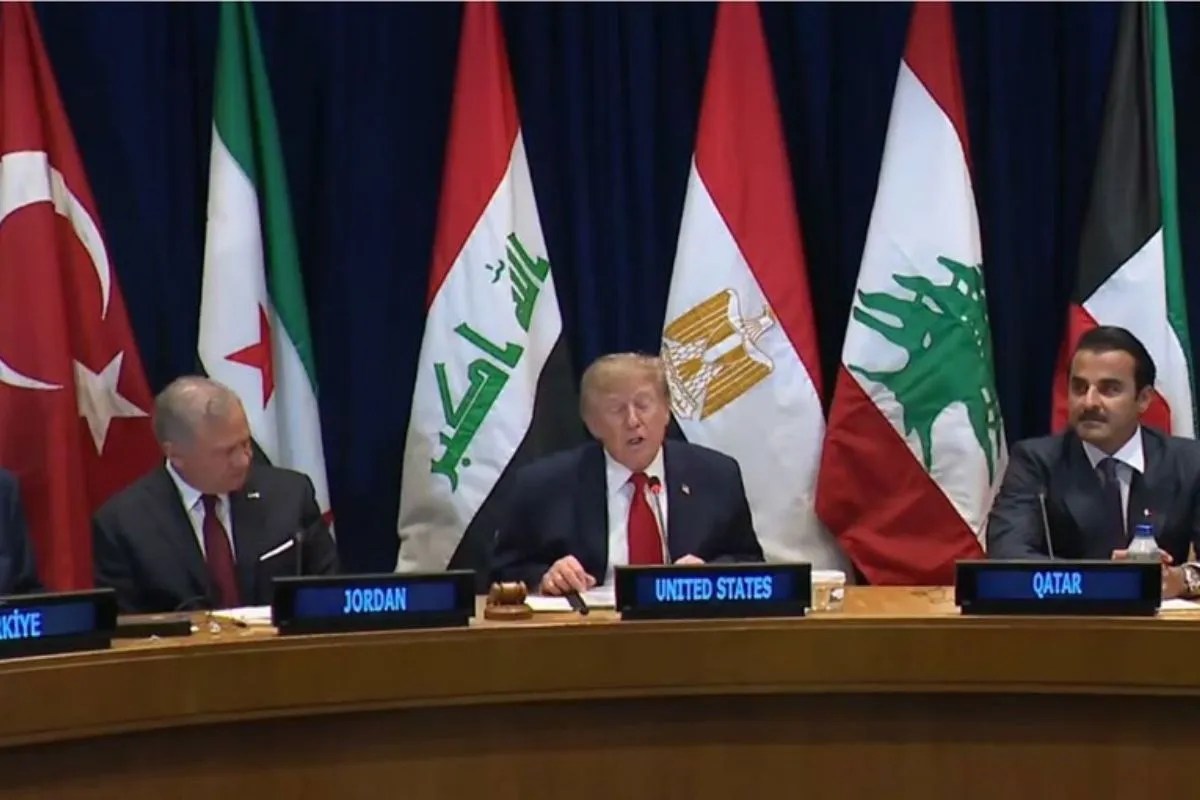
Geopolitical maneuvers in the energy sector rarely happen in a vacuum. When Donald Trump publicly threw his weight behind the India-Middle East-Europe Economic Corridor, known as IMEC, he did more than endorse a massive infrastructure project. He drew a hard economic line against Tehran, signaling an aggressive strategy to isolate Iran by altering critical trade and energy transit pathways across Eurasia.
The core premise of this strategy centers on economic encirclement. By forging a direct commercial bridge linking India through the Arabian Peninsula and Israel directly into European markets, participating nations bypass traditional maritime bottlenecks and hostile territorial corridors. For decades, regional stability in energy transport depended heavily on vulnerable maritime chokepoints like the Strait of Hormuz. Through which a massive share of the world’s liquefied natural gas and petroleum passes daily. An unstable Iran holds disproportionate leverage over these waters. IMEC acts as a strategic bypass valve, designed to drain that leverage over time.
The Anatomy of the IMEC Blueprint
Announced during the G20 summit, the proposed corridor is structured around two distinct multimodal transit routes. An eastern corridor connecting India to the Arabian Gulf, and a northern corridor linking the Gulf to Europe. Railways, shipping lanes, and high-capacity energy and data pipelines form the backbone of the initiative.
Energy security analysts have long pointed out that physical infrastructure dictates political alignment. When goods and energy flow across borders through secure, land-based rail and subsea links, commercial interdependence deepens among allied states. India secures reliable energy and supply chain access without depending on maritime routes susceptible to Iranian naval interdiction. Meanwhile, Gulf states integrate more tightly with European markets through alternative land routes running through Jordan and Israel.
This architecture directly undermines Tehran's ambitions to position itself as the indispensable transit hub of the Middle East. For years, Iran has sought to market itself as the natural bridge between Central Asian energy reserves, South Asia, and European buyers. Projects connecting Iranian ports to regional rail networks were pitched as inevitable economic necessities. The full political backing of IMEC by figures like Trump signals to international investors that backing Iranian-linked infrastructure carries severe secondary sanction risks, while Western and allied capital should instead flow into the rival corridor.
Financial Realities and Regional Friction
Mega-projects of this scale face severe hurdles. Financing a network of cross-border rail links, deep-water ports, and modern pipeline infrastructure requires hundreds of billions of dollars. Private capital remains cautious when geopolitical flashpoints threaten project timelines. Furthermore, the normalization of diplomatic ties across the Middle East remains a foundational requirement for the corridor's physical security.
Recent regional conflicts have tested these alliances. Yet, the underlying economic logic driving IMEC remains intact. Nations dependent on secure energy imports realize that diversification is not merely a policy preference, but an absolute necessity for survival. When a single regional power can disrupt global energy prices by threatening to close a narrow strait, the international community searches for alternatives. IMEC provides that alternative on paper, even if execution takes years of intense diplomatic and engineering effort.
The economic pressure on Iran intensifies as a result. Tehran's state budget relies heavily on petroleum exports, much of which flows through clandestine or sanctioned channels to Asian buyers. By strengthening trade networks that deliberately circumvent Iranian influence, Washington and its partners aim to squeeze state revenues further without engaging in direct military conflict. Economic containment executed through concrete infrastructure investments offers a durable method of long-term deterrence.
The Broader Geopolitical Chessboard
Global trade routes are shifting away from traditional models of globalization toward friend-shoring and security-driven supply chains. Nations are no longer optimizing solely for the lowest cost, but for resilience against hostile actors. The endorsement of IMEC reflects this fundamental shift in global trade philosophy.
As planning moves forward, the success of the corridor will depend on sustained political will from New Delhi, Washington, European capitals, and Gulf partner states. The physical realization of rail networks spanning deserts and modern ports dotting the Mediterranean will redefine commerce for the coming decades. Iran watches these developments closely, fully aware that if IMEC becomes a reality, its geopolitical grip on energy transit will permanently erode.