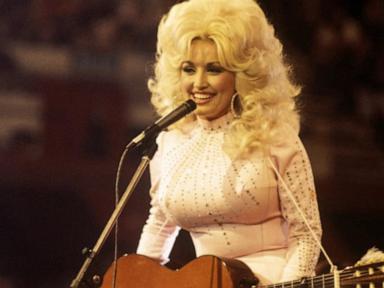
We love our secular saints. We desperately need them. The formula is simple: take a rags-to-riches story, coat it in rhinestones, bake in a self-deprecating folksy charm, and let the public project their collective yearning for authenticity onto a billionaire who owns the master tapes.
For decades, the lazy consensus on Dolly Parton has run on autopilot. Every retrospective, every tribute, every lazy morning-show segment paints her as a harmless woodland creature who stumbled out of a Smoky Mountain holler and accidentally built an empire while baking biscuits and singing about working nine-to-five. If you liked this piece, you should check out: this related article.
It is a comforting myth. It is also entirely fabricated nonsense.
Behind the oversized wigs and the self-effacing punchlines sits one of the most ruthless, calculated business minds in modern entertainment. Parton did not survive six decades in a notoriously predatory industry by being a kindly grandmother figure. She survived because she out-negotiated, out-maneuvered, and out-capitalized every major record label executive, publishing shark, and corporate board that tried to put her in a box. For another look on this development, check out the recent coverage from E! News.
If you think Dolly Parton is a soft-hearted philanthropist who happens to write catchy tunes, you have fallen for the greatest branding masterclass of the twentieth century. Let us dismantle the caricature and look at the actual operator.
The Publishing Heist That Defined Modern Copyright Ownership
Let us start with the single smartest business decision in the history of country music. It happened in 1973, and most pop-culture historians gloss over it because it involves boring contract law rather than sequined gowns.
Elvis Presley wanted to record "I Will Always Love You." At the time, Colonel Tom Parker—Elvis’s infamous manager—demanded his standard operating procedure: Presley’s camp would record the track only if Parker acquired half of the publishing rights.
Any normal, struggling songwriter in the seventies would have folded instantly. Handing over fifty percent of a song to Elvis Presley meant guaranteed radio saturation, massive royalties, and immediate mainstream ascension. It was the industry-standard shakedown.
Parton said no.
She walked away from the King of Rock and Roll because she understood the long-tail value of her intellectual property better than the most powerful manager in the business. Twenty-one years later, Whitney Houston recorded the track for The Bodyguard soundtrack, turning it into one of the best-selling singles of all time. Parton pocketed tens of millions of dollars in royalties because she refused to surrender her equity.
That is not folksy charm. That is hard-nosed, predatory-level asset protection. When people talk about her impact on music and culture, they usually point to her vocal delivery or her cross-demographic appeal. They ignore the fact that she treats her catalog like a venture capitalist treats a seed-stage portfolio. She owns her masters. She owns her publishing. While legendary artists from Prince to Taylor Swift spent decades fighting legal battles to reclaim ownership of their life's work, Parton secured hers before the ink on her second major label contract had even dried.
The Monroe County Industrial Complex
Let us talk about Dollywood, because the cultural conversation around Parton's theme park in Pigeon Forge, Tennessee, completely misses its economic reality.
Mainstream profiles frame Dollywood as a quaint hometown project designed to provide jobs for Appalachian locals. It is framed as charity wrapped in a roller coaster.
Look at the balance sheet. Dollywood is the economic engine of Sevier County. It generates hundreds of millions of dollars in regional tourism revenue, anchors a massive hospitality cluster, and functions as a vertically integrated entertainment holding. Parton partnered with Herschend Family Entertainment, a titan in the themed-attraction space, ensuring she retained significant equity while offloading day-to-day operational friction.
She did not build an amusement park out of nostalgia. She built a cash-flow juggernaut that insulates her from the volatility of the recorded music market. When streaming payouts began destroying the traditional royalty model for legacy artists, Parton was already collecting gate receipts, parking fees, and merchandise sales from millions of families visiting the Smoky Mountains every year.
That is not a country singer. That is a real estate and leisure tycoon who happens to wear custom Bob Mackie designs.
The Weaponization of Self-Deprecation
"It costs a lot of money to look this cheap."
We have all heard the line. It has been quoted in a thousand profile pieces, cited as proof of her down-to-earth humor. But look closer at the mechanics of that statement.
Parton weaponized self-deprecation to disarm her critics before they could even load their weapons. By leaning aggressively into the cartoonish stereotypes of femininity and rural poverty, she created an impenetrable armor. No interviewer could make her look foolish because she had already called herself out first, amplified to the maximum degree.
Underneath the hyper-feminine aesthetic lies a disciplined, workaholic perfectionist. She has written over three thousand songs. She wakes up at three in the morning to write lyrics before the rest of the world is awake. She maintains total creative control over her image, her licensing, and her media appearances.
Imagine a male executive running a multi-media empire for sixty years without a single major public scandal, maintaining total ownership of his assets while cultivating a public persona of universal benevolence. You would call him a ruthless corporate monopolist. Because Parton does it in glitter, we call her a national treasure.
The genius is that both things are true. She can be genuinely kind, deeply empathetic, and fiercely generous through initiatives like her Imagination Library, while simultaneously operating with the cold precision of a hedge fund manager.
The Cultural Amnesia About Her Radicalism
Cultural commentators love to sanitize Parton's legacy into safe, bipartisan comfort food. They talk about her as a bridge between red states and blue states, a universal grandmother who offends nobody.
This is historical revisionism of the highest order.
Parton was talking about feminism, bodily autonomy, and sex work long before it was palatable for mainstream country radio. Listen to "Just Because I'm a Woman," released in 1968. It is a direct, unvarnished indictment of the double standard applied to female sexuality. She was singing about cross-dressing, queer acceptance, and sex worker empathy decades before corporate diversity campaigns made it fashionable.
She did not do this by marching in the streets or alienating her core base with fiery political diatribes. She did it through narrative subversion. She smuggled progressive ideas into traditional country arrangements wrapped in rhinestones. Conservative listeners were humming the melody while absorbing lyrics that dismantled patriarchal power structures.
That is not accidental. That is master-class strategic communication. She understood that direct confrontation gets you canceled or boycotted; systemic subversion gets you played on every jukebox from Nashville to Bakersfield.
Stop Misunderstanding the Brand
When people ask why Dolly Parton matters, they usually focus on the wrong metrics. They talk about Grammy nominations, chart records, and outfit changes.
Those are lagging indicators. The leading indicator of her impact is her ownership stake.
She proved that an artist from abject poverty could enter a predatory, misogynistic industry, play by its rules long enough to understand them, rewrite those rules, and walk away with total sovereignty over her name, her likeness, and her catalog.
She didn't beat the music business by being nice. She beat it by being smarter, tougher, and infinitely more strategic than the men who thought they owned her.
Stop reducing her to a folksy caricature. She is a masterclass in modern capitalism. Respect the architect.