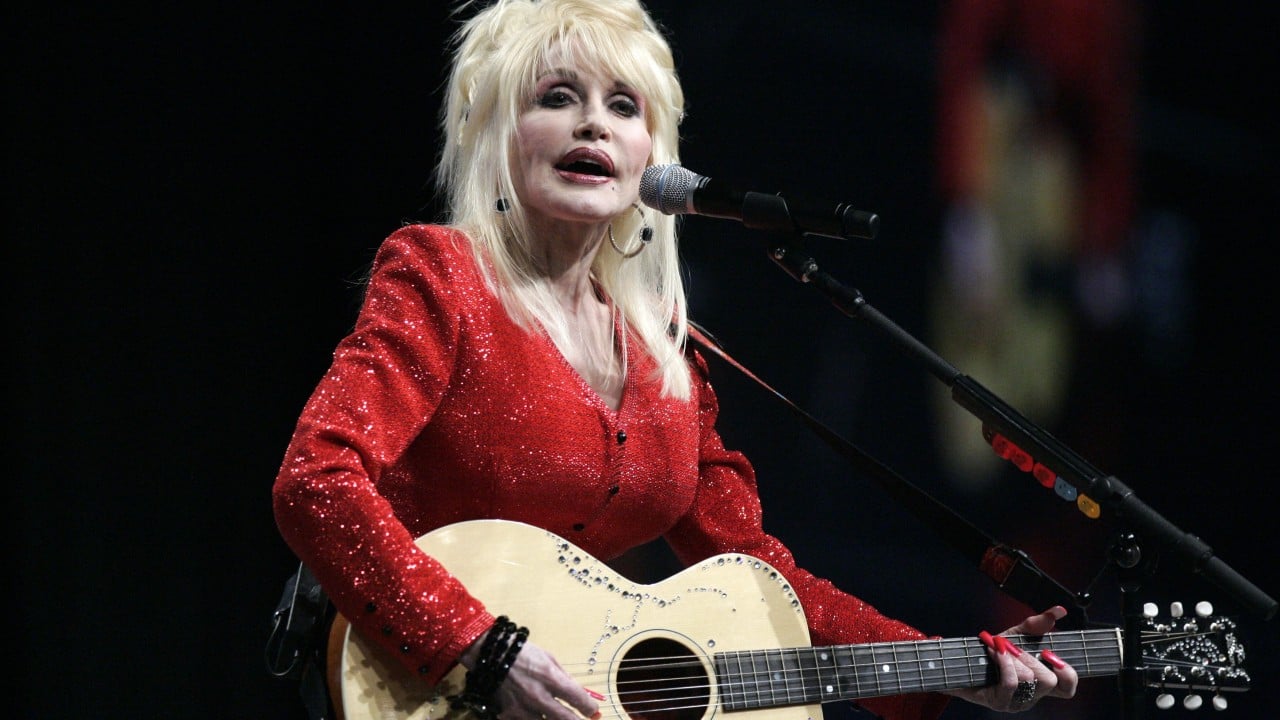
Dolly Parton has died at the age of eighty, closing the book on a career that defied every standard rule of the entertainment industry. For six decades, she remained a dominant cultural force not by chasing reinvention, but by doubling down on her exact roots. The news of her passing marks the end of an era for country music, film, and global philanthropy. Yet her real legacy extends far beyond standard charts or box office tallies. She constructed an economic and cultural empire out of pure self-determination, outsmarting major record labels, corporate executives, and cultural gatekeepers who routinely underestimated a woman wrapped in rhinestones and high-pitched charm.
The world knew her voice, her signature wigs, and her self-deprecating humor. Beneath the theatrical presentation sat a razor-sharp businesswoman who retained ownership of her publishing rights at a time when Nashville executives routinely stripped artists of their life's work. When Elvis Presley wanted to record "I Will Always Love You" in 1974, Colonel Tom Parker demanded half of the publishing royalties. Parton said no. That single business decision cost her an immediate windfall but yielded hundreds of millions of dollars over her lifetime, culminating in a fortune that funded massive charitable works without corporate oversight.
That shrewdness defined her entire trajectory in the entertainment business. She never asked for permission to occupy space.
The Nashville Machine and the Price of Independence
To understand the weight of Parton's departure, one must examine the industry she entered during the mid-twentieth century. Nashville was an old boys club built on assembly-line production methods. Session musicians played exact arrangements, producers dictated song choices, and female vocalists were frequently relegated to ornamental roles beside veteran male crooners. Parton arrived from Sevier County, Tennessee, with a high soprano voice and a portfolio of songs that sounded too rural for mainstream radio and too aggressive for traditional pop listeners.
Instead of conforming to the neat molds assigned to rising stars, she partnered with Porter Wagoner on his television show, using that platform to build a dedicated national audience. When the creative partnership ran its course and Wagoner attempted to block her solo progression, she walked away from a lucrative television contract, sat in her car, and wrote "I Will Always Love You" as a direct artistic reaction to the professional fracture.
That track record proved she possessed an instinct for survival. While other artists signed away their catalogs for quick cash advances, Parton guarded her intellectual property like industrial secrets. She understood that songwriting ownership represents the only truly permanent asset in the music business. When Whitney Houston covered her signature ballad in 1992, the resulting royalties flowed directly back to Parton's independent publishing company, creating a financial engine that funded her later humanitarian initiatives.
Her transition into film during the 1980s followed the same independent playbook. 9 to 5 wasn't just a box office smash; it was a calculated step into a medium where female actors were routinely sidelined once they reached a certain age. Parton negotiated top billing alongside Jane Fonda and Lily Tomlin, wrote and performed the iconic title track on a typewriter prop using her long acrylic nails as percussion, and secured a permanent place in Hollywood history without ever abandoning her country identity.
Literacy as an Economic Imperative
Many observers reduce Parton's philanthropy to the Dollywood Foundation or general acts of southern hospitality. That perspective misses the systemic impact of her work, particularly through the Imagination Library. Founded in 1995 in her home county of Sevier County, the program began as a localized effort to mail one book per month to children from birth until they entered school. It has since expanded globally, distributing well over two hundred million books across the United States, Canada, the United Kingdom, Australia, and Ireland.
This was never just a feel-good literacy project. Parton recognized early that educational inequality serves as the primary engine for generational poverty. Her father, Lee Robert Parton, was illiterate—a reality that haunted him throughout his life and limited his ability to navigate basic economic transactions. By placing books directly into the hands of infants before formal schooling begins, Parton bypassed bureaucratic school boards and state funding delays, creating a private, highly efficient distribution network that rivals major federal programs.
Funding this initiative required continuous capital generation. Parton maintained a grueling recording schedule, launched a successful theme park that revitalized the economy of East Tennessee, and licensed her image selectively. Every ticket sold at Dollywood and every royalty check from her extensive catalog fed directly back into her philanthropic pipeline. She did not rely on venture capital or corporate boardrooms to dictate her charitable strategy. She maintained absolute financial control so that no foundation director could dilute her mission.
The Weaponization of Self-Deprecation
One of the most persistent miscalculations made by cultural critics over the past fifty years involved Parton's public persona. She frequently joked about her physical appearance, famously stating that it costs a lot of money to look this cheap. That self-effacing humor functioned as a calculated defense mechanism and a tactical weapon.
By leaning into cartoonish femininity, she disarmed hostile interviewers, conservative politicians, and cynical music executives who expected a naive country singer. Behind the punchlines sat a master strategist who understood how to navigate polarized cultural landscapes without alienating her core base. When conservative fans in rural America disagreed with her politics, they nevertheless forgave her because her authenticity felt foundational. When progressive urban audiences embraced her as an ally, they did so because her actions consistently supported marginalized communities.
She quietly funded HIV/AIDS research, donated heavily to hospitals in East Tennessee, and provided financial relief to families displaced by devastating regional wildfires. She did not broadcast every check she wrote. She operated with the quiet authority of a matriarch who understood that real power requires no microphone to validate its existence.
Her recent induction into the Rock and Roll Hall of Fame—an honor she initially resisted on the grounds that she wasn't a rock artist—demonstrated her cultural flexibility. When the institution insisted on her inclusion, she stopped fighting the designation, recorded a heavy-hitting rock album featuring a roster of classic rock legends, and proved once again that she could master any genre she chose to enter.
The End of an Irreplaceable Lineage
The void left by Parton's passing cannot be filled by modern algorithm-driven pop stars or manufactured Nashville icons. Today's music industry relies on streaming metrics, social media virality, and short-term brand partnerships designed for maximum engagement on mobile screens. Parton belonged to an older, rarer breed of artist who built a career brick by brick through relentless touring, undeniable songwriting craft, and absolute ownership of her commercial output.
She navigated the treacherous waters of fame without losing her connection to the people who bought her first records out of the back of a station wagon. Her life stands as a masterclass in how to outsmart systemic exploitation through talent, discipline, and unwavering self-belief. As the tributes pour in from world leaders, fellow musicians, and everyday readers whose childhoods were shaped by a single monthly book delivery, the reality of her absence sets in. The rhinestone curtain has finally fallen on an American original who wrote her own rules and never apologized for winning the game.