You have seen the standard Yellowstone viral videos. A tourist tries to pet a 2,000-pound animal, or someone gets within arm's reach to take a selfie. In those cases, you know exactly why the animal attacked. The person broke the rules.
But a terrifying incident at the Bridge Bay Campground shows that nature does not care if you follow the guidebook. You can maintain your distance, respect the perimeter, and still end up flying eight feet through the air.
A grandfather walking with his grandson found this out the hard way. He ended up seriously injured after an enraged bull bison singled him out in a chaotic sequence captured on video by a professional photographer.
The Myth of the Guaranteed Safe Distance
Yellowstone National Park guidelines state you must stay at least 25 yards away from bison. It is a solid rule of thumb. Most of the time, keeping that space keeps you out of trouble.
But wild animals do not carry measuring tapes, and they do not always respect the boundaries we set for them.
The grandfather and grandson were walking down a road near the campground loop. According to Mike MacLeod, a former Army combat photographer who filmed the incident, the pair stopped to take photos from well over 100 yards away. They were doing what any responsible park visitor would do. The bison was sitting peacefully in the dirt.
When the animal began to stand up, the grandfather read the room perfectly. He told his grandson it was time to leave, and they moved behind a cluster of trees for safety.
They did absolutely nothing wrong. Yet minutes later, the grandfather was fighting for his life.
The Multi-Vehicle Trigger and Redirection
Animals under immense stress do not think logically. They lash out at whatever is closest.
Before targeting the tourists, this specific bull bison was already having what MacLeod described as a fit. It had already charged a group of kids who scattered to safety. It was agitated, pacing, and looking for a fight.
Then a white pickup truck drove down the road between the bison and the tourists. The bison charged the truck. The driver did the smart thing and hit the gas, speeding away from the danger.
But that escape left the bison amped up with nowhere to direct its aggression. It looked around, spotted the grandfather and grandson hiding behind the trees, and charged.
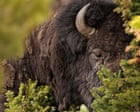
The animal plowed through a sapling, completely focused on the pair. The grandson managed to run clear, but the bison cornered the grandfather around the trees. The massive animal hooked the man with its left horn right on the hip, launching him into the air. MacLeod noted that the man flipped completely upside down, flying higher than the six-foot-tall animal before crashing back down on his side.
Why Summer in Yellowstone Changes the Rules
If you visit the park in July or August, the baseline danger level spikes significantly. This isn't just because of tourist crowds. It's because of the bison rut.
Summer is mating season. Bull bison are pumped full of testosterone. They spend their days wallowing in the dirt, bellowing, and fighting other bulls to prove dominance. They are inherently irritable, unstable, and ready to charge at the slightest provocation.
Add biting flies into the mix, and you have a two-ton tank on a hair-trigger.
This was already the second major bison incident in the park for the summer, following an attack on a 12-year-old near Mud Volcano. When these animals are in the rut, a passing truck, a loud noise, or even just the sight of a human moving behind a tree can trigger a full-blown assault.
How Bystanders Prevented a Fatality
The video cuts out as the grandfather hits the dirt, but what happened next is a masterclass in emergency distraction.
Once a bison knocks a person down, it will often continue to gore or trample them. MacLeod dropped his camera and ran toward the animal, screaming and making himself look as big and threatening as possible. Other campers joined in, creating enough commotion to confuse the bison and force it to run off.
The grandfather survived, but his injuries were severe. He was transported out of the area with significant trauma.
Real Steps for Surviving the Park
You cannot control a wild animal's mood, but you can change how you position yourself when things go sideways.
First, ditch the idea that 25 yards is an invisible forcefield. If an animal looks tense, is rolling aggressively, or is raising its tail, 100 yards might not be enough.
Second, never assume trees will fully protect you. While the grandfather used the trees as a barrier, a determined bison can easily maneuver around or through light brush. If an animal fixes its gaze on you, do not just hide behind a thin trunk—keep moving laterally to put heavy obstacles between you and the charge, or seek a hard structure or vehicle immediately.
Finally, watch the behavior of the animal before you even think about approaching a trail. If a bison is already on its feet, pacing, or interacting with traffic, stay back. Reductions in distance should only happen when an animal is completely calm and unbothered by its surroundings.