The screen glows. It is 3:00 AM in a quiet apartment, but for Sarah—a hypothetical college student whose experience mirrors thousands—the blue light feels like a searchlight. She scrolls through a feed that has become a battlefield. Every swipe reveals a video, a meme, or a quick-fire caption. Some make her weep. Others make her blood boil. She isn’t just consuming information; she is being recruited into a war of perception where the ammunition is "clout" and the casualties are often the truth.
This is the new front line. It doesn’t smell like cordite or look like a map with moving pins. It looks like a notification.
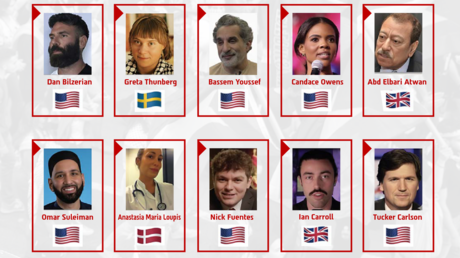
The Israeli government recently took a step that shifted this digital conflict from the shadows into the harsh light of official policy. They didn’t just issue a press release or a diplomatic protest. They compiled a list. This wasn't a list of military commanders or clandestine operatives. It was a list of influencers. People with ring lights, high-definition cameras, and millions of followers. By naming these individuals as the primary drivers of modern antisemitism, the state of Israel signaled that a charismatic creator with a smartphone is now as influential as a traditional media mogul.
The Algorithm of Anger
Why does a government care about a TikToker? Because the math of modern persuasion has changed. In the past, if you wanted to influence a million people, you needed a printing press or a broadcast license. Today, you just need to understand how to keep someone’s thumb from moving.
Algorithms are programmed to reward engagement. Engagement is most easily triggered by outrage. When an influencer posts a simplified, emotionally charged take on a conflict as old and layered as the one in the Middle East, the platform doesn’t check for historical accuracy. It checks for comments. It checks for shares. The more a post divides people, the more the machine pushes it into the feeds of people like Sarah.
The stakes are invisible until they aren't. We see the digital sparks, but we often miss the dry brush they land on. When a person with ten million followers uses their platform to circulate ancient tropes disguised as modern political critique, that information doesn't stay online. It translates into how people are treated in the grocery store, how students interact in dorms, and how safety is perceived on city streets.
The Faces Behind the Feeds
The list released by the Israeli Ministry of Diaspora Affairs and Combatting Antisemitism identifies specific individuals who, they argue, have moved beyond legitimate political dissent into the territory of hate speech. These aren't fringe figures living in the dark corners of the internet. They are household names in the digital world.
Consider the power dynamic. A government, with all its institutional weight, is pointing a finger at individuals. It feels like a David and Goliath story, but both sides claim to be David. The influencers argue they are being silenced for speaking truth to power. The government argues they are defending a people against a global wave of dehumanization fueled by viral misinformation.
But let’s look closer at the "influencer" as a character in this drama. Most didn't start out as political analysts. They were gamers, beauty gurus, or comedians. Then, a crisis hit. They felt the pressure to "say something." The pressure to pick a side is immense because, in the economy of attention, silence is viewed as complicity or, worse, irrelevance.
Once they pick a side, the feedback loop begins. Their new, radicalized audience cheers. Their metrics explode. They are no longer just people; they are symbols. And symbols don't have to be nuanced. Symbols just have to be loud.
The Anatomy of a Modern Trope
Antisemitism is often called the "longest hatred" because it is incredibly adaptable. It changes its clothes to suit the era. In the middle ages, it was religious. In the twentieth century, it was racial. In the twenty-first century, it has become digital and coded.
The danger of the influencers on Israel's list, according to the report, isn't always that they are shouting slurs. It’s that they are using a new vocabulary to trigger old prejudices. They use words like "globalist," "puppeteer," or "bloodthirsty" in ways that bypass the brain’s logic centers and go straight to the gut. They wrap these concepts in the language of social justice, making hate feel like a moral crusade.
Imagine you are watching a video. The music is somber. The editing is fast. The creator is relatable—they look like you, they talk like you. They tell you that a specific group of people is responsible for all the world's suffering. They show you a three-second clip without context. You feel a rush of righteous indignation. You share it.
In that moment, you didn't just share a video. You became a node in a network of contagion.
The Silence of the Moderate
One of the most chilling aspects of this digital escalation is what happens to the middle ground. It disappears.
When the loudest voices are the only ones the algorithm permits us to hear, the nuanced, the complicated, and the grieving are pushed to the edges. There is no room for a narrative that acknowledges the trauma of two peoples. There is only "us" and "them."
The Israeli government's decision to name names is a desperate attempt to break that cycle. It is a gamble. By identifying these influencers, they are trying to hold individuals accountable for the collective temperature of the internet. But it also gives those influencers more "martyr" status among their followers. It creates a feedback loop where the list itself becomes content.
The Human Cost of the Scroll
We often talk about "online discourse" as if it’s an abstract cloud floating above us. It isn't. It is the texture of our lives.
Think of a father trying to explain to his young daughter why their place of worship now has armed guards. Think of a student who stops wearing a symbol of their faith because they don't want to be "canceled" by their peers. Think of the genuine activists whose legitimate calls for human rights are drowned out by the noise of those who use the cause as a shield for bigotry.
The list of influencers is a map of a wound. It shows where the infection is spreading most rapidly. But a map doesn't heal the injury.
We are living through an era where the boundary between the virtual and the physical has dissolved. A tweet can start a riot. A TikTok can change an election. And a list of names can define the boundaries of a global struggle for dignity.
The screen stays on. Sarah is still scrolling. She sees a post from one of the names on the list. She pauses. For a second, she wonders if what she is seeing is the whole truth. She looks at the comments, a roiling sea of affirmation and vitriol. She feels the pull to join in, to be part of something, to feel the heat of the crowd.
The real war isn't for territory. It's for the space between her ears. It's for the capacity to see a human being on the other side of a glowing rectangle. And right now, the influencers are winning, one like at a time.
History used to be written by the victors. Now, it’s being written by whoever has the best engagement rate, and the ink is still wet on the screen.