The fluorescent lights of the Eisenhower Executive Office Building don’t flicker, but they hum with a frequency that eventually settles into the marrow of your bones. It is a sterile, high-stakes environment where every word is weighed for its geopolitical impact and every email is a permanent record. In the corridors of American power, the air is thick with the scent of floor wax and the crushing weight of institutional decorum.
But beneath the surface of press briefings and policy memos, a different kind of communication is happening. It vibrates in the pockets of tailored suit jackets. It glows on encrypted screens during three-minute coffee breaks. It is the meme—the modern world’s most potent shorthand for the things nobody is allowed to say out loud. Don't forget to check out our recent coverage on this related article.
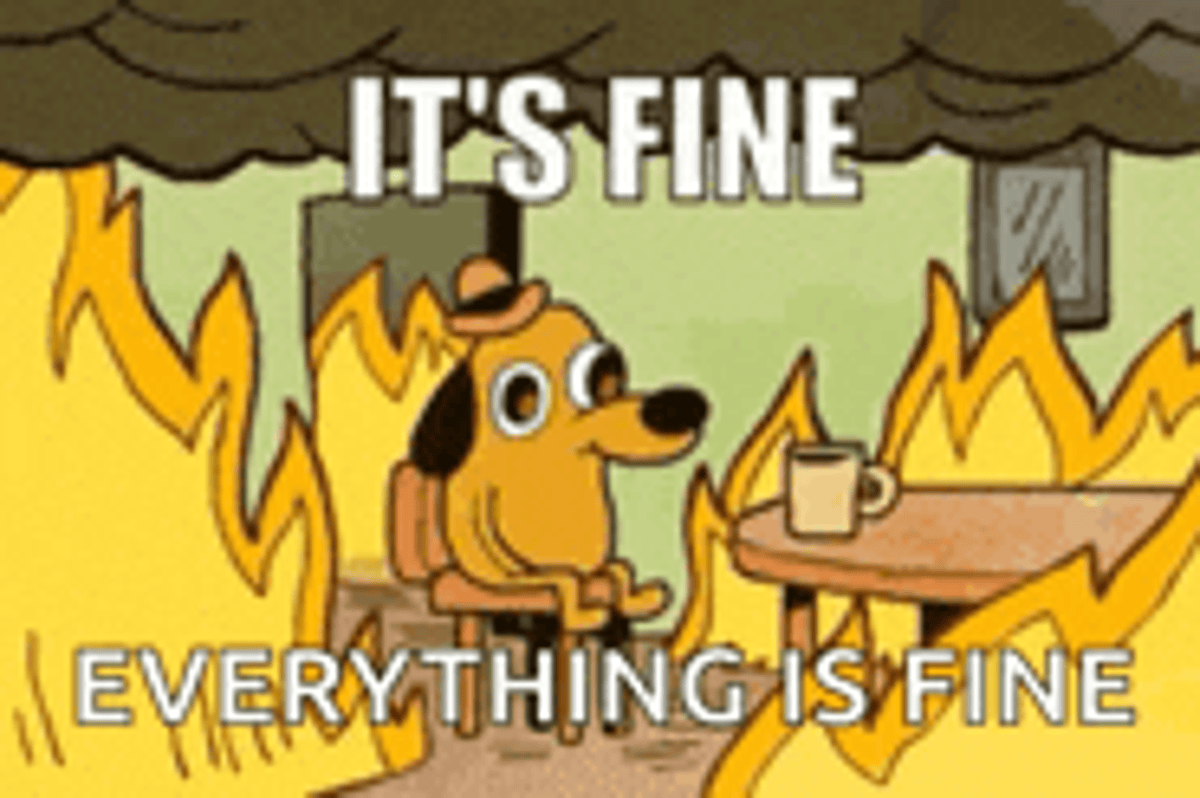
Recent reports suggest a shift in the internal weather of the White House. For months, the digital chatter among staffers was defined by a cautious, perhaps even grim, resolve. Now, that frequency has changed. The images being traded in the private shadows of signal apps and group chats are sharper, weirder, and unexpectedly bold. They reveal a staff that has stopped merely enduring the news cycle and has started to find a strange, irreverent kind of joy in the chaos.
The Language of the Unspoken
To understand why a simple image of a cartoon frog or a distorted screen-grab from a 90s sitcom matters in the West Wing, you have to understand the isolation of the job. Working at the highest level of government is a process of sanding down your personality until you are a smooth, frictionless extension of the administration’s will. You speak in talking points. You think in contingencies. To read more about the background here, NPR offers an informative summary.
Humor becomes the only available oxygen.
Consider a hypothetical staffer—let’s call her Sarah. Sarah spends fourteen hours a day drafting responses to crises that would keep the average person awake for a week. She cannot vent to her friends because of non-disclosure agreements and security clearances. She cannot post her frustrations on X or Instagram because a single misunderstood joke could trigger a congressional inquiry.
When Sarah receives a meme from a colleague three desks down, it isn't just a joke. It is a handshake. It is a confirmation that they are seeing the same absurdity, feeling the same pressure, and surviving the same storm. The "changing mood" reported by insiders isn't just about morale; it’s about a collective realization that the old rules of political stoicism are dissolving in the face of a hyper-digital reality.
From Anxiety to Audacity
The transition in the White House’s internal culture appears to follow a distinct arc. In the early days of any administration or during periods of low polling, the memes are defensive. They are "gallows humor"—self-deprecating nods to the impossibility of the task at hand. They are the digital equivalent of a sigh.
But the current shift suggests something more aggressive. Insiders describe a move toward "dark" humor that leans into the criticisms leveled against them. Instead of shrinking away from the noise of the outside world, the staff is beginning to mock the noise itself. This is a psychological pivot point. When a group starts laughing at the things meant to intimidate them, they are no longer being managed by their circumstances. They are owning them.
This isn't unique to the current West Wing, but the speed of the shift is unprecedented. In previous eras, a shift in "mood" might take months to filter through the ranks via water-cooler gossip or Friday night drinks at a nearby dive bar. Today, a sentiment can be codified into a meme and distributed to every junior aide and senior advisor in a matter of seconds. It creates a feedback loop. The meme reflects the mood, but it also reinforces it, acting as a catalyst for a new, more defiant internal culture.
The Invisible Stakes of the Group Chat
There is a temptation to dismiss this as "kids being kids" or a lack of professional gravity. That would be a mistake. The stakes of these digital exchanges are remarkably high.
Behind every shared joke is a data point. When insiders share memes that reflect a "changing mood," they are inadvertently providing a real-time heat map of the administration’s psychological state. If the memes are confident, the policy-making often follows suit. If the memes are fractured and bitter, it’s a sign that the machinery of government is grinding gears.
The shift toward a more vibrant, perhaps even chaotic, internal culture suggests an administration that has stopped playing defense. They are leaning into the weirdness of the modern political landscape. They are using the tools of the internet—irony, sarcasm, and hyper-reference—to build a wall between their private sanity and their public duty.
The Ghost in the Machine
We often talk about "The Administration" as if it were a monolith, a giant marble statue that moves with slow, deliberate purpose. The reality is that it is a collection of exhausted human beings, most of them in their twenties and thirties, who have spent their entire lives communicating through screens.
To these people, a meme is more "real" than a press release. A press release is a costume. A meme is the truth underneath.
The fact that these images are now leaking into the public consciousness through insider reports tells us that the boundary between the "official" White House and the "human" White House is thinning. We are seeing a glimpse of the people behind the podiums. They are tired. They are cynical. They are funny. And they are increasingly aware that the old ways of projecting power—stern faces and somber tones—are losing their currency.
The new currency is relatability, even if that relatability is hidden in a locked phone.
Imagine the quiet of a late-night shift in the West Wing. The silence of the hallway is broken only by the soft ping of a notification. A staffer looks down, sees a particularly biting piece of satire about their own boss, and smothers a laugh. In that moment, the hierarchy disappears. The pressure drops. The "mood" changes not because the world has gotten easier, but because the people inside the bubble have found a way to make it smaller.
This internal shift acts as a pressure valve. Without it, the intensity of the work would likely lead to a much higher rate of burnout and defection. By leaning into a culture of shared digital irony, the staff creates a sense of "us vs. them" that is more powerful than any team-building exercise or pep talk from the Chief of Staff. It is a grassroots culture, built from the bottom up, pixel by pixel.
The memes are a map of the administration's survival instinct. They show a group of people who have looked into the abyss of 24-hour news cycles and decided to laugh back. Whether that laughter is a sign of healthy resilience or a symptom of a deeper detachment from reality is a question that won't be answered until the history books are written. For now, the glow of the screen remains the only light in the room that feels honest.
The hum of the lights in the Eisenhower building continues, steady and unchanging. But in the pockets of the people walking those halls, something is shifting. The jokes are getting louder. The images are getting sharper. The mask is still on, but behind it, the smile is starting to look a lot like a smirk.