The silence in a rural Nova Scotia home is different than the silence in a city. It is heavy. It carries the weight of the Atlantic wind and the memory of what used to fill the rooms. For the families of those lost in the 2020 mass shooting—the deadliest in Canadian history—that silence was supposed to be a sanctuary, a place to heal. Instead, they found it invaded by a digital echo that refused to let the dead rest.
Now, that grief has traveled across the border, landing in a California courtroom. The lawsuit filed against OpenAI and its CEO, Sam Altman, isn't just about data privacy or corporate negligence. It is a fight over the ownership of tragedy. It is a demand to know why a machine was allowed to scrape the most painful moments of human lives and process them into a product.
The Algorithm of Agony
Imagine a software engine that doesn't just read the news, but consumes the soul of a community. When ChatGPT or similar models "train" on the internet, they don't distinguish between a recipe for sourdough and the visceral, heart-wrenching details of a massacre. To a large language model, the names of the twenty-two victims are just tokens. Units of probability. Data points to be rearranged to satisfy a user’s prompt.
The families allege that OpenAI used their personal information, their likenesses, and the grizzly details of their loved ones’ final moments without consent. They aren't just numbers on a spreadsheet. They are the families of nurses, teachers, and neighbors. For them, the "training data" is actually their trauma.
Consider the mechanics of the insult. A user somewhere in the world, perhaps out of morbid curiosity or academic clinicalism, asks an AI to describe the events of April 2020. The machine responds with a polished, synthetic retelling. It might hallucinate details. It might sanitize the horror. Or it might recite facts that were never meant to be a commodity. Each generation of that text is a ghost built from stolen fragments.
The Borderless Reach of Big Tech
Why California? Why now? The legal strategy is as much about jurisdiction as it is about justice. The families are chasing the source of the code. They are looking at the headquarters in San Francisco and asking a fundamental question: Does a company's right to innovate trump a family's right to mourn in private?
The lawsuit claims that OpenAI’s business model is built on "data scrapers" that vacuumed up everything in their path. This included private details surfaced during the public inquiry into the shooting—testimony, evidence, and deeply personal accounts that were meant for the record of history, not the optimization of a commercial chatbot.
The stakes are invisible but massive. If the court sides with the families, it challenges the very foundation of how generative AI is built. The "move fast and break things" era of Silicon Valley has finally hit something that refuses to stay broken quietly. It has hit the human heart.
A Mirror That Distorts
When we talk about AI "hallucinations," we usually mean the machine got a date wrong or invented a fake book title. But there is a darker version of this glitch. When an AI processes a mass tragedy, it creates a distorted mirror of reality. It takes the fragmented grief of a daughter or a husband and blends it with thousands of other data points until the original truth is blurred.
The families argue that this isn't just a technical error. It’s a violation. They describe a secondary trauma—the feeling of seeing their lives turned into a "feature" of a multi-billion-dollar enterprise. They are fighting against a world where their names are no longer their own, but belong to the servers of a company that didn't exist when the first shots were fired in Portapique.
There is a cold irony here. OpenAI markets itself as a tool for the "benefit of humanity." Yet, the humans at the center of this specific story feel discarded. They feel like the raw material for a future they never asked for.
The Price of a Token
To understand the legal battle, you have to understand how these models view information. In the realm of high-stakes computing, your life story is broken down into mathematical vectors.
$$V = {w_1, w_2, w_3, ... w_n}$$
In this equation, $V$ represents the vector of a sentence, and each $w$ is a weight assigned to a word. When the AI processes the name of a victim, it assigns it a weight based on how often it appears near words like "shooting," "tragedy," or "Nova Scotia." It doesn't see the person. It sees the proximity.
The lawsuit seeks to prove that this mathematical treatment of human suffering is a form of conversion—the legal term for taking someone's property and making it your own. Only here, the property isn't a car or a house. It is the narrative of a life.
The Architect of the Machine
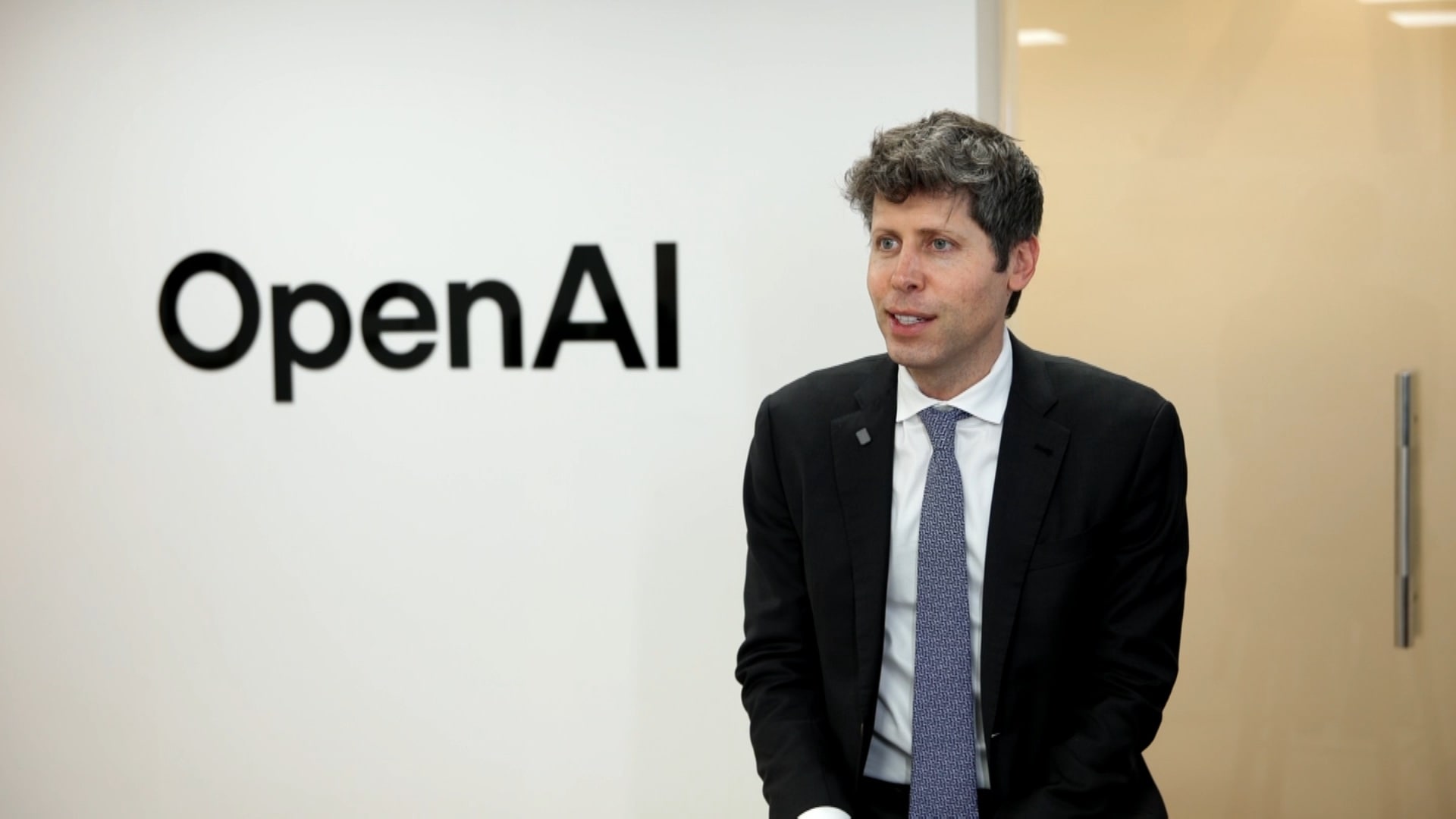
Sam Altman has become the face of the AI revolution, a man who speaks of existential risks and utopian futures with the same calm cadence. But in this lawsuit, he is cast in a different light. He is the overseer of an archive that contains the world’s pain, and the families believe he bears a personal responsibility for how that archive is managed.
They aren't just suing a corporation; they are suing a philosophy. The philosophy that says all information is free for the taking if you are building something "important" enough. The families disagree. They believe some things are sacred. They believe that even in a digital age, there should be a fence around a person’s death.
The legal teams will argue over the Fair Use doctrine. They will debate the Transformative nature of AI. They will cite precedents from the early days of the internet. But outside the courtroom, the argument is much simpler. It’s about the look in a survivor's eyes when they realize their father’s death is being used to train a robot to write marketing copy or student essays.
The Ripple Effect
This isn't an isolated case. It is a bellwether. If these families succeed, they open the door for every victim of every public horror to reclaim their story. They represent a growing resistance to the idea that our digital footprints—the traces of our love and our loss—are fair game for the highest bidder.
Think about the precedent. If a machine can own the details of a massacre, what can’t it own? Your medical history? Your private letters? Your quietest fears? The Nova Scotia families are standing at the breach, trying to pull back the pieces of themselves that the scrapers took.
They are moving through a landscape of legalese and technical jargon, but their motivation is as old as time. They want to protect their dead. They want to ensure that the final word on their loved ones isn't written by an algorithm that doesn't know how to cry.
The courtroom in California is thousands of miles from the quiet roads of Nova Scotia. The air in San Francisco is sharp with the smell of the bay and the hum of the tech industry. But as the lawyers open their files and the judges take their seats, the two worlds are about to collide.
A mother sits in a chair, waiting for news. She isn't thinking about neural networks. She isn't thinking about the next version of a software update. She is thinking about a Sunday afternoon in April, a world that ended, and the company that turned that ending into a product. She is waiting to see if the law agrees that some things are too heavy to be turned into data.
The machine is waiting, too. It is ready to process the next prompt, the next name, the next tragedy, indifferent to the fact that its very existence is now being weighed against the heavy, salt-stained silence of a home that will never be the same.