The nitrogen does funny things to your brain at forty meters. It doesn’t hit like a hammer. It creeps in like a warm, tequila-soaked whisper, telling you that everything is fine, that you have all the time in the world, that the shadows dancing just beyond the reach of your dive light are friendly. Divers call it the narcs. The rapture of the deep.
But there was no rapture inside the shark cave. Only the cold, heavy reality of what happens when a paradise vacation goes terribly wrong.
Most people see the Maldives through a heavily filtered lens. They see the turquoise water of the Indian Ocean, the overwater bungalows, the white sand that looks like powdered sugar, and the gentle nurse sharks that tourists pay hundreds of dollars to swim with for Instagram photos. It is an industry built on the illusion of absolute safety. We want the thrill of the wild, but we want it curated, sanitized, and predictable.
The ocean doesn’t care about the brochure.
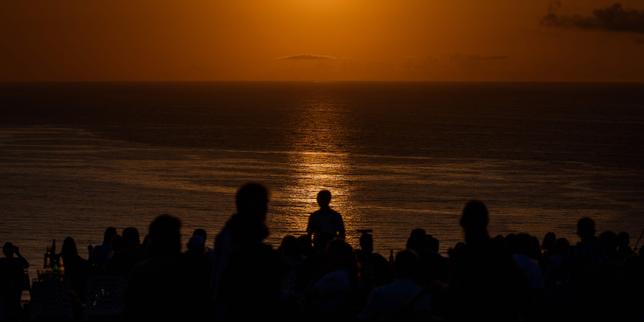
When the call came in, the sun was hitting the water at that perfect, golden angle that usually signals the end of a beautiful day in the tropics. But for the recovery team, the day was just beginning. Two recreational divers had gone down into a well-known underwater cavern system, a place notorious for its unpredictable currents and deep, overlapping overhangs. They never came back up.
To understand why someone volunteers to crawl into a pitch-black underwater tomb, you have to understand the community of technical divers. We aren't daredevils. True professionals are obsessive, checklist-driven, almost pathologically boring people on land. We calculate gas mixes to the decimal point. We carry three of everything. We know exactly how many minutes of life are strapped to our backs.
Yet, when a recovery mission is called, the math changes. You aren't diving for a thrill anymore. You are diving to give a family a closed coffin, a funeral, a place to weep. You are diving for the dead.
The descent into the blue is always the easiest part. You drop through the warm, sunlit layer of the ocean, watching the surface fade from a bright mirror to a dull ceiling. Then the light starts to die. The blues turn to deep indigos, then to a bruised, heavy purple, and finally, a devouring black.
The shark cave sat at the edge of a sheer drop-off, a vertical wall that plunged thousands of feet into the abyssal plain. The entrance was a jagged gash in the rock, barely wide enough for two divers to enter abreast. Inside, the water was utterly still, but the ceiling was alive. Dozens of reef sharks and whitetips used the cavern as a resting place, hovering motionless in the dark, their eyes catching the glare of the dive lights like shards of broken glass.
They aren't the danger. Sharks in caves are generally lethargic, disturbed only by the sudden invasion of bubbles and light. The real killer is the silt.
The floor of an underwater cave is covered in a fine, powder-like sediment that has settled over thousands of years. It is as delicate as ash. One careless kick of a fin, one panicked movement, and the silt rises in an instant cloud. The technical term is a silt-out. The human term is instant blindness. Imagine being trapped in a closet, the lights turned off, and the air inside your lungs slowly ticking down while you fumble for a door that might not even be there.
The lead diver on the recovery team moved with an agonizing, glacial slowness. Every movement of his legs was a modified frog-kick, designed to push water backward rather than downward. His breath was a rhythmic, mechanical hiss-click through the regulator.
Inhale. Count to four. Exhale. Watch the bubbles hit the stone ceiling, dislodging tiny fragments of rock that rained down like black snow.
Finding the lost divers didn’t take long. In the enclosed space of a cavern, there are only so many places the current can push a body once the air runs out and the buoyancy changes.
They were caught in a recess near the back of the cave, wedged beneath a low shelf of coral.
Seeing a body underwater is a surreal, unsettling experience that never quite leaves your subconscious. The water preserves them, yet robs them of their humanity. They look like wax figures, or mannequin parts discarded in the dark. Their masks were still on, their eyes open, staring blankly into the void.
In that moment, the training takes over. It has to. If you let yourself think about who they were—if you look at the expensive dive computers on their wrists, the matching wedding bands, the realization that someone in a resort hotel nearby is currently staring at a phone, waiting for a text that will never arrive—the panic will find you. And panic at forty meters is a death sentence.
The physical logistics of a deep-water recovery are a nightmare of physics and anatomy. A human body becomes awkward, heavy, and unyielding. The gear they were wearing—heavy steel tanks, BCDs filled with water—had to be managed alongside the recovery team's own life-support systems.
Worse, the bodies had begun to float slightly due to natural processes, straining against the rocky ceiling like grotesque balloons.
The team worked in a silent, coordinated dance, communicated entirely through hand signals and the fierce glare of underwater torches. A tap on the shoulder meant I have the line. A clenched fist meant stop. Two fingers held up against the palm meant watch your gas.
Slowly, carefully, they unhitched the tangled gear of the first victim. Every movement had to be calculated to avoid disturbing the silt bed below. The margin for error was non-existent. If they lost visibility now, they would be trapped in the dark with two corpses, their own gas supplies dwindling with every frantic breath.
The journey out of the cave was twice as long as the journey in. Pushing a body ahead of you through a narrow stone tunnel requires a strange, intimate kind of violence. You are gripping a stranger by the scuba tank, navigating their limp limbs through the rock, trying desperately not to let their gear snag on the sharp coral edges.
And then, the current hit.
Outside the cave mouth, the incoming tide had turned the open ocean into a washing machine. A violent, invisible wall of water slammed into the divers as they emerged from the shelter of the rock. It tore at their masks and threatened to rip the recovery lines from their hands.
This is where the invisible stakes become painfully visible. In deep diving, you cannot simply swim to the surface when things go wrong. If you ascend too fast, the nitrogen dissolved in your blood and tissues forms bubbles, like opening a shaken bottle of soda. It causes decompression sickness—the bends. It can paralyze you. It can kill you.
The team was forced to hang in the open, churning water, suspended on a line, holding onto the bodies while the ocean battered them. They had to wait out their decompression stops.
Ten minutes at fifteen meters. Twenty minutes at nine meters. Thirty minutes at three meters.
It is a agonizing exercise in patience. You are cold. Your lips are chapped and tasting of salt and dry tank air. Your hands are cramping from holding onto the heavy canvas straps of the body bags. And all you can do is hover there, watching the digital numbers on your dive computer slowly count down to zero, while the sunlit world above waits just out of reach.
When they finally broke the surface, the contrast was jarring. The afternoon sun was blindingly bright. The dive boat was waiting, its twin outboard engines idling with a low, rumbling vibration. The crew on board didn't cheer. They didn't speak. They simply reached down over the gunwales, their faces grim, and helped haul the heavy, dripping bundles onto the deck.
The resort islands were visible on the horizon, their white villas gleaming in the distance like jewels dropped into the sea. Somewhere over there, music was playing. People were drinking cocktails out of pineapples.
The dive team stripped off their heavy gear in silence. Their skin was pale, wrinkled from the hours spent in the water, their faces marked with the deep, red indentations of their masks.
People often ask why we do it. Why risk your life for those who are already gone? The answer isn't found in a manual or a safety briefing. It’s found in the quiet, brutal understanding that the ocean is vast, lonely, and entirely indifferent to human life. We do it because no one should be left alone in the dark.
The boat turned back toward the main port, cutting a clean, white wake through the water, leaving the shark cave and its secrets far behind in the deepening shadows of the sea.