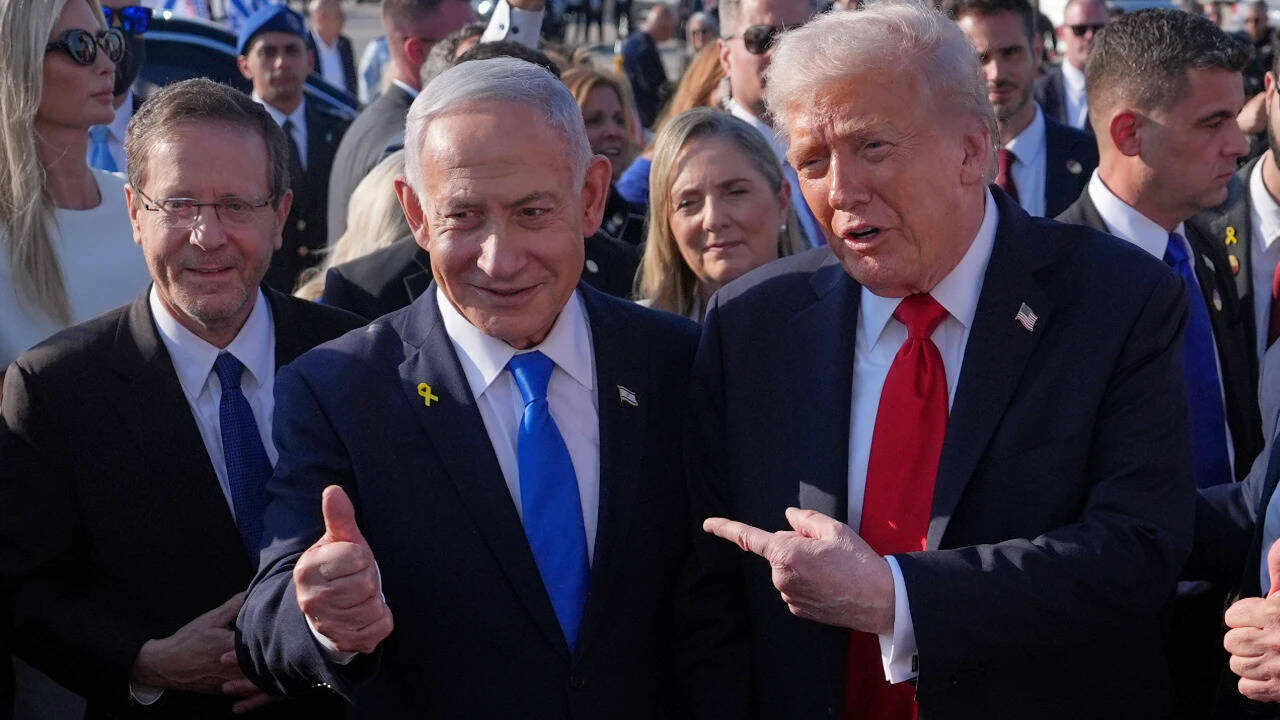
Public denials of a blocked military strike rarely settle what happened behind closed doors; they reveal how leaders manage domestic electoral risk while keeping strategic options open. When reports surfaced in late October 2026 that Israeli Prime Minister Benjamin Netanyahu had planned a major multi-day operation against Iran for October 10—and that U.S. President Donald Trump opposed or halted it ahead of the November 3 U.S. midterm elections—Netanyahu rejected the account outright, calling it inaccurate and biased and asserting that Israel did not depend on a Washington green light.
Standard news coverage of this exchange treats it as a binary dispute over veracity: either the anonymous reporting is right and Trump restrained Jerusalem, or Netanyahu is right and the story is spin. That framing misses the deeper strategic mechanics. In high-stakes coalition and alliance politics, denial and veto operate on two different tracks—operational readiness and political signaling—and neither side has an incentive to lay its full hand on the table before voters cast ballots.
Deconstructing the Standard Reporting Narrative
Most coverage of the October 10 dispute relies on a straightforward sequence: media reports cite unnamed sources claiming a strike package targeting Iranian nuclear facilities, power plants, or regime infrastructure was shelved due to U.S. electoral sensitivities, followed by a public pushback from Netanyahu insisting that security decisions rest on operational merit rather than political interference.
That standard framing has three structural blind spots:
- It conflates public denial with operational non-existence. A leader denying a reported timeline or veto does not prove that contingency plans were never drafted, reviewed, or adjusted; it proves only that publicly conceding external restraint carries a political cost.
- It treats alliance friction as a one-way leash. Reporting often portrays Washington as holding a simple off-switch over Jerusalem, overlooking how military logistics, air defense coverage, escalation ladders, and regional posture bind both capitals in reciprocal ways.
- It flattens domestic incentives into a single motive. Both U.S. midterms and Israeli domestic politics shape risk appetite, yet analysts frequently attribute restraint or pushback to a single election calendar while ignoring internal institutional pushback.
Distinguishing established facts from analytical inference is essential here. What is publicly documented includes the emergence of reports in October 2026 alleging a planned October 10 strike and Trump's opposition or hold, prior public remarks by Trump indicating Washington would not attack Iran before the midterms, and Netanyahu's public rejections characterizing the reporting as false or biased. What remains unverified from open sources is the exact internal deliberation inside the White House and the Israeli cabinet, whether a formal execution order was ever ready for October 10, and the precise terms of any private understanding between the two leaders.
The Alliance Constraint Matrix
To understand why a reported strike plan and a public denial can coexist without one necessarily being a fabrication, it helps to map the decision space along two axes: U.S. Political Sensitivity (how strongly Washington weighs domestic electoral and economic fallout from regional escalation) and Israeli Escalation Appetite (how urgently Jerusalem views degrading Iranian capabilities or shifting the strategic balance).
In the low-sensitivity, high-appetite quadrant, alignment is straightforward: both capitals see immediate upside or manageable risk in kinetic action. Near a major electoral cycle—such as the November 2026 U.S. midterms—the U.S. position shifts toward higher political sensitivity, especially given concerns over wider regional war, energy markets, shipping lanes such as the Strait of Hormuz, and retaliatory missile fire.
Even when a senior partner opposes an immediate strike, the other partner faces a practical trade-off rather than an absolute wall. Acting unilaterally preserves formal autonomy, which explains why Netanyahu rejects any narrative that portrays Israel as needing a U.S. green light. Yet acting against a major ally's explicit wishes can alter resupply timelines, diplomatic cover, intelligence sharing, or collective defense against retaliation. Conversely, accepting a delay preserves alliance cohesion and avoids fighting on two political fronts at once, even if it forces the leadership to deny being overruled so it does not look weak at home.
Consider a simplified operational example. Suppose an air campaign requires complex munitions replenishment, tanker support, or coordinated missile-defense readiness to absorb an Iranian barrage. Even if a prime minister insists in interviews that sovereignty is untouched, practical sequencing still depends on timing and risk absorption. A pause before an election can therefore function simultaneously as a political accommodation in Washington and a force-protection or timing adjustment in Jerusalem.
Missed Cause-and-Effect Chains
Competitor coverage tends to stop at the clash of quotes between Netanyahu and anonymous sources. Tracing the causal chains reveals why these stories surface precisely when they do and why denials follow immediately.
- Pre-election timing distorts signal-to-noise ratios. Ahead of high-stakes votes like the U.S. midterms or Israeli elections, officials, security establishments, and rival political camps leak selectively to shape expectations. A leak claiming a strike was blocked can serve domestic critics arguing against foreign entanglement, foreign adversaries testing resolve, or supporters framing leadership as tough on security.
- Public denial protects deterrence and domestic standing. If a government admits it wanted a major strike and was stopped by an ally, two consequences follow: domestic hawks may view the leadership as constrained, and adversaries may infer a temporary window of reduced risk. Denying the report—or dismissing it as biased—closes that perceived vulnerability immediately.
- Institutional friction inside capitals complicates external accounts. Reporting on disputes around Iran has also highlighted internal debates, including military or transition cautions against abrupt escalation or timing miscalculations. When internal caution overlaps with external diplomatic pushback, outside observers often compress a multi-actor negotiation into a single ruler saying "no" to another.
- Post-election windows change the cost calculation. Once immediate electoral pressure passes, the political penalty for a U.S. administration or an Israeli government to absorb market volatility or diplomatic friction shifts. A delay in October does not logically foreclose action later; it changes the calendar and the bargaining leverage of each side.
Evaluating Claims Under Information Asymmetry
When analyzing contested national-security reports where both sides have strong incentives to spin, an analyst should apply a four-step verification discipline rather than picking a side based on tone:
- Separate the claim of intent from the claim of veto. Planning or discussing strike options is routine in adversarial environments; blocking a specific execution date is a specific political act. Treat each claim's evidentiary standard separately.
- Audit incentive alignment on both sides. Ask who benefits if the leak is believed and who benefits if the denial is believed. A denial is not automatic proof of falsehood, nor is an anonymous leak automatic proof of truth.
- Check for corroborating behavioral markers. Look for concrete posture indicators—force deployments, diplomatic warnings, public rhetoric on regime change or negotiations, and official statements from defense or intelligence channels—rather than relying solely on dueling media statements.
- Track post-event trajectories. Watch whether policy after the inflection point matches the denial's implication of full autonomy or the leak's implication of calendar-driven restraint.
This framework has clear limits. Intelligence assessments, private leader-to-leader calls, and classified operational plans are not directly observable from open reporting, meaning any outside reconstruction carries irreducible uncertainty. Moreover, political leaders frequently use ambiguity as a deliberate tool of statecraft, which means even accurate analytical models cannot predict exact timing with certainty.
Strategic Play for Decision-Makers
Treat every pre-election report of a blocked strike—and every high-volume denial that answers it—as a bargaining signal rather than a closed verdict on future military action. Analysts, investors, and policymakers should anchor their risk posture to observable operational constraints and post-election calendar shifts instead of reacting to headline denials alone, while preparing contingency scenarios for renewed escalation or diplomatic moves once short-term electoral pressures subside.