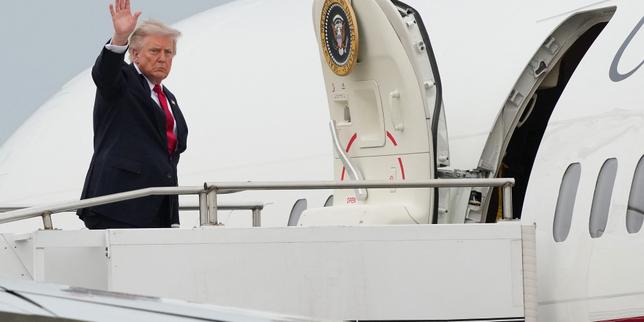
Twenty-five blue-state attorneys general just rushed to federal court to block executive-branch trade policy, framing it as a heroic defense of local economies against federal overreach.
It is political theater. Worse, it is an engineered distraction.
Every headline breathlessly covers the lawsuit as a monumental constitutional showdown. The lazy consensus from mainstream analysts claims this is a gritty resistance movement by governors and state legal officers protecting their exporters from collateral damage.
They are missing the entire architecture of modern political leverage.
When states sue over tariffs, they assume the battlefield is standard administrative law. They argue procedure, overreach, and economic harm. They want judges to halt levies on foreign steel, aluminum, and consumer goods, pretending that trade policy is just another bureaucratic rule subject to normal judicial review.
That framework is obsolete. Tariffs are not merely taxes on imports; they are weapons of economic realignment designed to force corporate restructuring. By taking the bait and filing lawsuits, blue states are stepping directly into a trap that validates the administration's entire narrative.
The Illusion of Free Trade Nostalgia
Let us look past the legal filings. The core argument from the coalition of twenty-five states is that tariffs impose immediate, painful costs on local constituents—automakers, agricultural exporters, and tech hardware suppliers who rely on integrated global supply chains.
This argument relies on a romanticized view of global trade that died years ago.
I have watched corporate boards spend the last decade pretending that supply chain volatility was a temporary glitch rather than a permanent feature of global economics. Executives built lean, hyper-efficient, single-source manufacturing networks overseas because the spreadsheet math looked incredible in a quarterly report. They ignored geopolitical risk because chasing the lowest possible labor cost trumped national resilience.
When a tariff hits, these companies scream about margin compression and consumer price inflation. They run to sympathetic state attorneys general demanding legal intervention to restore the status quo of 1995.
The status quo is not coming back.
Judges may grant temporary injunctions or issue stern reprimands about executive authority, but they cannot rewrite the underlying structural reality. Globalization as an unbridled, frictionless ideology is dead. The sovereign state is back, and it is using tariffs as a sledgehammer to force domestic manufacturing footprint changes, whether corporate boardrooms like it or not.
Why the Lawsuit Actually Helps the Administration
Here is the counter-intuitive truth that nobody in the legal briefs wants to admit. The administration actually benefits from these lawsuits.
Politics is a game of contrast. When twenty-five Democratic attorneys general band together to sue the executive branch over protectionist trade measures, they paint themselves as defenders of multinational corporations and foreign trade partners.
Think about how that plays out in the industrial heartland.
To a factory worker in Michigan, Pennsylvania, or Wisconsin, watching a coastal attorney general file a lawsuit to protect Chinese supply chains or lower costs for importers does not look like a defense of the Constitution. It looks like an explicit endorsement of offshoring. It reinforces the exact populist narrative that local politicians care more about global trade flows than domestic industrial capacity.
By dragging the fight into the courts, the administration successfully shifts the debate. Instead of debating whether a specific tariff schedule rate is optimal, the debate becomes: Are you with the domestic worker or are you with the globalist status quo?
That is a political fight the administration wants every single day of the week.
The Myth of Judicial Remedy in Trade
Let us examine the legal mechanics of what these twenty-five states are trying to achieve.
They are leaning heavily on administrative procedure acts and historical delegations of congressional trade authority. They argue that executive branch tariff deployment stretches statutory emergency powers past their breaking point.
From a strict constitutional law perspective, they have a coherent argument. Congress abdicated much of its trade authority over decades through broad legislative delegation, and modern executive branches have pushed those boundaries aggressively.
Winning a legal argument does not equal winning an economic strategy.
Even if a federal judge strikes down a specific tariff mechanism on procedural grounds, the statutory architecture of modern trade law provides the executive branch with a half-dozen alternative levers to achieve the exact same outcome. They can pivot to national security justifications under Section 232, unfair trade practices under Section 301, or currency manipulation penalties.
Litigating trade policy in court is like trying to stop a hurricane with a butterfly net. You might catch a falling branch, but the storm system keeps moving forward. Corporations wasting millions in legal fees trying to block tariffs through the judiciary are burning capital that should be spent on supply chain diversification and domestic reshoring.
The Real Cost of Resistance
The real tragedy of this lawsuit is opportunity cost.
While state leadership spends taxpayer money filing briefs and holding press conferences about federal overreach, foreign competitors are aggressively capturing market share by adapting to the new reality. Asian and European industrial players are not waiting for an American district judge to save them from protectionism; they are restructuring their logistics, building out regional hubs, and finding ways to align with sovereign industrial policies.
Meanwhile, American firms caught in the crossfire are paralyzed by legal optimism. They delay capital expenditures on domestic plant modernization because they are holding out hope that a court will magically erase the tariffs next month.
That hesitation is fatal.
In modern business, uncertainty is a tax far heavier than any tariff. Waiting for judicial salvation is a corporate death wish. Companies that survive this transition are the ones that treat tariffs as a permanent cost of doing business and re-engineer their supply chains accordingly, rather than funding political lawsuits that accomplish nothing.
What the Critics Get Wrong About Domestic Impact
Critics of the tariffs love to point out short-term pain. They publish breathless studies showing how import levies raise input costs for manufacturers and drive up prices for consumers at the local level.
These studies are mathematically accurate and strategically useless.
They measure the static cost of the friction while ignoring the dynamic benefit of the reset. For thirty years, American industrial policy suffered from a profound lack of ambition. We accepted the hollowing out of our manufacturing base as an inevitable law of economic gravity. We told ourselves that we could transition entirely to a service and knowledge economy while outsourcing the dirty work of making things to countries with fewer environmental and labor constraints.
That experiment failed. It created deep regional inequality, fragile supply chains vulnerable to every geopolitical shock, and a depleted industrial workforce that cannot rapidly scale up production when crises hit.
Tariffs are a blunt, painful instrument designed to break that dependency. They introduce artificial friction precisely because the natural market incentives were completely distorted by decades of global arbitrage.
Complaining that tariffs raise prices is like complaining that chemotherapy makes you sick. Of course it hurts. That is the point. It is an aggressive intervention designed to purge a systemic weakness before it kills the patient.
The Futility of Blue-State Posturing
The twenty-five attorneys general launching this litigation know they face steep odds. Many legal scholars acknowledge that federal courts are notoriously deferential to the executive branch on matters of foreign policy and international trade.
So why do they do it?
Because it is cheap signaling for a domestic political base. It allows state officials to project strength and resistance without having to make any difficult economic choices of their own. It satisfies campaign donors who profit from global trade networks and want to see their representatives put up a fight, regardless of whether that fight has any chance of success.
It is performative governance at its finest.
While the legal teams draft their motions, the actual economic transformation of the country accelerates around them. Factories are breaking ground in states whose governors are busy signing onto amicus briefs against the very policies making those investments viable. The disconnect between legal posturing and economic reality has never been wider.
The Way Forward
If business leaders and state officials want to protect their economies, they need to stop looking backward.
The era of hyper-globalized, frictionless trade is over, and no federal judge is going to resurrect it. The winners of the next decade will not be the companies that win lawsuits in district courts; they will be the ones that build resilient, localized, and politically insulated supply chains.
Stop fighting the gravity of sovereign industrial policy. Start building for it.
The courtroom door is wide open, but the exit leads nowhere.