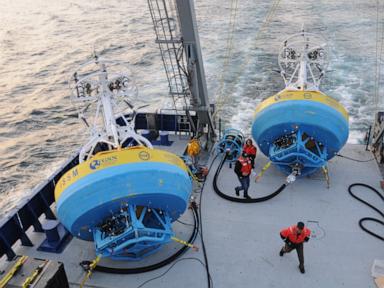
The federal government is quietly moving to dismantle a 386 million dollar ocean observatory network, triggering a fierce, bipartisan backlash from lawmakers who warn that killing the project will blind scientists to imminent climate threats and maritime security risks. The administration’s budget proposal seeks to phase out the Ocean Observatories Initiative, a sprawling grid of undersea cables, deep-sea moorings, and autonomous gliders that has monitored the Atlantic and Pacific for a decade. While officials claim the cuts are necessary to free up funds for newer, more agile environmental programs, oceanographers and congressional overseers call the decision a short-sighted betrayal of a massive infrastructure investment that is just beginning to pay dividends.
The Battle for the Bottom of the Sea
Federal budget battles usually happen in sterile Washington conference rooms, far away from the crushing pressure and absolute darkness of the deep ocean. Yet the latest fiscal skirmish threatens a technological marvel anchored to the seabed. The Ocean Observatories Initiative, funded by the National Science Foundation, consists of seven major operating sites that stream real-time data from the sea floor to the internet.
It is the oceanic equivalent of the Hubble Space Telescope. Before its deployment, scientists relied almost entirely on periodic research cruises to drop sensors into the water, collecting mere snapshots of an ever-changing system. Now, thousands of instruments measure chemistry, temperature, and seismic activity every second of the day.
The administration’s sudden pivot away from this infrastructure has caught the scientific community completely off guard. Budget documents justify the phase-out by pointing to rising maintenance costs and a desire to redirect capital toward immediate, localized climate resilience projects. Bureaucrats argue that the network has served its purpose as a research pilot and that keeping it online eats up too much of the agency's operational liquidity.
Lawmakers from coastal states see a different motive. They argue that the agency is simply looking for an easy budget target to fund political pet projects, sacrificing foundational science for short-term fiscal optics. A coalition of senators has already signaled plans to block the defunding effort through the appropriations process, setting up a high-stakes standoff over the future of American marine science.
The Infrastructure Trap
Building a network capable of surviving the hostile environment of the deep ocean is an extraordinary engineering feat. Saltwater corrodes titanium. The pressure at three miles down can crush standard hulls like soda cans. Marine life hitches rides on sensors, fouling delicate lenses and calibration points.
To overcome these challenges, the project required a massive upfront capital injection. Fiber-optic cables had to be snaked across the Juan de Fuca plate off the coast of Oregon and Washington. Massive, instrument-laden buoys had to be moored in the treacherous, storm-tossed waters of the sub-Polar North Atlantic.
Dismantling this network now ignores the harsh reality of scientific infrastructure. You do not save money by abandoning a house the moment the roof needs its first repair.
The data flowing from these arrays does not just feed academic curiosity. It provides the baseline metrics used by commercial fisheries to predict toxic algal blooms, by coastal managers to prepare for storm surges, and by the military to understand acoustic propagation in submarine warfare. Turning off the power to these sensors means abandoning hundreds of millions of dollars in unamortized hardware that cannot simply be plugged back in later.
Consider the physical reality of the situation. If a deep-sea mooring is left unmaintained for two years, its batteries die, its cables fray, and the pressure housings eventually fail. Rebuilding the network from scratch five years from now would cost double the original investment. The administration’s proposal assumes that data collection can be paused and resumed at will, showing a fundamental misunderstanding of the physical degradation of marine assets.
The True Cost of Data Gaps
Climate modeling relies entirely on long, unbroken timelines of data. If you have a ten-year record of ocean temperatures and you introduce a two-year gap, you break the mathematical models used to project sea-level rise and hurricane intensity. The ocean absorbs more than 90 percent of the excess heat trapped by greenhouse gases. Missing the signals from the deep ocean means flying blind during the most critical decade of climate mitigation in human history.
Alternative Paths and Better Outcomes
The administration is not entirely wrong about the financial strain. The network is expensive to run. Specialized research vessels must be chartered every year to replace batteries, clean biofouling from sensors, and swap out damaged instruments. These operational costs increase with inflation and fuel prices.
Instead of scrapping the entire network, a more pragmatic approach would involve restructuring its funding mechanism. Right now, the National Science Foundation shoulders the entire burden. This is an administrative anomaly. Multiple federal agencies benefit directly from the data generated by the observatory.
A sustainable path forward requires a shared-services funding model. The National Oceanic and Atmospheric Administration relies on the data for weather and fishery predictions. The Navy uses it for undersea situational awareness. The Department of Energy utilizes the seismic data to evaluate offshore wind and carbon-capture sites.
By distributing the annual operational costs across these agencies, the financial burden on any single budget would drop significantly. This requires bureaucratic coordination, a rare commodity in Washington, but it is a far more logical solution than vandalism disguised as fiscal prudence.
A Phased Modernization Strategy
Technology has evolved since the network was designed over a decade ago. Sensors are more energy-efficient. Autonomous underwater vehicles can now stay submerged for months at a time, reducing the need for expensive surface ships to perform routine checks.
The program could save millions by aggressively upgrading to these low-power, autonomous systems during regular maintenance cycles. Transitioning to a hybrid model that pairs a scaled-down cable network with a larger fleet of long-endurance gliders would lower the cost per gigabyte of data collected without blinding our eyes beneath the waves.
The Security Blindspot
Beyond the climate implications lies a stark national security reality that lawmakers are beginning to leverage in their arguments against the budget cuts. The undersea domain is no longer the exclusive playground of a few elite navies. Competitor nations are rapidly expanding their submarine fleets and developing autonomous underwater surveillance networks of their own.
The American ocean observatory sits in strategic corridors, particularly the Pacific Northwest array, which monitors waters adjacent to critical naval submarine bases. The sensors track acoustic anomalies and ambient ocean noise. While the data shared with the public is scrubbed of sensitive military specifics, the infrastructure itself provides an invaluable baseline of oceanographic conditions that the military uses to calibrate its own classified sonar systems.
Abandoning these monitoring sites creates a vacuum. If the United States pulls its instruments out of these waters, it loses the continuous environmental awareness required to detect changes in the underwater acoustic highway. It is a risk that members of the armed services committees are increasingly unwilling to take, turning a dispute over scientific funding into a broader debate about sovereign maritime dominance.
The fight on Capitol Hill is ultimately about whether the government can commit to long-term scientific infrastructure, or if it will remain trapped in a cycle of building expensive tools only to abandon them when the next budget cycle shifts political priorities. Lawmakers have the power to rewrite the budget and save the observatory, but doing so requires a rejection of short-term fiscal gamesmanship in favor of the slow, unglamorous work of maintaining our scientific defenses.