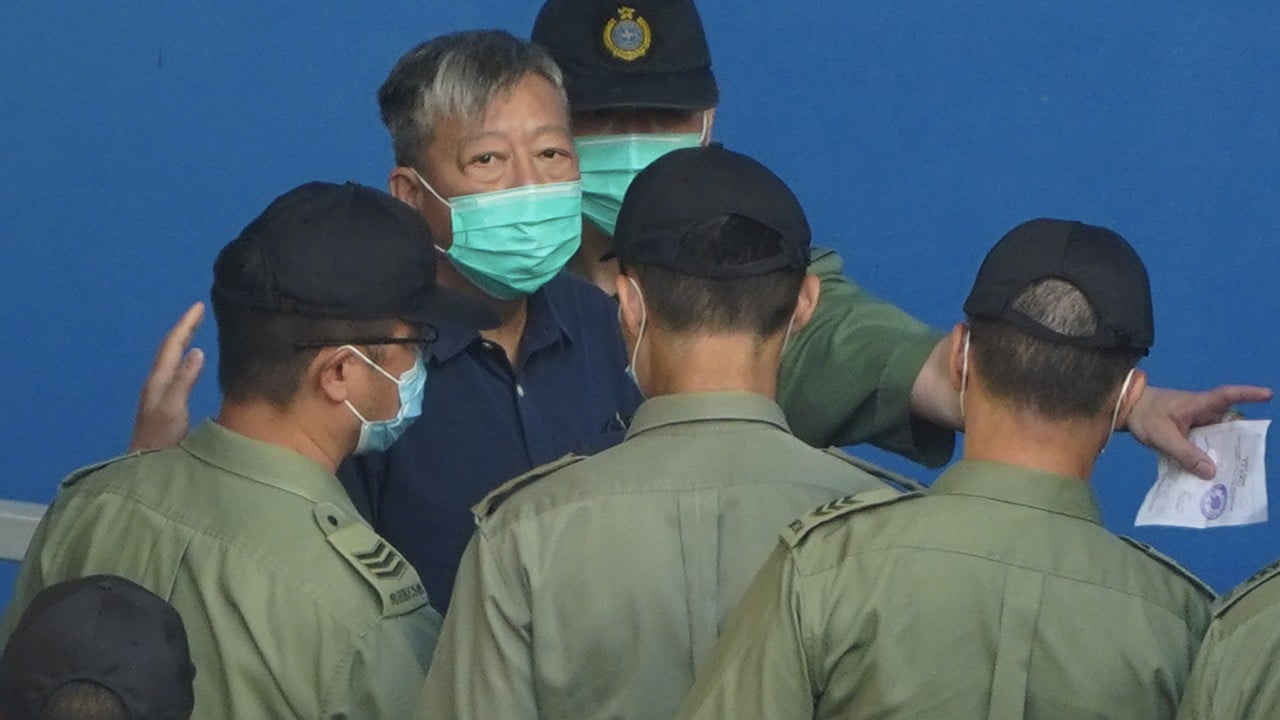
The courtroom in West Kowloon was quiet when the verdict dropped. A judge appointed under Beijing's strict national security framework handed down guilty rulings against the core organizers of Hong Kong's annual Tiananmen Square massacre vigil. Chow Hang-tung, Lee Cheuk-yan, and Albert Ho stood accused not of violence, not of weapons possession, but of inciting subversion of state power.
For three decades, Victoria Park in Causeway Bay was the only place on Chinese soil where hundreds of thousands could legally light candles for the victims of the 1989 military crackdown. That public grief is now classified as a criminal enterprise. The conviction of the Hong Kong Alliance in Support of Patriotic Democratic Movements of China marks the final institutional burial of a mass movement that once defined the city's unique identity under the handover agreement.
Memory is heavy. Governments prefer it light, erased, or rewritten entirely. What happened in that courtroom represents a structural shift in how authoritarian power operates inside a former global financial hub. The legal machinery did not just punish individuals; it criminalized collective memory itself.
The Machinery of Erasure
Law has a way of twisting language until words lose their original weight. Inciting subversion used to require plots, pamphlets, or physical attempts to overthrow a government. In the post-2020 legal environment of Hong Kong, organizing a candlelight vigil or chanting slogans calling for an end to one-party rule constitutes a direct threat to state survival.
The prosecution argued that the Alliance's decades-long demand to end the dictatorship of the Chinese Communist Party was an illegal act designed to subvert the state. The defense pointed out that political speech, no matter how critical, is protected under basic human rights frameworks. The judges disagreed. They accepted the state's argument that words spoken in a public park carry the momentum of revolution.
History shows us this pattern repeatedly. When a regime cannot tolerate dissent, it redefines dissent as treason.
- The Victoria Park vigil drew crowds numbering in the tens and hundreds of thousands every June Fourth.
- Artifacts from the June 4th Museum were seized, confiscated, or shuttered by authorities.
- Group members faced relentless legal pressure, asset freezes, and prolonged pre-trial detentions.
The speed of this transformation catches people off guard. Institutions that took generations to build vanish in months. Organizations dissolve under pressure from national security police. Universities scrub library databases of books documenting the 1989 crackdown. Even statues vanish from university campuses in the dead of night, hauled away by contractors working under police supervision.
The Strategy of Silence
Silence is rarely passive. It is manufactured.
When the annual gathering was banned under pandemic pretexts in 2020, people found ways around it. They walked through the streets holding up phone lights. They lit candles on apartment windowsills. They whispered names in alleyways. The state noticed these workarounds and closed every single loophole.
Now, possessing a book about Tiananmen or wearing a black shirt on a specific date draws intense scrutiny from plainclothes officers. The strategy relies on deterrence through unpredictability. If no one knows exactly where the legal red line sits, everyone self-censores to stay safe.
Why the Vigil Mattered
To understand why Beijing cracked down so hard on a peaceful gathering, you have to look at legitimacy. The Chinese Communist Party bases its authority on economic delivery and historical narrative. The events of June 1989 represent a fundamental fracture in that narrative. Allowing an open commemoration inside Chinese territory was an intolerable crack in the armor.
Hong Kong was supposed to be different. The "One Country, Two Systems" framework promised that the city would retain its civil liberties, its press freedom, and its right to assemble. By destroying the vigil, the state sent an unambiguous signal. The boundary between the mainland and the special administrative region no longer exists in practice.
Financial markets watched the legal proceedings with quiet anxiety. Capital flows depend on predictable laws and independent courts. When the judiciary acts as an arm of political enforcement, foreign firms reassess their risk exposure. Yet the outflow of talent and money tells a complicated story. Some leave immediately. Others stay, keeping their heads down, calculating how much compliance is required to survive.
The Cost of Compliance
Living through a transition of this magnitude wears people down. Activists face years behind bars. Journalists who once exposed corruption now work in exile or abandon the trade entirely. Ordinary citizens look away when police patrol public transit stations, checking phones and bags for subversive material.
The defendants in the subversion trial knew what was coming. They refused to flee. Albert Ho, a veteran lawyer and politician, spent decades defending civil rights before becoming a target of the state himself. Lee Cheuk-yan, a trade unionist with a lifetime of organizing behind him, accepted that his activism would end in a prison cell. Chow Hang-tung, a young barrister who kept the flame alive long after others stepped back, defended herself with sharp, uncompromising clarity.
Their defiance matters, even if it does not change the immediate political outcome. It leaves a record. It ensures that the state cannot pretend this happened without resistance.
The Digital Archiving Battle
Physical spaces are easy to clear. Parks can be cordoned off, museums closed, and monuments removed. But the digital realm offers different battlegrounds, though authorities have mobilized rapidly to police those spaces as well. Local internet service providers block access to websites documenting the crackdown. Algorithms scrub social media posts containing specific dates, numbers, or imagery associated with the protests.
Activists outside the territory work to mirror archives overseas, saving oral histories, photographs, and legal documents on decentralized servers. This digital preservation prevents total erasure. Yet it creates a deep division. The history of Hong Kong is now written and remembered mostly from the outside, by a diaspora scattered across London, Toronto, Taiwan, and Melbourne.
Inside the city, a generation grows up under a different syllabus. Textbooks no longer use the term massacre to describe the military clearing of Tiananmen Square. Teachers who mention the event risk losing their licenses. The official story replaces the lived experience.
This is the reality of the new normal in Hong Kong. The verdicts delivered against the vigil organizers are not isolated legal events. They are milestones in a systematic campaign to rewrite the past in order to control the future. The candles in Victoria Park are extinguished, but the struggle over who gets to remember and who is forced to forget continues in the dark.