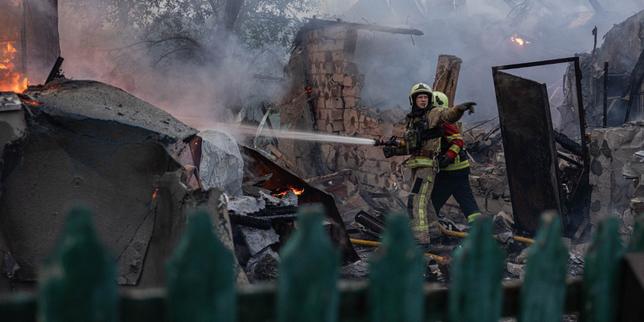
War doesn't announce itself with sirens. It arrives in the quiet hours, tearing through apartment blocks before people even have time to register the incoming whistle. At least two civilians are dead following a brutal Russian strike on the northeastern Ukrainian city of Sumy. Rescue crews are sifting through the rubble right now, looking for survivors trapped under collapsed concrete.
If you've been following the conflict remotely, numbers like "two dead" start blending together into background noise. That's a dangerous trap. Sumy isn't just a dot on a tactical map. It sits right near the Russian border, making it a constant frontline target for artillery, glide bombs, and missile attacks. When residential districts take direct hits, the human cost goes far beyond immediate casualties. It strips away any illusion of safety for millions of civilians trying to live normal lives under abnormal conditions.
The Strategic Reality of Border Targeting
Sumy occupies a unique and brutal geographic position. Because of its proximity to the border, warning times are agonizingly short. Air defense systems often have mere seconds to react before an impact occurs. That's why these strikes feel so terrifyingly efficient for the aggressor and so impossible to defend against for local authorities.
When residential zones get targeted, the immediate tactical impact is disruption. Power grids fail. Water systems break. Emergency services get stretched thin across multiple simultaneous blast sites. But the psychological impact is what matters most to military analysts. The strategy relies on grinding down local morale, forcing families to constantly weigh the risks of staying against the harsh reality of becoming refugees.
People living in Sumy aren't asking abstract geopolitical questions. They want to know if their local shelter is stocked, how long the blackout will last, and whether the emergency response team can dig out their neighbors before nightfall. The disconnect between high-level diplomatic talks and ground-level survival keeps growing wider every single day the shelling continues.
Local Resilience Facing Relentless Pressure
You have to understand the sheer exhaustion setting in across northeastern Ukraine. Communities in Sumy have dealt with continuous cross-border threats for years now. They've built routines around air raid apps, basement bolt-holes, and emergency rations.
Yet, routine doesn't make explosions less lethal. First responders walk into smoking ruins knowing secondary strikes happen all the time. Local volunteers show up with hot tea and heavy lifting equipment within minutes of the blast. This isn't cinematic heroism; it's the grim muscle memory of a population that learned how to keep society functioning while under fire.
International reporting often focuses exclusively on the frontlines in the Donbas or major southern hubs. But cities like Sumy bear the brunt of daily attrition warfare. Every residential strike forces the state to redirect critical air defense assets away from counter-offensive operations just to protect civilian rooftops. That trade-off forms the quiet architecture of this war.
What Happens When Protection Fails
Air defenses work miracles every single week, intercepting incoming projectiles over major cities. But no shield is 100 percent airtight. When a ballistic missile or heavy drone slips through over Sumy, the consequences are immediate and permanent.
Families lose homes they spent decades building. Children grow up measuring time by the distance to the nearest cellar. The international community sends packages, aid, and statements of condemnation. Those matter. They keep the lights on and hospitals supplied. But they don't stop the next shockwave from shattering glass three blocks over.
Staying informed means looking past the sanitized headlines of casualty counts and recognizing the grinding reality on the ground. Sumy absorbed another blow today. The sirens will sound again tomorrow, and the people living there will keep adapting, because stopping isn't an option.