Two CIA agents and two state officials died in a mountain road crash after a drug lab raid in Chihuahua, and six months later a former state attorney general found himself ordered to stand trial for treason. Honestly, that chain reaction sounds like a spy thriller plot until you remember how raw U.S.-Mexico sovereignty politics have become.
When people search about two CIA agents killed northern Mexico treason case, they usually expect a dramatic cartel ambush or an espionage ring exposed in broad daylight. Instead, the spark was a vehicle wreck on the way back from dismantling clandestine drug labs in northern Mexico in April 2026, followed by a federal judge's late-October ruling ordering former Chihuahua Attorney General César Jáuregui to face trial under Mexico's treason statute.
I've watched cross-border security cooperation swing back and forth for years, and this case exposes the exact fault line where operational urgency collides with strict national sovereignty rules. Washington and Mexican state authorities often rely on quick, informal trust to hit drug labs fast, while Mexico City has spent recent years tightening laws to bar foreign agents from operating without explicit federal permission.
How the Chihuahua Drug Lab Raid Unraveled
The operation itself didn't end with a major cartel takedown. According to reports on the April 2026 raid in Chihuahua, Mexican state prosecutor personnel and the army dismantled drug laboratories, though criminals fled before any arrests were made.
Then came the return trip in the Chihuahua mountains. A car accident killed two state agents and two Americans who were CIA officers. Once the bodies and wreckage drew federal scrutiny, a routine tragedy turned into a constitutional crisis over who authorized foreigners to take part in the mission.
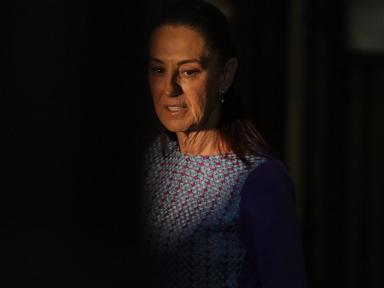
Look at the contradictions that surfaced right after the crash. Mexican President Claudia Sheinbaum stated that the military was unaware of the foreigners' presence and that none of them had permission to operate in the country, adding the next day that she hadn't known about the operation. Jáuregui, who later resigned as state attorney general in April, maintained that the Americans joined the group after the operation began and previously referred to U.S. personnel in public remarks as "instructor officers" involved in training.
Those conflicting accounts matter because legality in Mexico turns on authorization and chain of command. If state officials brought foreign intelligence personnel into a field operation without federal sign-off, Mexico City wasn't just looking at bad coordination. It saw a direct challenge to federal authority.
Why Treason Charges Are So Rare in Mexico
Charging a public official with treason isn't a routine prosecutorial move in Mexico. Federal prosecutors invoked Article 123, section I of the Federal Penal Code, targeting conduct that allegedly undermines national independence and sovereignty to subject the nation to a foreign group.
In practice, treason cases in Mexico have been extraordinarily rare—with reporting noting it has been roughly eight decades since Mexico last brought a treason case to trial, aside from a recent attempt that didn't stick. Following Jáuregui's arrest on October 17, 2026 on allegations involving illegal exercise of public office, federal authorities layered on the treason accusation, and a federal judge ordered him to stand trial after a marathon hearing stretching into early Sunday, October 25. By mid-November, appellate court filings over admissibility were still playing out.
Here's the catch that legal observers point out. Treason carries heavy political weight and a high evidentiary bar, especially when defendants deny authorizing foreign operational involvement and point to partisan friction between Mexico City's ruling Morena party and state-level opposition leadership in Chihuahua's National Action Party (PAN).
- High legal threshold: Prosecutors must prove intent and acts that genuinely threaten sovereignty rather than sloppy administrative oversight.
- Partisan tension: State-versus-federal clashes turn legal questions into political battles over who speaks for the state.
- Diplomatic fallout: Dragging CIA involvement into a treason prosecution risks chilling intelligence sharing that both countries need against synthetic drug networks.
Sovereignty Rules vs. Cross-Border Reality
If you've followed U.S.-Mexico security policy for a while, you know the gap between official rules and on-the-ground habits is nothing new. Both Sheinbaum and her predecessor, Andrés Manuel López Obrador, pushed legal reforms aimed at stopping foreign agents from operating unilaterally or without federal approval.
Yet as researcher Pérez Ricart has noted in coverage of the case, informal arrangements between U.S. personnel and local or state officials keep happening because trust built in the field speeds up work—until a lack of clear rules leads to abuses or blowback. When things go smoothly, nobody in Washington or Mexico City complains loudly about a quiet assist. When people die in a mountain crash, the gloves come off.
That tension also raises uncomfortable questions for Washington. Putting CIA officers anywhere near an active or adjacent raid on Mexican soil without airtight federal clearance creates massive diplomatic risk, particularly when Sheinbaum has made sovereignty a signature pillar of her presidency.
What You Should Watch Next
Don't treat the treason charge as an open-and-shut conviction just because a judge ordered a trial. Watch the appellate court rulings and evidentiary hearings first to see whether the treason count survives intact or gets narrowed or challenged on procedural grounds.
If you're tracking U.S.-Mexico security relations, pay close attention to two things over the coming months: whether federal prosecutors introduce documented proof of who invited or coordinated with the U.S. personnel, and whether Washington and Mexico City formalize stricter guardrails for joint counter-narcotics work. You can follow ongoing court developments through AP News coverage of the Chihuahua treason case and check Mexico's Federal Penal Code if you want to read the exact statutory language behind Article 123.