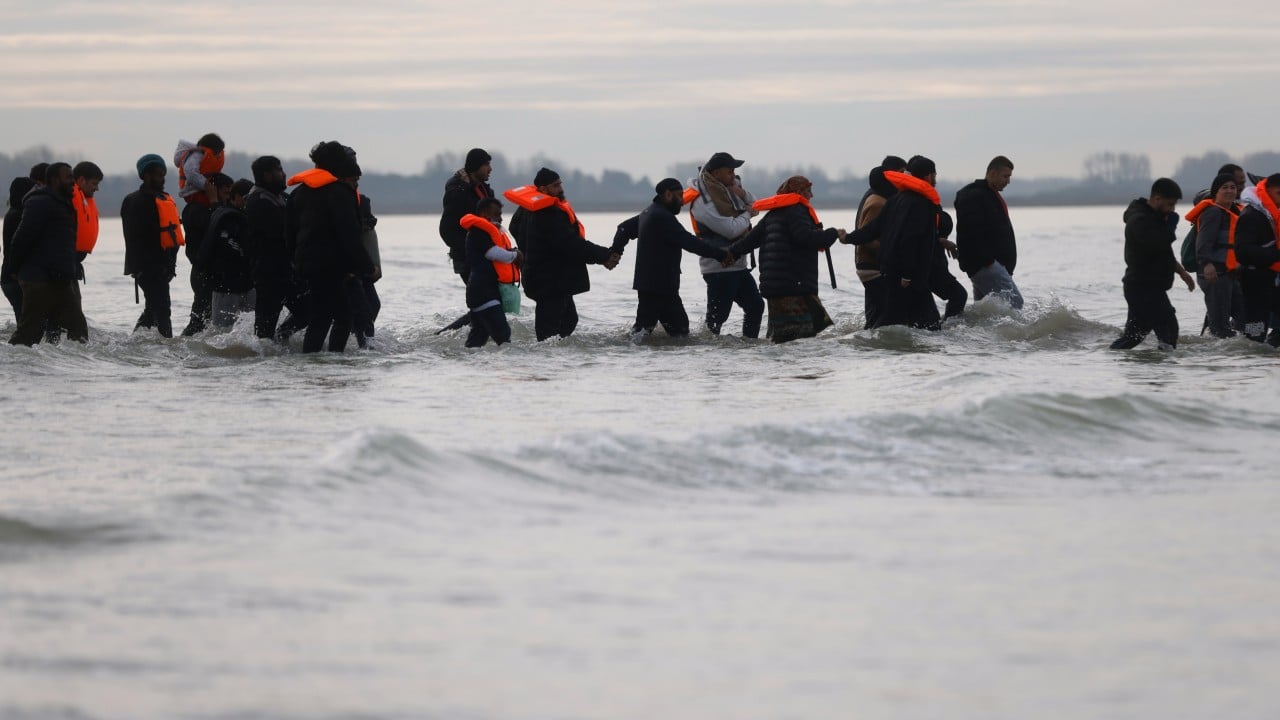
Two more bodies on a French beach. Another boat splintered against the rocks. The headlines follow a script so predictable it feels choreographed. We call it a "tragedy." We blame the "callous smugglers." We demand "increased surveillance."
Every single one of those reactions is wrong.
The deaths of two individuals in a failed crossing this week aren't a failure of policing. They are the logical, mathematical outcome of a border policy that has prioritized theater over physics. We are witnessing the brutal efficiency of a system doing exactly what it was designed to do: make the passage so dangerous that only the desperate try, and then act shocked when the desperate die.
If you think more drones or higher fences will stop this, you haven't been paying attention to the last twenty years of maritime migration. You’re looking at the symptoms and calling them the disease.
The Smuggler Myth
The "evil smuggler" is the ultimate political get-out-of-jail-free card. By focusing entirely on the predatory nature of human traffickers, governments shift the moral burden away from their own policy failures.
Yes, smugglers are often monsters. They overload unseaworthy vessels and vanish the moment the water gets choppy. But smugglers don't create demand; they fill a vacuum. You don't have a smuggling problem; you have a market distortion problem. When there is no legal path to seek asylum without physically standing on UK soil, and no legal way to reach that soil, you have created a monopoly for the black market.
Imagine a scenario where the only way to buy bread was to jump through a ring of fire. You wouldn't blame the guy selling flame-retardant suits for the burns; you’d ask why the bakery is behind a bonfire.
The business model of the Channel crossings isn't built on slick marketing. It’s built on the Dublin Regulation’s ghost and the lack of humanitarian visas. We have handed the keys to the border to the most violent elements of society by making them the only travel agents available.
The Perverse Incentive of "Safety"
Here is the counter-intuitive truth that nobody in Parliament wants to admit: The safer we try to make the "containment," the deadlier the crossing becomes.
When the UK and France increased security at the Port of Calais and the Eurotunnel entrance, they celebrated a victory. They "shut down" the stowaway routes in lorries. The result? The migration didn't stop. It moved to the water.
A lorry is a steel box. A dinghy is a balloon. By "securing" the land, we forced people into the most volatile environment on earth. The English Channel is one of the busiest, most unpredictable shipping lanes in existence. It has complex tidal streams and weather that turns in minutes.
We traded a trespassing problem for a drowning problem and called it "stronger borders."
The Mathematics of Displacement
Standard news reports treat these sinkings as isolated incidents of bad luck or exceptionally poor boat craft. They aren't. They are data points in a trend of "displacement."
- Interdiction leads to Diversion: Every time a specific beach in northern France is heavily patrolled, the launch points move further south or further east.
- Distance equals Risk: Longer routes mean more time at sea, more fuel required, and a higher probability of hitting a Gale Force 4 or higher.
- The Quality Death Spiral: As authorities seize more high-quality Rigid Inflatable Boats (RIBs), smugglers switch to "taxi boats"—flimsy, flat-bottomed crafts made of thin PVC and plywood. These are literally disposable.
We are currently in Phase 3. The boats hitting the water today are significantly less sea-worthy than the ones used five years ago. We are policing the quality of the vessels down to zero, ensuring that any mechanical failure or shift in wind becomes a mass casualty event.
Stop Asking if the Border is Secure
The question "Is the border secure?" is a distraction. The real question is: "What is the price of this version of security?"
Currently, the price is measured in human currency. The UK spends billions on the French border, on "Small Boats" commands, and on offshore processing schemes that remain tied up in legal knots. Meanwhile, the number of crossings remains tied more to the weather than to the presence of the Royal Navy.
If the goal were truly to stop the deaths, the solution is agonizingly simple and politically suicidal: allow asylum claims to be processed outside the territory.
The moment you allow a person to file a claim at an embassy or a dedicated center in France, the smuggler's value proposition hits zero. Why pay £5,000 to risk your life in a rubber tube when you can file a paper for the price of a bus ticket?
But we don't do that. Because "processing" implies people might actually arrive. The current system relies on the deterrent of death. We are using the English Channel as a moat, hoping the bodies at the bottom will convince the people on the shore to turn back.
The Sovereignty Delusion
We are told that "taking back control" of our borders is a matter of national sovereignty. But there is nothing sovereign about a policy that is entirely reactive to the tactics of criminal gangs.
A sovereign nation manages its flow. It doesn't outsource its border security to the waves. We are currently in a reactive loop where the smugglers set the pace, the weather sets the death toll, and the government sets the rhetoric.
I have seen the internal mechanics of these "security" surges. They are built on optics. They involve moving ships around so they show up on thermal cameras, and giving press briefings in front of seized engines. It’s theater for a domestic audience that wants to feel like "something is being done" without actually solving the structural mismatch between international law and geography.
The Brutal Reality of the "Safe Third Country"
The "lazy consensus" says these people should stay in France because France is safe. This ignores the reality of how asylum systems actually function and the specific ties—language, family, colonial history—that draw people to the UK.
France is not a waiting room; it’s a country with its own overwhelmed system. When we demand that people "stay in the first safe country," we are essentially asking Greece, Italy, and France to shoulder the entirety of a global migration crisis simply because of their GPS coordinates. That isn't a policy; it's a geographic middle finger. It guarantees a lack of cooperation, which in turn guarantees more unmonitored launches.
The Logic of the Long Game
We are stuck in a cycle of "crisis management." A boat sinks, we express "condolences," we announce a "crackdown," and we wait for the next boat to sink.
We need to stop treating the English Channel as a battlefield and start treating it as a failure of logistics. The deaths this week weren't an accident. They were the inevitable result of a policy that values the appearance of a hard border over the reality of human movement.
Until we stop pretending that we can "patrol" our way out of a humanitarian reality, the Channel will continue to be a graveyard. The blood isn't just on the hands of the smugglers; it’s on the pens of the people who designed a system where the only way to ask for help is to nearly die first.
The system isn't broken. It's working perfectly. And that is the real horror.