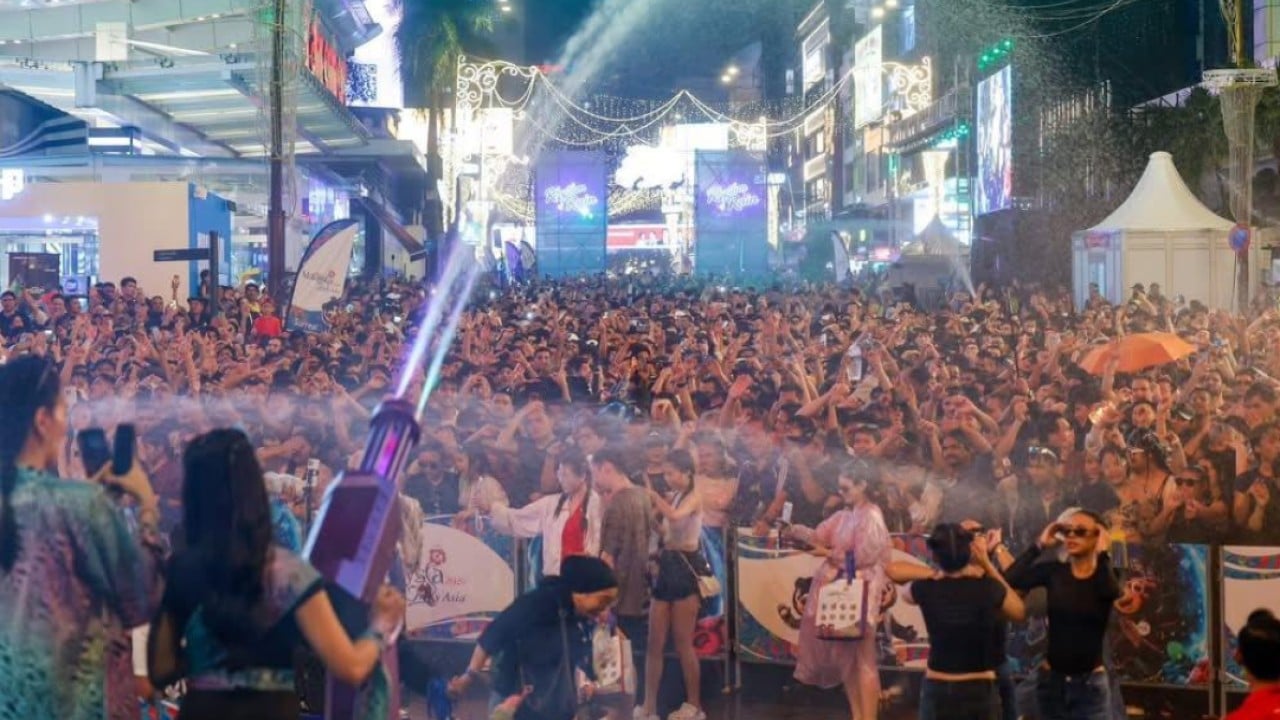
The air in Kelantan usually tastes of salt and heavy humidity, but during the water festival, it tastes of joy. It is a sensory overload of neon plastic pistols, the rhythmic thud of bass speakers, and the frantic, cooling relief of a sudden soak. Thousands of strangers become childhood friends for an afternoon. There is an unspoken contract in these crowds: we are here to lose ourselves in the play, to be vulnerable, and to be drenched.
Then the music stopped. Not because the power failed, but because the atmosphere curdled. For another view, consider: this related article.
It started near the edge of the main thoroughfare. A ripple of movement that wasn't a dance. A woman, her face a mask of fractured composure, held something that didn't belong in a playground. It wasn't a brightly colored water toy. It was the dull, grey glint of a knife. In a space defined by fluid motion and liquid fun, the presence of cold steel felt like a tear in the fabric of reality.
The Anatomy of a Second
Time in a crisis doesn’t move linearly. It stretches. Scientists call it tachypsychia—the brain’s way of overclocking its processing speed when survival is on the line. For the revelers standing inches away from the blade, the festive shouting died instantly, replaced by a vacuum of silence so thick you could hear the water dripping off the eaves of the nearby stalls. Similar reporting on the subject has been published by NPR.
The woman didn't scream. She didn't make a grand proclamation. She simply stood there, the weapon an extension of a psychic break that most of us will, thankfully, never have to navigate. This is the hidden reality of public gatherings. We assume safety because of the sheer volume of people around us, believing in a "safety in numbers" that is often more psychological than physical.
But numbers can be a liability. In a dense crowd, panic is a contagion. If one person bolts, a hundred follow. If a hundred follow, a thousand surge. The biggest threat in that moment wasn't just the knife; it was the potential for a stampede that could crush the very life out of the festival.
The Choice to Stay
Most survival manuals tell you to run. They tell you to put distance between yourself and the threat. It is sound advice. It is logical. Yet, something different happened in the heart of this Malaysian crowd.
Instead of a vacuum forming around the woman, a circle crystallized. It was a group of men and women, still dripping wet from the festivities, who made a split-second internal calculation. They didn't see a "suspect." They saw a human being in the middle of a dangerous collapse, and they saw the families behind them who were at risk.
Fear is a chemical reaction—a flood of cortisol and adrenaline. Bravery, however, is a social one.
One man moved first. He didn't lung like a movie hero. He moved with the cautious, heavy steps of someone walking on thin ice. He used his hands, palms open, a universal signal of peace that transcends language. He was trying to bridge the gap between her reality and the one the rest of the world was living in.
Consider the sensory dissonance he faced. His clothes were heavy with water. His eyes were likely stinging from the sun and the spray. The ground beneath him was slick, making every movement a gamble. A single slip would have ended the standoff in tragedy.
The Weight of the Collective
There is a concept in sociology known as the "Bystander Effect," where the presence of others discourages an individual from intervening. We wait for someone else to be the adult in the room. We wait for the "authorities." But at a water festival, the authorities are often blocks away, navigating the same congested streets as everyone else.
The crowd in Kelantan rewrote that sociological script.
As the first man engaged, others followed. They didn't wait for a signal. They moved in a synchronized, unspoken flank. This wasn't a mob seeking justice; it was a community performing a delicate extraction. They used the weight of their collective presence to shrink her world until the only option left was to give up the steel.
The struggle was brief but harrowing. It was a tangle of limbs and wet fabric. The knife was stripped away—not with a flourish, but with the desperate, grinding efficiency of people who just wanted to go home to their children. When the blade finally hit the pavement, the sound it made was tiny. A metallic "tink" against the concrete that signaled the end of a nightmare.
The Invisible Stakes
We often consume these stories as "crazy news items" while scrolling through our phones, forgetting the visceral trauma left in the wake of the event. The woman was eventually handed over to the police, and the official reports will cite her mental state or her motives in dry, legalistic prose. They will use words like "apprehended" and "disarmed."
Those words are hollow.
They don't capture the trembling hands of the man who grabbed her wrist. They don't capture the look in the eyes of the parents who shielded their toddlers behind plastic buckets. They don't account for the fact that, for those involved, the water festival will never just be about water again. Every flash of sunlight on a metallic surface will, for a fleeting second, bring back the smell of the damp pavement and the sight of the blade.
We live in an era where we are told to mind our own business, to look down at our screens, and to avoid conflict at all costs. We are taught that the "system" will handle the outliers. But the system is made of people. And sometimes, the system is just a group of strangers in wet T-shirts who decide that they are responsible for one another.
The Aftermath of the Surge
When the police finally arrived and the woman was taken away, the music didn't immediately start back up. The festival didn't just "reset." There was a long, communal exhale. People looked at each other—really looked at each other—perhaps for the first time that day.
The water festival is a celebration of cleansing, of washing away the bad luck of the previous year to make room for the new. In a strange, unintended way, the crowd in Kelantan lived out the deepest meaning of that tradition. They confronted a moment of pure, jagged darkness and neutralized it with the sheer force of their common humanity.
They didn't wait for a hero. They became a wall.
As the sun began to set over the province, the water on the ground started to evaporate, leaving behind only the faint outlines of where the crowd had stood. The guns were picked back up. The music eventually returned, drifting over the rooftops. But the air had changed. It was no longer just about the play. It was about the knowledge that if the world turned sharp and cold again, the person standing next to you might just be the one to catch your arm.
The knife was gone. The water remained.