The air inside the Brussels summit room always smells faintly of stale espresso and expensive wool. It is a room built for whispers, for the slow, grinding machinery of international diplomacy where disagreements are usually buried under layers of polite, translated prose.
Then came the flash.
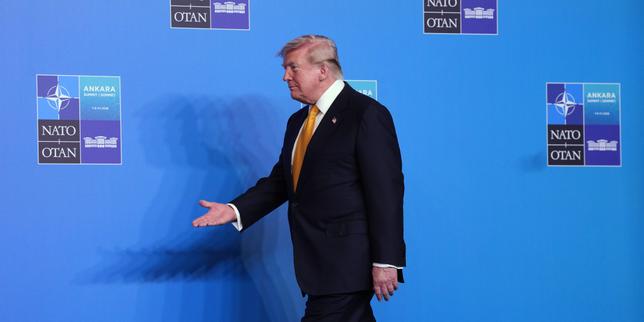
With a single declaration at the NATO summit, Donald Trump pulled the plug on a centuries-old economic relationship. The words were stark, devoid of the usual diplomatic cushioning: the United States would cease all trade with Spain. Just like that. A total embargo, born from frustration over defense spending and trade imbalances, thrown into the middle of a security conference like a live grenade.
In Madrid, the news did not arrive via official diplomatic cable. It landed on mobile screens in the middle of the afternoon siesta, vibrating against coffee tables and waking up an entire nation to an impossible new reality.
To understand what this means, you have to look past the talking heads on television and the frantic stock tickers in New York. You have to travel to the sun-baked hills of Andalusia, where the true weight of geopolitical chess is actually felt.
The Olive Groves of Seville
Alejandro Garcia stands in an orchard that his great-grandfather planted. His hands are rough, stained with the dark oil of the manzanilla olives his family has harvested for over a century. For Alejandro, the United States is not a distant superpower on a map. It is the destination for forty percent of everything his land produces. It pays his mortgage. It funds his daughters' schooling.
When the news broke, his phone did not stop ringing. His American distributor in Ohio was frantic. Three shipping containers packed with pristine, brined olives were currently sitting in the middle of the Atlantic Ocean, somewhere between Valencia and the Port of Baltimore.
"What do we do with the ships?" the distributor asked, his voice cracking over a weak satellite line.
Alejandro had no answer. Dictating global policy is the work of men in pristine suits who rarely see the dirt. But the consequences of those policies flow downward, heavy and fast, pooling in the lives of ordinary people who suddenly find their entire livelihoods illegal overnight.
Consider the sheer scale of what happens when a trading relationship evaporates. We talk about trade in billions of dollars, a number so vast it becomes abstract. But trade is actually a sequence of promises. It is a promise that a bottle of olive oil from Seville will find a shelf in Chicago. It is a promise that an aerospace engineer in Madrid will receive the specialized titanium components manufactured in a Pennsylvania foundry.
When those promises are broken by executive decree, the machinery of daily life grinds to a terrifying halt.
The Invisible Network Under the Sea
The immediate reaction from analysts was a mix of panic and profound confusion. Can a president simply halt trade with a single European nation? The legal frameworks of the World Trade Organization and the European Union suggest a tangled web of litigation would follow. But markets do not wait for court rulings. Fear moves faster than the law.
Imagine a massive, invisible conveyor belt stretching across the Atlantic Ocean. Day and night, it moves aircraft parts, footwear, wine, medical instruments, and machinery. Spain relies on American natural gas to keep its factories running and its homes warm during the winter. The United States relies on Spanish infrastructure firms to build its highways and manage its transit systems.
But the real problem lies elsewhere. It rests in the fragile nature of confidence.
In a small manufacturing town just outside of Cleveland, a factory foreman named Dave looked at his assembly line the morning after the announcement. His team builds high-end industrial machinery. The computerized control units inside those machines are designed and programmed by a tech firm based in Barcelona.
Without those units, the assembly line stops. Without the assembly line, Dave has to tell twelve men and women that their shifts are being cut indefinitely.
"We don't know anything about NATO budgets," Dave said, staring at the idle machinery. "We just know how to build things. If we can't get the parts, we can't work. It’s that simple."
This is the collateral damage of modern economic warfare. The targets are rarely the ones who suffer the most. Instead, the blowback hits the factory floors of the Midwest and the agricultural cooperatives of southern Europe.
The Myth of Isolation
There is a comforting fiction that nations can exist as islands, entirely self-sufficient and immune to the whims of their neighbors. The rhetoric of a total trade halt appeals to this instinct. It promises protection. It promises an end to reliance on outsiders.
But this ignores how things are actually made. A modern automobile is not built in one place. Its alternator might come from Indiana, its wiring harness from Mexico, its brake sensors from Germany, and its electronic housing from Spain. To cut one thread is to unravel the entire sweater.
The tension at the summit was not just about money; it was about the fundamental misunderstanding of interdependence. When the American administration signaled that trade was a weapon rather than a shared foundation, the psychological shift was instantaneous. European leaders huddled in emergency sessions, realizing that the rules of the post-war order were being rewritten on the fly.
For decades, the alliance between North America and Europe was built on the idea that economic integration prevents conflict. If our businesses are intertwined, if our workers rely on one another, war becomes unthinkable. By weaponizing trade at a defense summit, that calculation was inverted. Economic vulnerability became the ultimate leverage.
The Long Night in Valencia
As the sun set over the Mediterranean, the Port of Valencia looked like a city of steel giants. Giant cranes towered over thousands of colorful shipping containers, casting long shadows across the dark water. This port is the beating heart of Spanish commerce, a gateway to the Western hemisphere.
Inside the port’s administrative office, logistics managers stared at monitors displaying vessel tracking data. Ships bound for New York were slowing down in the middle of the ocean, awaiting instructions from corporate headquarters. No one wanted to be the one responsible for a cargo ship full of perishable goods arriving at an American dock only to be turned away by customs officials.
The uncertainty is more damaging than an actual tariff. A tariff can be calculated, budgeted for, and passed on to the consumer. A total halt is a black hole. It paralyzes decision-making. Businesses stop investing. Orders are canceled. Contracts are torn up.
The true cost of this diplomatic rupture will not be tallied in a single quarter. It will be measured in the quiet decisions made by thousands of small business owners over the coming months. The American bakery that decides to source its flour alternatives elsewhere. The Spanish tech startup that chooses to open its next office in Toronto instead of Austin. The slow, agonizing erosion of trust.
Back in Seville, Alejandro Garcia walked out into his groves long after his workers had gone home. He picked an olive from a low-hanging branch, pressing it between his fingers until the oil coat his skin. The trees do not care about geopolitical posturing. They will continue to grow, the fruit will continue to ripen, and the seasons will change regardless of what happens in the corridors of Brussels.
But the human world is far more fragile than the earth beneath our feet. It requires constant maintenance, mutual respect, and a recognition that we are all connected by the invisible threads of commerce and shared survival. When those threads are severed, we are all left standing in the dark, wondering how a world so carefully constructed could become so suddenly disconnected.