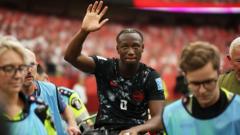
Canada first ever men's World Cup victory arrived wrapped in a shroud of clinical dominance, shattering records, and a sickening fracture that silenced Vancouver. The 6–0 thrashing of Qatar at BC Place on Thursday should have been an unadulterated national holiday. Instead, the post-match discourse features less celebration and more concern over a brutal injury to midfielder Ismael Kone and an ugly post-match brawl that exposed tactical desperation. Jesse Marsch team achieved its competitive objective, but the tactical warfare deployed by Julen Lopetegui Qatari side left wounds that could derail Canada knockout stage ambitions before they even begin.
High-end tournament soccer is rarely just about the scoreline. While Jonathan David claimed a historic hat trick to push his side to the brink of the Round of 32, the real story lies in how a structurally superior team became the target of systematic, physical intimidation.
The Anatomy of a Meltdown
To understand the chaos that erupted in Vancouver, one must look at the structural mismatch that defined the first whistle. Qatar rolled out a conservative defensive shape designed to clog the channels, but Canada quick ball circulation exposed deep-seated technical deficiencies in Lopetegui defensive unit.
Cyle Larin opener in the 16th minute forced Qatar to abandon their low block. What followed was a classic tactical unraveling. When technical execution fails, teams under severe pressure often resort to raw physicality. The Qatari side did not just lose their discipline; they completely lost their structural composure.
The first flashpoint came in the 33rd minute. Tajon Buchanan tore down the flank, leaving Homam Ahmed isolated. The resulting challenge was late, high, and dangerous. A video review upgraded the initial yellow to a straight red card, reducing Qatar to ten men and setting a toxic tone for the remainder of the evening.
The Cost of Compliance
Jonathan David capitalized on the chaos, netting twice more before the half-time whistle to ensure a comfortable cushion. Yet, the match official failed to establish firm boundaries after the first dismissal. Tournament referees are frequently instructed to protect player safety, but the leniency shown toward standard tracking tackles allowed resentment to simmer on both sides.
The breaking point arrived early in the second half. Assim Madibo lunged into Ismael Kone with an uncontrolled tackle that resulted in a horrific, audible lower left leg fracture.
Kone went down instantly. The immediate, visceral reaction of his teammates signaled the severity of the damage. Madibo was sent off, leaving Qatar with nine men, but the tactical damage to Canada tournament spine was already absolute.
Replacing a foundational midfielder like Kone is not a simple plug-and-play scenario for Marsch. Nathan Saliba came off the bench and managed to score a fine free-kick goal in the 64th minute, even holding up Kone jersey in an emotional tribute. Despite the individual brilliance of the depth players, losing a progressive ball-carrier changes the entire mechanical ceiling of this team.
Blood and Bad Blood at the Whistle
By the time the final whistle blew, the tactical reality of a 6–0 scoreline had been entirely eclipsed by raw emotion. A massive brawl broke out on the pitch as players from both squads engaged in shoving matches, verbal tirades, and physical confrontations.
The hostility extended straight to the technical areas. Jesse Marsch and Julen Lopetegui engaged in a fierce, face-to-face shouting match, requiring staff members from both associations to physically separate the managers. Marsch anger stems from a legitimate grievance: his team was subjected to dangerous, career-threatening challenges while holding a massive lead. Conversely, Lopetegui frustration seemed to stem from his team absolute humiliation on the world stage.
This friction highlights a deeper issue within tournament group stages. When a team realizes its tournament life is effectively over, the psychological shift from competitive execution to existential frustration can happen in minutes. Qatar knew they were beaten, and their subsequent choices reflected a group that had completely abandoned tactical instruction.
The Disciplinary Nightmare Facing FIFA
Six straight red cards have been issued in the opening eight days of this World Cup, surpassing the total count of several previous tournaments combined. This is a systemic issue. FIFA refereeing committees have emphasized strict enforcement on simulation and time-wasting, yet the protection of creative players against reckless challenges remains wildly inconsistent.
Leaving a stadium with three points matters little if your squad depth is permanently compromised by the round of 32. Canada now faces a final Group B fixture against Switzerland to determine who wins the group and secures crucial home-field advantage for the knockout rounds.
Alphonso Davies remains sidelined with a delicate hamstring recovery, and now Kone is entirely out of the picture. The historic nature of Jonathan David joining Lionel Messi as one of the few players to secure a modern World Cup hat trick is a stellar individual achievement. It means nothing if Canada cannot field a functional, cohesive midfield unit next week. Marsch must now find a way to stabilize a locker room that is simultaneously flying high on a historic margin and grieving the loss of an indispensable peer.