The foreign policy establishment is having another collective panic attack.
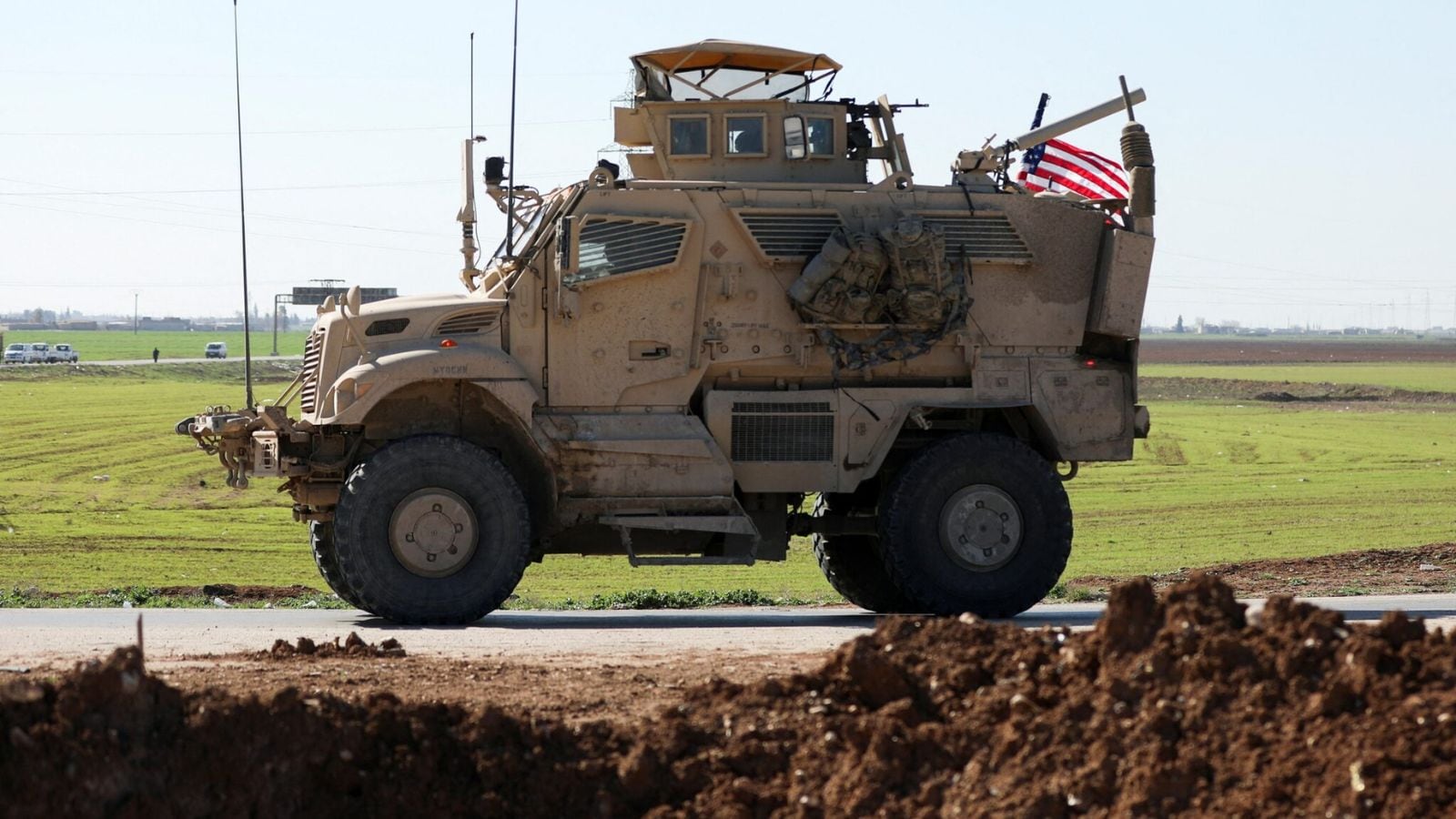
Every major editorial board is running some variation of the same terrified headline: a quiet, incremental reduction of US military presence in Eastern Europe is leaving our allies exposed, fracturing NATO, and practically inviting Russian tanks to roll through the Suwalki Gap. They paint a picture of a fragile frontier suddenly stripped of its protector, desperate for more American boots on the ground, more permanent bases in Poland, and more endless deployments of US armored brigades.
It is a comforting, dramatic story. It is also completely wrong.
The lazy consensus in Washington and Brussels treats US military presence in Europe as an unalloyed good—a magical force field where more troops automatically equal more security. They fail to understand how modern military deterrence works.
The slow, calculated shift of US resources away from Europe is not a betrayal. It is a necessary, long-overdue correction. The hard truth that nobody in the Pentagon or the North Atlantic Council wants to admit publicly is simple: the perpetual American security guarantee has crippled European defense, turned sovereign nations into security dependents, and created a highly centralized, fragile command structure that is ill-equipped for the realities of modern, high-intensity attrition warfare.
Removing the American training wheels is the only way to build a genuinely resilient European continent.
The Myth of the American Tripwire
For decades, NATO strategy in the east has relied on the "tripwire" model. The theory is that by placing small units of US and multinational troops near the Russian border, any hostile incursion would immediately kill American soldiers, guaranteeing total US entry into the war.
It is a psychological security blanket designed for the Cold War, and it is dangerously obsolete.
I spent years analyzing defense logistics and war games in Eastern European theaters. Here is what actually happens in those simulation rooms: when you rely on a distant superpower for your immediate survival, your local defense planning becomes performative. Instead of building deep, sustainable magazines of artillery ammunition, layered air defenses, and highly mobile citizen-reservist forces, host nations spend their energy lobbying for symbolic US deployments. They build infrastructure to house American soldiers rather than factories to build their own shells.
A tripwire is not defense. It is an invitation to a hostage crisis.
In a real conflict, a highly centralized US-led response is bottlenecked by logistics. The US Army's heavy armor must cross the Atlantic Ocean or move slowly from depots in Germany through choked European rail systems. By the time American decision-makers debate the political consequences of entering a hot war, the territorial reality on the ground is already settled.
Real deterrence does not live in Washington. It lives in Warsaw, Tallinn, Riga, and Vilnius. It lives in the physical capacity of those front-line states to inflict asymmetric, unpalatable costs on an aggressor from hour one, without waiting for permission from a US president who might be distracted by a crisis in the Taiwan Strait.
The Great Free-Rider Delusion
Let us talk about money, because this is where the conventional narrative falls apart completely.
The standard defense of the status quo is that Eastern European allies are doing their part—Poland is spending over 4% of its GDP on defense, and the Baltic states are regularly hitting or exceeding the 2% NATO benchmark. This is true, and they deserve credit for it.
But look at Western Europe.
The nations with the largest economies, the deepest industrial capacity, and the most advanced manufacturing bases—Germany, France, Italy, Spain—have spent thirty years treating national defense as an optional luxury. They subsidized their generous social safety nets by outsourcing their defense to the American taxpayer.
When the US keeps 100,000 troops stationed in Europe, it subsidizes this exact complacency. Why would a German chancellor make the politically painful decision to rebuild the Bundeswehr when they know Uncle Sam is keeping the northern plains secure? Why would France invest in massive, mass-production ammunition lines when they can rely on US global stockpiles?
The numbers paint a devastating picture of European defense decay:
- Ammunition Starvation: During peak fighting in Ukraine, the entire British army would have run out of heavy artillery ammunition in a matter of days.
- The Tank Deficit: Germany, the industrial engine of Europe, struggles to field more than a couple of hundred combat-ready Leopard 2 tanks at any given moment.
- Logistical Paralysis: Major European highways and bridges cannot support the weight of heavy US main battle tanks, meaning any rapid deployment is a logistical pipe dream.
By quietly pulling back, the US is forcing Western Europe’s hand. The threat of an American exit is the only political leverage that actually works to force European leaders to rebuild their defense-industrial bases. We saw this clearly when US political deadlock temporarily stalled aid to Ukraine; suddenly, European capitals started scrambling to buy shells globally and invest in domestic production.
True allied strength is not measured by how much the US spends to defend Europe. It is measured by how effectively Europe can defend itself.
The Math of Modern Attrition War
The war in Ukraine has shattered every assumption the Western military establishment held about 21st-century conflict.
We were told that future wars would be short, high-tech, and decided by air superiority and precision strikes. Instead, we got a brutal, industrial-scale war of attrition defined by drone swarms, massive artillery duels, and deep trench networks.
In this environment, a few US brigade combat teams stationed in Poland are a drop in the bucket. An attrition war requires massive depth: millions of artillery rounds, thousands of cheap drones, endless replacement barrels, and a deep pool of trained reserve manpower.
The US defense-industrial base is already stretched to its absolute limit trying to supply Ukraine while simultaneously preparing for a potential conflict in the Indo-Pacific. The US cannot be the arsenal of democracy for two hemispheres at the same time. The math simply does not work.
Consider the requirements of a high-intensity conflict in Europe:
US Production Limits vs. Attrition Realities
--------------------------------------------------
US 155mm Shell Production (Target): ~100,000 / month
Ukrainian Shell Usage (Peak):        ~200,000+ / month
Estimated European Shell Capacity:   Slightly rising, but fragmented
To survive an attrition war, Europe needs a highly distributed, regional manufacturing network. They need factories in Poland, Romania, and Germany pumping out standardized ammunition, cheap FPV (First-Person View) drones, and basic air-defense interceptors.
Keeping American forces stationed on the border acts as a narcotic. It dulls the pain of underinvestment and delays the structural reforms needed to turn European factories back to wartime production footing.
Why Decentralized Defense is Superior
A centralized, US-dependent NATO is fragile. It has a single point of failure: the political will of the United States.
If a future US administration decides that Eastern Europe is not worth a war, the entire alliance collapses like a house of cards because the European allies have not built the independent structures required to fight on their own.
A decentralized, sovereign European defense is infinitely more resilient. Imagine a security structure where:
- Poland and the Nordics Lead the Ground War: Poland builds the largest land army in Europe, backed by Finland's massive artillery reserve and Sweden's advanced naval assets in the Baltic Sea.
- Germany and France Provide the Industrial and Air Depth: Western European nations focus on logistics, deep-strike cruise missiles, layered air defense networks, and mass manufacturing of defense materiel.
- The Baltics Deploy Asymmetric Denial Networks: Rather than trying to match Russia tank-for-tank, the Baltic states turn their territory into an un-occupiable nightmare using millions of landmines, automated anti-tank systems, and dense drone networks.
This model is a nightmare for an aggressor. There is no single Washington political debate to exploit. There is no single supply line across the Atlantic to interdict. Every nation along the eastern flank becomes a highly toxic, self-defending unit.
The Price of Transition
Let us be brutally honest about the risks.
A US pullback will create a period of vulnerability. It takes years, not months, to build ammunition factories, train officers, and restructure military doctrines. During this transition phase, Russia may perceive a window of opportunity.
But this risk is far lower than the risk of maintaining the current illusion. If we keep pretending the US can and will defend every inch of European territory forever, we guarantee a catastrophic failure when that bluff is eventually called.
The transition will be messy. It will require Eastern European nations to take difficult, sovereign responsibility for their own survival. They will have to buy weapons not just from the US to curry political favor in Washington, but from domestic and European suppliers to build regional supply chain resilience.
The age of the cheap US security guarantee is over. The faster Eastern Europe accepts this reality, the safer they will be.
Stop mourning the end of the American empire in Europe. Start building the European fortress that should have existed all along.