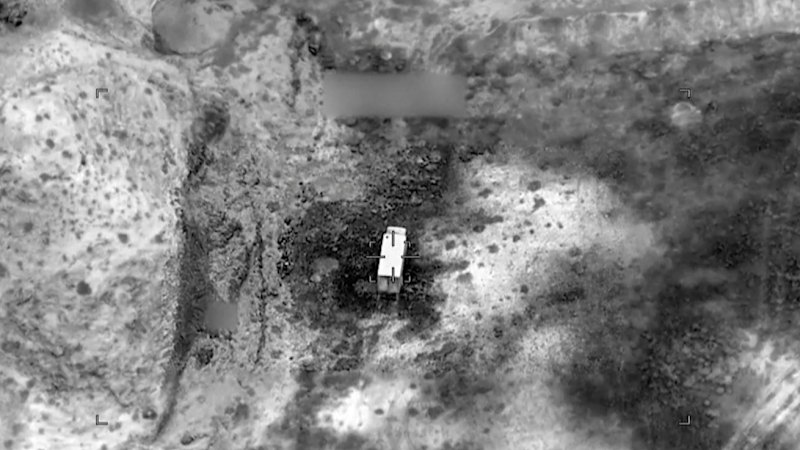
When the US Navy intercepted and turned away two hostile vessels attempting to disrupt commercial shipping in the Strait of Hormuz, it was not an isolated maritime skirmish. It was a symptom of a highly volatile shadow conflict. By deploying warships and air assets to block these incursions, Washington signaled its refusal to cede control of the world’s most critical energy chokepoint. But this intervention exposes a deeper vulnerability. The global economy remains hostage to a narrow strip of water, and tactical victories at sea cannot cure a structural breakdown in international deterrence.
This quiet confrontation highlights a reality that defense planners rarely admit. The traditional methods of securing global trade are failing.
For decades, the presence of the US Fifth Fleet was enough to keep the peace. That era is over. Today, asymmetric tactics, low-cost drone technology, and deniable state-sponsored harassment have leveled the playing field. To understand why two ships being turned away matters, we must look past the immediate tactical success and examine the fragile economics and shifting military doctrines of the Persian Gulf.
The Tactical Standoff at the Chokepoint
The mechanics of the encounter reveal a highly choreographed dance of escalation and de-escalation. In the narrow transit lanes of the Strait, foreign military vessels routinely shadow commercial tankers. In this specific instance, the hostile ships—operating with the tactical profile of paramilitary forces—attempted to alter the course of merchant vessels in international waters.
The US response was swift but measured.
A combination of guided-missile destroyers, maritime patrol aircraft, and unmanned surveillance assets converged on the scene. The US military did not fire a shot. Instead, they used a combination of electronic warfare, direct bridge-to-bridge communications, and highly visible physical positioning to force the harassing vessels to back down.
This is gray-zone warfare. It is designed to hover just below the threshold of open military conflict.
The adversaries want to test American resolve. They want to see how quickly the US Navy can respond, what assets they deploy, and how far they are willing to push their rules of engagement. By forcing the US to react, they gather valuable intelligence on operational readiness. Every intercept is a data-gathering mission for the other side.
The physical constraints of the Strait make these operations incredibly risky. At its narrowest point, the shipping channel is only twenty-one miles wide. The actual shipping lanes used by massive supertankers are even narrower, consisting of a two-mile-wide inbound lane, a two-mile-wide outbound lane, and a two-mile-wide buffer zone between them.
There is no room for error. A single miscalculation by a young officer on a fast-attack craft or a destroyer bridge could trigger a localized clash that quickly spirals into a regional war.
The Shifting Rules of Maritime Engagement
Historically, international maritime law protected the right of innocent passage. The United Nations Convention on the Law of the Sea (UNCLOS) outlines these protections clearly. Yet, the nation-states operating in these waters routinely exploit legal loopholes to justify their aggressive behavior.
They claim environmental violations, safety infractions, or legal disputes over cargo ownership to board and seize commercial vessels.
This is not law enforcement. It is state-sanctioned piracy used as geopolitical leverage.
When the US military intervenes to turn these vessels away, it acts as a global gendarme. This role is becoming increasingly difficult to maintain. The US Navy is currently facing a severe shipbuilding and maintenance crisis, leaving its fleet stretched thin across multiple theaters of operation.
The demand for American warships in the Western Pacific and the Mediterranean has drained resources from the Middle East.
Strait of Hormuz Daily Oil Transit (Approximate)
+------------------------------------------+
| Volume: ~20.5 million barrels per day    |
| Percentage of global maritime oil: ~30%  |
| Primary destinations: Asian markets      |
+------------------------------------------+
To compensate for fewer physical hulls, the military has turned to technological integration. Task Force 59, the Fifth Fleet’s unmanned systems and artificial intelligence integration unit, has deployed a network of sea drones to monitor the Gulf. These surface drones act as persistent eyes on the water.
They cannot, however, physically block a hostile boarding team.
When a crisis occurs, there is still no substitute for an Arleigh Burke-class destroyer. The physical presence of eighty-one hundred tons of American steel, packed with vertical launching systems and manned by highly trained sailors, remains the only credible deterrent. But when those destroyers are pulled away to counter threats elsewhere, the deterrence gap widens.
The Economic Realities of a Broken Transit Zone
The immediate consequence of these maritime confrontations is not military. It is financial.
The global shipping industry operates on razor-thin margins. When tension rises in the Strait of Hormuz, the cost of doing business skyrockets. Insurance companies immediately adjust their formulas, raising war risk premiums for any vessel planning to transit the region.
These costs are not absorbed by the shipping conglomerates. They are passed directly to the consumer.
- War Risk Premiums: Can spike by tens of thousands of dollars per voyage during periods of heightened tension.
- Security Details: Shipowners must hire private armed security teams to guard their vessels, adding to operational overhead.
- Re-routing Costs: Avoiding the area entirely by sailing around the Cape of Good Hope adds weeks to transit times and millions in fuel costs.
This economic pressure is precisely what Washington’s adversaries want to exploit. By demonstrating that they can disrupt the flow of oil at will, they exert pressure on Western economies.
The goal is to make the cost of defending the shipping lanes higher than the West is willing to pay.
There is a glaring irony at the heart of this security arrangement. The primary beneficiaries of American maritime protection in the Persian Gulf are not Western nations. The vast majority of the crude oil flowing through the Strait of Hormuz is destined for Asian markets, specifically China, India, Japan, and South Korea.
The American taxpayer is effectively subsidizing the energy security of its primary global competitor.
This dynamic has created a growing debate within Washington policy circles. Critics argue that the US should demand that allied nations contribute more to the security of these waters. If East Asian economies rely on Gulf oil, their navies should be patrolling the Strait alongside the US Navy.
But building a functional international coalition is easier said than done. Many nations are hesitant to deploy their fleets to the region, fearing they will be drawn into a broader geopolitical confrontation.
The Fragility of the American Umbrella
Relying on a single military power to guarantee global trade is a precarious strategy. The US Navy is a highly capable force, but it is not omnipotent. It is facing recruitment shortages, aging infrastructure, and a political establishment that is increasingly wary of foreign entanglements.
If a coordinated escalation were to occur, with multiple harassment operations happening simultaneously across the Gulf, the US military would be forced to make difficult choices. They cannot be everywhere at once.
The adversaries know this. They do not need to win a fleet-on-fleet engagement with the United States. They only need to create enough chaos and uncertainty to make the Strait of Hormuz unusable for commercial traffic.
A sustained disruption of just a few weeks would trigger a global economic crisis.
The turn-away of those two ships was a tactical success, but it should not be celebrated as a permanent victory. It was a temporary reprieve. The underlying tensions that drove those hostile vessels to attempt the interception remain completely unresolved.
Until the international community addresses the root causes of the instability, the Strait of Hormuz will remain a ticking time bomb. The next confrontation may not end with a peaceful retreat. It may end with fire on the water, and a global economy plunged into sudden, predictable chaos.