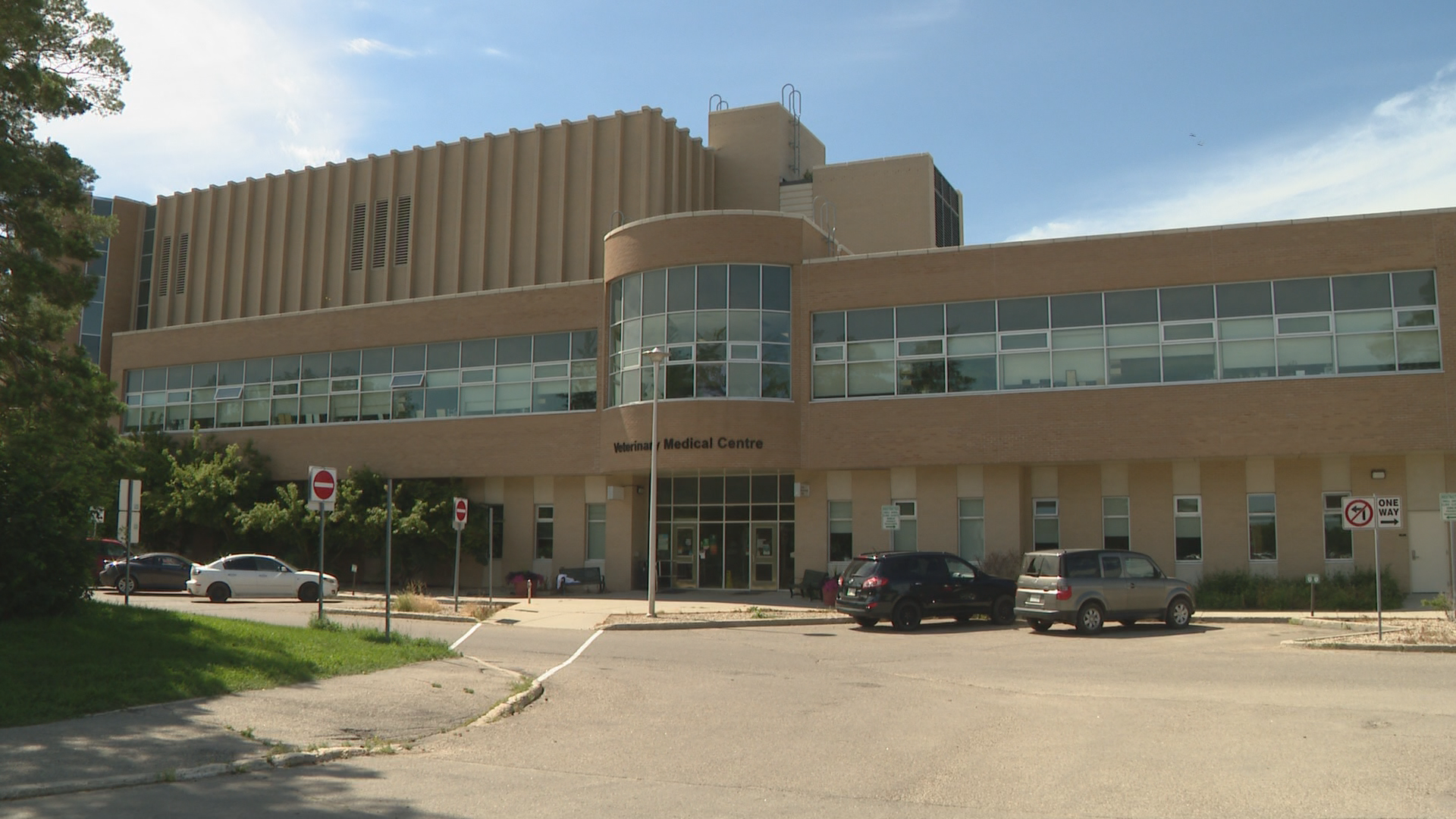
The Western College of Veterinary Medicine at the University of Saskatchewan recently announced an indefinite suspension of its wildlife and exotic animal admissions. This sudden operational halt leaves injured wild animals across Western Canada without an institutional safety net and dumps an unmanageable medical burden onto underfunded volunteer organizations. The decision reveals a much larger, systemic failure within corporate and academic veterinary structures that prioritizes profitable domestic pet care over the uncompensated labor of wildlife conservation. It is an immediate crisis of animal welfare and public safety.
For decades, the Veterinary Medical Centre in Saskatoon stood as a critical hub for specialized animal care. It was a place where a fractured hawk wing or a poisoned eagle could receive advanced orthopedic surgery. That system is now broken. The university frames the suspension as a temporary pause for an extensive service review, but those on the ground recognize it as a structural retreat. Non-profit rehabilitation groups were named as alternative care options without their prior knowledge or consent, exposing a complete lack of coordination.
Shifting the Weight to Breaking Points
Volunteer groups cannot perform complex veterinary surgery. Jan Shadick, the executive director of Living Sky Wildlife Rehabilitation, made it clear that her organization operates as a recovery center rather than a fully equipped trauma hospital. When a bird arrives with a shattered femur from a vehicle strike, it requires an operating room, inhalation anesthesia, and an orthopedic specialist. It does not just need a cage and some seed. By shutting its doors to these animals, the university is effectively deciding that these creatures will simply die in the wild or face agonizing delays before euthanasia.
The financial strain on grassroots rescue networks is already severe. These entities subsist on individual donations, small corporate sponsorships, and endless cycles of public fundraising. They rely heavily on seasonal interns and volunteers who work long hours for little to no compensation. Forcing these tiny operations to source private, commercial veterinary care for wild species is an impossible demand. Most commercial veterinary clinics are already turning away domestic clients due to their own capacity limits, let alone accepting an aggressive, injured wild mammal that requires specialized handling protocols.
The Educational Vacuum for Next Generation Doctors
The fallout extends far beyond immediate animal suffering. The Western College of Veterinary Medicine is the sole English-speaking veterinary program in Canada that offers a dedicated, hands-on wildlife and exotics curriculum for undergraduate students. Students choose this institution specifically because they want exposure to non-traditional species. Removing wildlife cases from the teaching hospital effectively eviscerates that training pipeline.
Third-year students have already begun organizing online petitions to force the administration to reconsider. They point out that entering a profession where avian influenza, chronic wasting disease, and climate-driven habitat changes are altering the biological map requires more wildlife literacy, not less. If graduates enter the workforce with zero experience handling wild vectors, public health surveillance suffers. Veterinarians are the first line of defense against zoonotic diseases that jump from wilderness populations to domestic livestock and human communities.
The Veterinary Shortage Corporate Myth
University administrators frequently point to staffing constraints and a generalized shortage of veterinary professionals to justify cutting low-margin programs. This explanation obscures the real economic drivers. The shortage is not driven by a lack of qualified applicants wanting to enter veterinary school. It is driven by systemic burnout, unmanageable student debt, and the aggressive corporatization of domestic animal clinics.
Veterinary medicine has transformed rapidly over the past decade. Private equity firms have quietly bought up thousands of independent clinics across North America, consolidating them into massive networks designed to maximize shareholder yield. These corporate clinics focus heavily on high-margin elective procedures, diagnostic panels, and premium pet products for dogs and cats. They offer salaries and signing bonuses that public institutions and specialized wildlife tracks simply cannot match. A young veterinarian graduating with substantial debt is funneled directly into suburban small-animal practices out of sheer financial survival.
Wildlife medicine pays nothing. Wild animals do not have owners with credit cards. The university hospital relied on internal subsidies and specialized clinical faculty who were willing to balance a heavy teaching load with uncompensated emergency cases. When those faculty members burn out or leave for the private sector, the university chooses to close the department rather than restructuring its budget to offer competitive, sustainable compensation.
Strategic Distractions and Accountability
The institutional playbook for handling public backlash is entirely predictable. Administrations announce a temporary suspension, initiate an internal committee review, and promise to study the problem for several years. This stretches the timeline until public anger dissipates and the affected student cohorts graduate and move away. Meanwhile, the baseline of expected care is permanently lowered.
While some regional organizations are taking a cautious approach to the news, hoping for a structural compromise, the reality on the ground is unforgiving. Summer is peak season for wildlife injuries. High temperatures, increased human-wildlife encounters, and agricultural activity mean that orphaned, struck, or poisoned animals arrive at rescue doorsteps daily. The timing of this suspension could not be worse for regional ecosystems.
A Broken Funding Model for Public Ecology
The fundamental flaw lies in treating wildlife medicine as an optional luxury within an academic budget. Public universities receive significant provincial and federal funding to serve the broader public interest. Protecting regional biodiversity and training specialists to manage ecosystem health should be core mandates, not line items that can be discarded when corporate competition pinches the labor pool.
Relying on the charity of local veterinarians to fill the gap is a failed strategy. A commercial vet clinic designed for standard domestic pets is rarely set up to safely house an adult deer or a predatory bird. The risk of cross-contamination, stress-induced mortality for the wild animal, and physical injury to staff is too high. Without an institutional anchor like the university teaching hospital, the management of injured wildlife degrades into a chaotic, ad-hoc system that satisfies no one.
The solution requires an explicit realignment of university priorities and targeted government intervention. Provincial ministries of environment and agriculture benefit directly from the diagnostic work and epidemiological screening performed by university wildlife clinics. They must provide dedicated, recurring operational envelopes that insulate these programs from the shifting financial winds of the veterinary college's general fund. Expecting a volunteer with a garage full of cages to patch the holes left by a multi-million-dollar academic institution is both cynical and dangerous. The doors must be reopened, and the funding must be secured permanently.