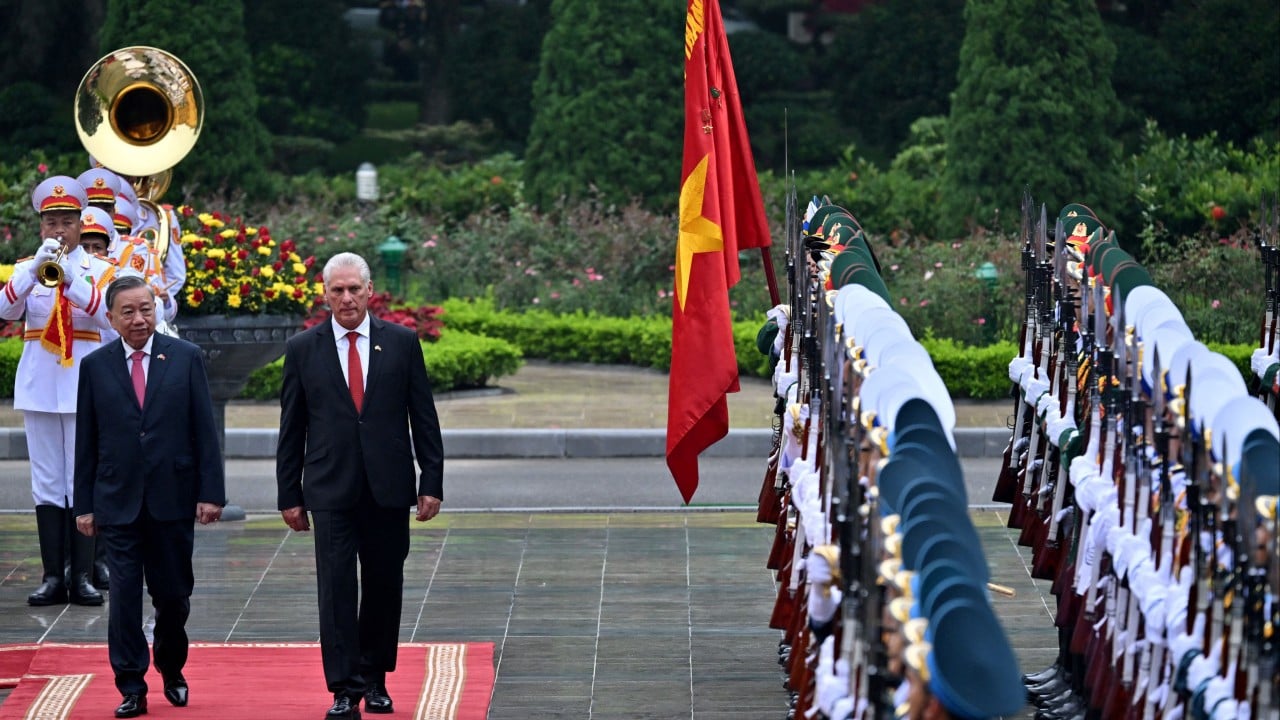
Hanoi face a structural bottleneck when navigating the accelerating diplomatic and economic friction between Washington and Havana. As the United States intensifies its economic embargo and applies tariff pressures against the Cuban administration, Vietnam is forced to balance its ideological solidarity with Havana against the reality of its Comprehensive Strategic Partnership with Washington. This dynamic exposes the limits of "Bamboo Diplomacy"—Vietnam's multi-directional foreign policy framework designed to maximize strategic autonomy without formal alignment.
The strategic calculus for Vietnam is governed by a fundamental asymmetry: bilateral trade with the United States exceeded $124 billion, whereas economic exchange with Cuba remains structurally nominal, largely centered on modest rice exports and medical cooperation. Consequently, any overt geopolitical maneuver by Hanoi to shield Havana from American pressure incurs an exponential cost function, risking retaliatory trade barriers or delays in critical technology transfers, such as the United States' semiconductor integration initiatives under the CHIPS Act.
The Dual-Track Constraint Framework
Vietnam’s strategic options are strictly bounded by two conflicting operational tracks. Each track possesses distinct dependencies and non-negotiable red lines.
                  [Vietnam's Strategic Dilemma]
                     /                       \
        [Track 1: Economic Realism]      [Track 2: Ideological Capital]
           - $124B US Trade Value           - Party Legitimacy Alignment
           - Semiconductor Technology       - Sovereign Autonomy Precedent
           - Market Status Recognition     - Diplomatic Reciprocity
Track 1: The Economic Imperative with Washington
The primary driver of Vietnam's contemporary state strategy is its integration into western high-technology supply chains. The US-Vietnam Comprehensive Strategic Partnership serves as the mechanism for workforce development in semiconductors, targeting diversification away from high-risk geopolitical zones. The economic payoffs are conditional on compliance with specific regulatory and geopolitical baselines set by the United States.
Track 2: The Ideological Imperative with Havana
Conversely, Cuba represents a core component of the Communist Party of Vietnam's historical legitimacy and ideological identity. Havana was an early supporter of North Vietnam during the mid-twentieth-century conflict, establishing a deep well of diplomatic capital. Preserving this relationship is essential for maintaining internal party consensus and reinforcing Vietnam's stance on state sovereignty and non-intervention in international forums.
Quantifying the Cost Function of Escalation
If the United States executes a more aggressive containment policy toward Cuba—combining heightened secondary sanctions with stricter enforcement of the Helms-Burton Act—Vietnam’s policy space contracts sharply. Under these conditions, Vietnam’s support for Cuba is evaluated through three specific structural variables:
- The Secondary Sanctions Threshold: If Washington applies secondary sanctions to entities doing business with Cuba, Vietnamese state-owned enterprises involved in infrastructure, telecommunications, and agricultural projects within the Mariel Special Development Zone face immediate exclusion from the US banking system.
- The Market Economy Status Bottleneck: Vietnam is actively seeking recognition from the US Department of Commerce as a market economy. Overtly undermining American foreign policy directives in the Caribbean gives domestic protectionist groups in the United States the leverage needed to block this reclassification, maintaining higher anti-dumping duties on Vietnamese exports.
- The Technology Transfer Penalty: The $2 million allocation via the US CHIPS Act for Vietnamese semiconductor infrastructure acts as a precursor for tens of billions in private venture capital. This capital inflow is highly sensitive to geopolitical alignment, meaning systemic friction over Cuba can halt technology transfers entirely.
The Limits of State Capitalism Emulation
The Cuban administration under Miguel Díaz-Canel has looked toward the economic models of China and Vietnam, explicitly exploring market-oriented reforms under one-party rule to alleviate chronic energy and food shortages. Cuba's proposed initiatives—including allowing foreign entities to hold foreign currency accounts and loosening state control over wages and tourism monopolies—mirror the early stages of Vietnam’s Doi Moi reforms launched in 1986.
However, a structural barrier prevents Cuba from replicating Vietnam’s growth trajectory. When Vietnam opened its economy, it leveraged a highly favorable geographic position adjacent to the world's most dynamic manufacturing hubs and ultimately achieved diplomatic normalization with Washington in 1995. Cuba faces a different geographic reality: it is located 90 miles from the world’s largest consumer market, which remains structurally sealed to it via a comprehensive embargo enforced by a powerful domestic voting bloc in the United States.
Furthermore, Western capital markets view Cuba’s legal and financial frameworks as deeply unstable. The lack of private banking depth and real estate protections means that even if Hanoi attempts to act as a primary investor or intermediary for Cuba’s transition toward state capitalism, Vietnamese capital cannot offset the absence of broader global integration.
The Strategic Playbook for Hanoi
Vietnam cannot alter the geopolitical trajectory between Washington and Havana; it can only optimize its position relative to the fallout. The strategic play requires a strict uncoupling of ideological signaling from physical asset exposure.
First, Hanoi must limit its support for Havana to non-sanctionable, high-visibility diplomatic domains. This involves voting against the US embargo in the United Nations General Assembly and issuing state-level declarations of solidarity. These actions satisfy internal ideological demands without triggering economic penalties.
Second, Vietnam must transition its economic assistance away from capital-intensive infrastructure investments inside Cuba and focus exclusively on food security mechanisms. By framing its rice export quotas and agricultural advisory programs to Cuba strictly as humanitarian aid, Hanoi minimizes the risk of secondary sanctions from the United States, utilizing the same humanitarian exemptions that Washington applies to its own trade policies.
Finally, Vietnam should position itself to Washington as a stabilizing economic advisor to Havana. By demonstrating that its engagement with Cuba is designed to guide the island toward market reforms and away from more volatile extra-regional actors like Russia or China, Vietnam can transform an economic liability into a diplomatic asset, reinforcing its utility to US strategic interests in both hemispheres.